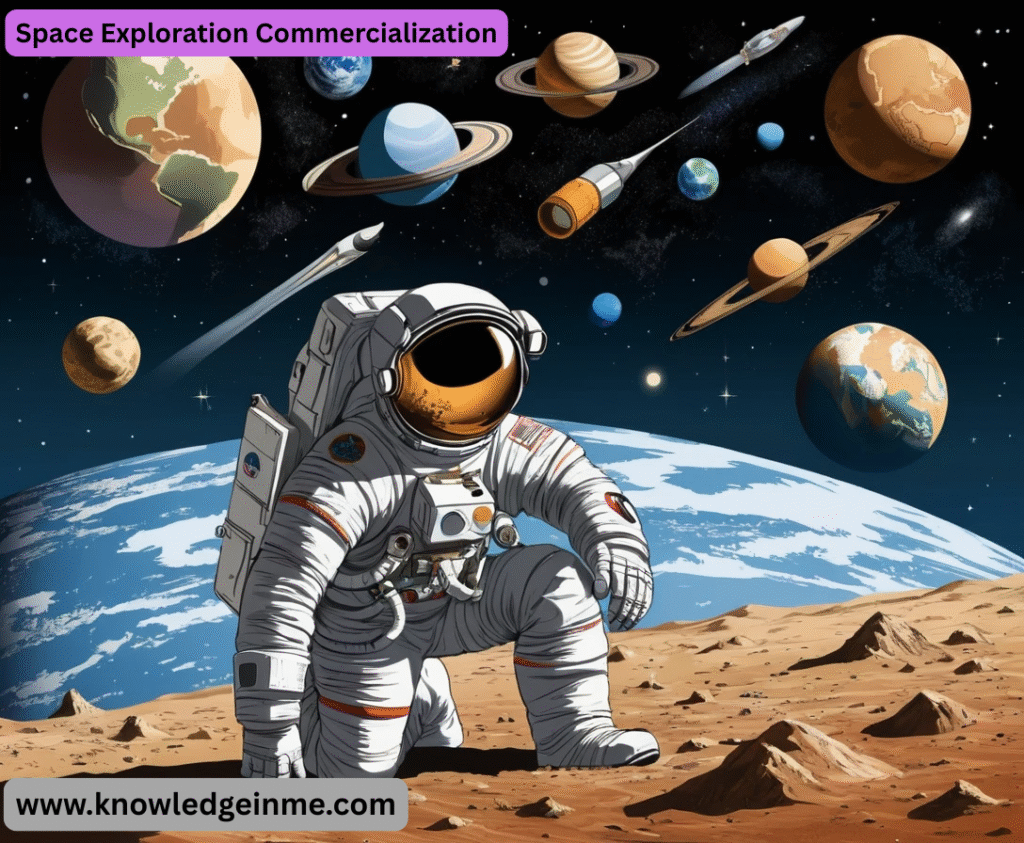

Space Exploration Commercialization Of course. Space Exploration Commercialization is one of the most significant shifts in the history of spaceflight. It marks the transition from space being the exclusive domain of governments and national agencies to a realm open for business, innovation, and private enterprise. Here is a comprehensive overview of the topic.

What is Space Commercialization?
- Space commercialization refers to the use of equipment and services in space for private profit. It involves private companies funding, developing, and operating space technologies and services, either for government clients (as contractors) or for other commercial customers and the general public.
- This is a shift from the “Old Space” model, where agencies like NASA or ESA designed the missions and contracted companies to build hardware, to a “New Space” model, where private companies develop their own systems and sell services.
Key Drivers and Enablers
- Government as an Anchor Customer: Instead of building its own rockets, NASA now often buys cargo and crew transport services from companies like SpaceX and Northrop Grumman. This guaranteed revenue de-risks private investment.
- Technological Advancements: Reusable rockets (SpaceX’s Falcon 9 and Falcon Heavy), miniaturization of electronics (CubeSats), and advances in AI and manufacturing have dramatically lowered costs.
- Private Investment: Venture capital, private equity, and even IPOs have poured billions into space startups, fueling rapid innovation outside of government budgets.
- Supportive Policy and Regulation: Governments have created frameworks to encourage commercial activity, such as the U.S. Commercial Space Launch Competitiveness Act of 2015, which grants private companies ownership of resources they mine in space.
Major Sectors of Commercial Space
The commercialization of space can be broken down into several key sectors:
Launch Services
- This is the most mature commercial sector. Companies compete to provide reliable and cost-effective access to space.
- Leading Players: SpaceX (dominant in global launches), Rocket Lab (leader in smallsat dedicated launches), Blue Origin, United Launch Alliance (ULA), and Arianespace.
- Impact: The cost to launch a kilogram to orbit has plummeted, enabling all other sectors to flourish.
Satellite Services and Manufacturing
This is the largest commercial space market by revenue.
- Communications: GPS, satellite TV, radio, and the new frontier of broadband internet mega-constellations (Starlink, OneWeb, Project Kuiper).
- Earth Observation (EO): Companies like Planet Labs and Maxar provide high-resolution imagery of Earth for agriculture, urban planning, disaster response, and climate monitoring.
- Manufacturing: Companies like Space Systems Loral (SSL) and Airbus build satellites for other operators.
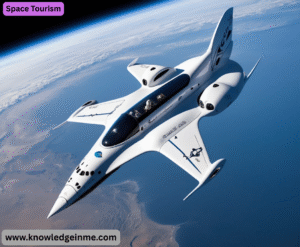
Space Tourism
Making space accessible to private citizens.
- Space Exploration Commercialization Suborbital: Virgin Galactic and Blue Origin offer brief trips to the edge of space for a few minutes of weightlessness.
- Orbital: SpaceX’s Crew Dragon has flown fully private missions (like Inspiration4 and Axiom Space missions) to the International Space Station (ISS) for paying customers.
In-Space Manufacturing and Research
- Using the unique microgravity environment of space to produce goods that are impossible or difficult to make on Earth.
- Examples: Growing perfect protein crystals for drug development, manufacturing specialized optical fibers, and 3D-printing human tissues.
In-Space Infrastructure
Building the “service stations” and “trucks” of space.
- Satellite Servicing: Companies like Northrop Grumman’s SpaceLogistics are developing mission extension vehicles that can refuel or repair satellites in orbit.
- Space Stations: With the ISS nearing retirement, companies like Axiom Space, Sierra Space, and Blue Origin are developing commercial space stations for research, manufacturing, and tourism.
Resource Utilization
The long-term, high-risk, high-reward frontier.
- Space Mining: The extraction of water from the Moon or asteroids for life support and rocket fuel, and mining precious metals.
- In-Situ Resource Utilization (ISRU): Using local materials (e.g., lunar soil for 3D-printing habitats) to support long-duration missions, reducing the need to launch everything from Earth.
Key Players (The “Who’s Who”)
- SpaceX: The pioneer and market leader. Revolutionized launch with reusable rockets and is building the Starlink constellation.
- Blue Origin: Founded by Jeff Bezos, focused on reusable rockets (New Glenn), lunar landers (Blue Moon), and space stations.
- Virgin Galactic: The first publicly-traded space tourism company, focused on suborbital flights.
- Rocket Lab: A leader in small-lift launch and now developing a reusable rocket (Neutron) and spacecraft for Venus missions.
- Axiom Space: Building the world’s first commercial space station and organizing private astronaut missions to the ISS.
- Planet Labs: Operates the largest fleet of Earth-imaging satellites, providing daily scans of the entire planet.
Benefits and Opportunities
- Reduced Costs: Competition and innovation have made space access dramatically cheaper.
- Accelerated Innovation: The private sector’s agility and risk tolerance lead to faster development cycles.
- New Industries and Jobs: Creates entirely new markets, from space tourism to on-orbit manufacturing.
- Global Connectivity: Satellite broadband can provide internet to remote and underserved areas.
- Democratization of Space: Universities, small companies, and even individuals can now afford to send experiments and payloads to space.
Challenges and Risks
- Space Debris: The proliferation of satellites, especially in mega-constellations, increases the risk of collisions, creating more dangerous debris.
- Orbital Congestion: Managing traffic in popular orbits like Low Earth Orbit (LEO) is becoming a critical issue.
- Regulatory Gaps: Laws governing space resource ownership, liability, and safety are still in their infancy.
- High Financial Risk: Many space startups fail due to the immense technical challenges and capital requirements.
- The “Gig Economy” in Space: Concerns about the working conditions and safety of employees in this high-pressure industry.
- Weaponization of Space: The dual-use nature of technology (e.g., a satellite servicer could also be an anti-satellite weapon) raises geopolitical tensions.
Deep Dive into Emerging and Future Sectors
The Cislunar Economy
- Space Exploration Commercialization This is the next great frotier. “Cislunar” refers to the space between Earth and the Moon, including the Moon itself. The goal is to create an economic ecosystem in this region.
- The Lunar Gateway: NASA’s planned space station in lunar orbit will serve as a hub, with commercial companies providing cargo and modules.
- Commercial Lunar Payload Services (CLPS): NASA contracts companies like Intuitive Machines and Astrobotic to deliver payloads to the Moon, kickstarting a lunar delivery industry.
- The Role of Propellant Depots: The key to a sustainable cislunar economy is refueling. Companies are developing concepts for orbital fuel depots, where rockets could refill with propellant derived from lunar water ice. This would turn the Moon into a “gas station” for deeper space missions.
The Data Economy in Space
Space is becoming a critical source of valuable data.
- Radio Frequency (RF) Monitoring: Companies like Hawkeye 360 are mapping global RF signals to detect illegal fishing, monitor maritime traffic, and analyze economic activity.
- Hyper-spectral Imaging: This goes beyond visual images, analyzing the chemical composition of the Earth’s surface for precision agriculture, mineral exploration, and environmental monitoring.
- Automatic Identification System (AIS) & Vessel Tracking: Satellite-based AIS provides global coverage, eliminating blind spots for shipping and security.
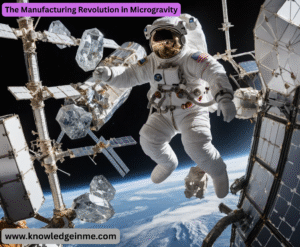
The Manufacturing Revolution in Microgravity
Why is microgravity so valuable for manufacturing?
- Perfect Crystals: Protein crystals grown in space are more perfectly formed, allowing for better drug design. Companies like Varda Space Industries are building entire in-space factories to produce pharmaceuticals and return them to Earth.
- Advanced Alloys and Fibers: Without gravity-driven convection and sedimentation, it’s possible to mix incompatible materials on Earth (e.g., metals and foams) to create stronger alloys or draw flawless optical fibers.
- Bioprinting: 3D-printing organic tissues in microgravity allows structures to form without collapsing under their own weight, a critical step towards eventually printing complex human organs.
The Geopolitical and Legal Landscape
Commercialization is reshaping global power dynamics in space.
- Artemis Accords: A U.S.-led set of principles for peaceful cooperation in space, including transparency, interoperability, and—crucially—the recognition of “safety zones” around lunar operations. This is a de facto framework for managing resource extraction. Over 30 countries have signed.
- The Rise of China: China has a robust, state-driven space program with clear commercial crossover. Companies like Galactic Energy are emerging, and China plans its own lunar base (International Lunar Research Station). This sets the stage for a new space race, but with commercial partnerships at its core.
- National Security Space: The U.S. Space Force and other national militaries are now major customers of commercial services, buying data from Earth observation satellites and planning to use commercial rockets for responsive launch. Space is now a recognized war-fighting domain.
Critical Challenges in Greater Detail
- The Kessler Syndrome: A catastrophic scenario where the density of objects in Low Earth Orbit is so high that a single collision could create a cascade of debris, rendering entire orbital regions unusable for generations. Mega-constellations make this a pressing concern.
- The Sustainability Paradox: The very companies creating debris (by launching thousands of satellites) are the ones developing the technology to clean it up. There’s a debate on whether this is a conflict of interest and if robust, international regulation is needed.
- The “Moon Treaty” Problem: The international legal framework is weak. The 1967 Outer Space Treaty states that no nation can claim sovereignty in space, but it is ambiguous about private property. The U.S. has explicitly legalized space mining for its companies, a move not universally recognized. This could lead to future disputes.
- Space Exploration Commercialization Economic Viability: While investment is high, many business models (like space tourism and in-space manufacturing) are not yet proven to be profitable at scale. The sector could face a “dot-com bubble” style correction if expectations aren’t met.
The Philosophical Shift: From Exploration to Settlement
- The ultimate endgame of commercialization is not just visiting space, but living and working there permanently. This represents a fundamental shift in human ambition.
- Elon Musk’s Goal with SpaceX is explicitly to make humanity a multi-planetary species to safeguard against existential threats, with a city on Mars as the ultimate goal.
- Jeff Bezos’s Vision for Blue Origin is to see millions of people living and working in space, with heavy industry moved off-Earth to preserve our planet as a “residential” zone.