
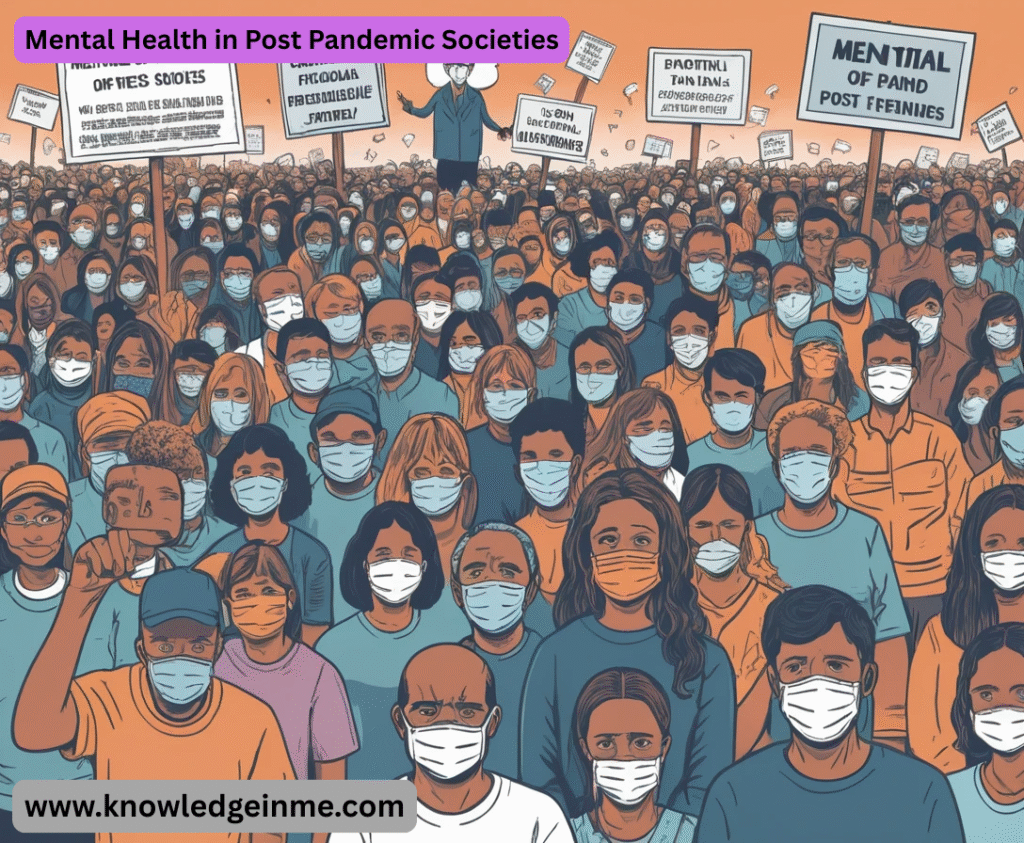

Mental Health in Post Pandemic Societies Of course. The COVID-19 pandemic was a global psychological earthquake, and its aftershocks are fundamentally reshaping mental health in our societies. The term “post-pandemic” is somewhat aspirational; we are living in a world transformed by the pandemic, where its mental health impact is a central feature of the social landscape. Here is a detailed analysis of mental health in post-pandemic societies.
The Legacy: A Deepened and Broadened Mental Health Crisis
The pandemic didn’t create mental health issues, but it acted as a potent accelerant and amplifier.
- The Great Exacerbation: Pre-existing conditions like anxiety, depression, OCD, and eating disorders were often intensified by isolation, health fears, and disruption to routines and care.
- New and Widespread Vulnerabilities: People who had never struggled with their mental health before found themselves facing burnout, anxiety, and depression. This “democratized” mental distress, breaking down some stigmas by making it a nearly universal experience.
Specific Impact on Key Groups:
- Healthcare Workers: Facing extreme burnout, moral injury, and PTSD from the relentless trauma and pressure.
- Children and Adolescents: Disrupted social development, education, and key milestones. A sharp rise in eating disorders, anxiety, and suicidal ideation has been observed.
- Young Adults: Faced with economic instability, disrupted education/career paths, and profound loneliness during a critical period for identity formation.
- The Elderly: Intense isolation and grief, compounded by the highest risk of severe illness, leading to elevated rates of depression.
- Frontline & Low-Income Workers: Faced constant health risks and financial precarity without the option of remote work.
- Caregivers (especially women): Shouldered a disproportionate burden of childcare, homeschooling, and domestic labor, leading to chronic stress and exhaustion.
Key Characteristics of the “Post-Pandemic” Mental Health Landscape
The Loneliness Epidemic and Social Atrophy
- Pandemic lockdowns and social distancing measures led to a profound loss of casual social connection—the “weak ties” with coworkers, baristas, or fellow gym-goers. Many people have experienced social atrophy, finding their social skills and confidence have diminished. Rebuilding these connections feels effortful and anxiety-provoking for many, cementing a baseline of loneliness.
The Redefined Workplace and Burnout Culture
- The shift to remote/hybrid work created a double-edged sword:
- Positive: Flexibility, no commute, and better work-life integration for some.
- Negative: The “always-on” culture, blurred boundaries, and the loss of community leading to a new form of isolated burnout. The “Great Resignation” was, in part, a mass mental health response—people reevaluating their relationship with work and prioritizing well-being.
The “New Normal” of Generalized Anxiety
- A low hum of anxiety has become background noise for many. This manifests as:
- Health Anxiety: Lingering fears about new variants or other illnesses.
- Social Anxiety: Discomfort in crowds or group settings.
- Existential Anxiety: A heightened awareness of global fragility, climate change, and political instability, triggered by the pandemic experience.

Grief and Collective Trauma
- Societies are grappling with a massive, unresolved sense of grief—not just for the millions lost, but for lost time, missed experiences, and a lost sense of “normal.” This is a form of collective trauma that changes the social fabric, leading to shared feelings of vulnerability and disillusionment.
The Digital Double-Edged Sword
- Technology was a lifeline during lockdowns, but its overuse has lingering effects.
- Positive: The normalization of telehealth and therapy apps increased access to care.
- Negative: “Zoom fatigue,” increased screen time, and the comparison culture of social media have contributed to mental exhaustion and poor self-image.
Societal Shifts and the Path Forward
The crisis has forced a long-overdue reckoning, creating potential for positive change.
Destigmatization and Mainstreaming of Mental Health
- Talking about mental health is now more common in workplaces, schools, and media. It’s increasingly seen as a core component of overall health, not a personal failing. This is the single most positive development.
Evolving and Expanding Care Models
- Telebehavioral Health: Virtual therapy is now a standard, permanent option, increasing access for those in rural areas or with mobility issues.
- Digital Therapeutics: Apps for meditation (Calm, Headspace), CBT (Woebot), and mood tracking are widely used as supplements to traditional care.
- Integrated Care: There is a growing push to integrate mental health services into primary care, schools, and workplaces, making support more accessible and routine.
The Employer’s Role is Changing
- Companies are under pressure to proactively support employee mental health. This goes beyond offering an EAP (Employee Assistance Program) to creating cultures of psychological safety, training managers, offering better benefits, and genuinely respecting boundaries.
A Focus on Resilience and Prevention
There is greater interest in building psychological resilience before a crisis hits. This includes promoting:
- Mental Health in Post Pandemic Societies Social Connection: Actively creating opportunities for community building.
- Mindfulness and Self-Care: These practices are becoming more mainstream.
- Financial and Physical Wellness: Recognizing their direct link to mental state.
Ongoing Challenges and Unresolved Issue
- The Access Gap: While telehealth helps, deep disparities in access to quality care persist based on income, race, and geography.
- Provider Shortages: The mental healthcare system was strained before the pandemic; it is now overwhelmed, with long waitlists for therapists and psychiatrists.
- The Long-Term Impact on Youth: We do not yet know the full long-term developmental impact of the pandemic on children and adolescents.
Emerging Psychological Concepts and “New” Conditions
Beyond exacerbating existing issues, the pandemic has given rise to, or popularized, several specific psychological states:
- Pandemic Flux Syndrome (Coined by therapist and author Amy Cuddy): This describes the feeling of being stuck in a state of perpetual adjustment. It’s not a clinical diagnosis but a useful framework for understanding the collective malaise. Key features include:
- Languishing: The sense of stagnation and emptiness, feeling neither depressed nor thriving.
- Decision Fatigue & “Brain Fog”: The mental exhaustion from constant micro-adjustments and a lack of clear long-term planning.
- Loss of “Assumptive World”: The foundational belief that life is predictable, safe, and fair has been shattered.
- Post-Traumatic Growth (PTG): It’s crucial to note that not all outcomes are negative. Many individuals have experienced PTG—positive psychological change resulting from struggling with highly challenging circumstances. This can manifest as:
- New Possibilities: (e.g., starting a new career or hobby).
- Closer Relationships: A deeper appreciation for family and friends.
- Increased Personal Strength: A newfound confidence in one’s ability to cope.
- Spiritual Change: A greater sense of meaning and purpose.
- Appreciation for Life: A shift in priorities towards what truly matters.
- The “5G” Grief Model: David Kessler, a grief expert, expanded the classic stages of grief to include a sixth stage: “Finding Meaning.” In the post-pandemic world, collective grief is not just about death but about collective loss. The process of “finding meaning” is what will ultimately allow societies to heal and rebuild.
Deep Dives into Specific Societal Sectors
Education: A System in Crisis
The impact on students and educators is profound and multi-layered.
- Academic & Developmental Delays: Learning loss is coupled with social-skills deficits. Younger children missed critical periods for developing social cues, while older students struggle with collaboration and independence.
- The Mental Health of Teachers: Educators are facing unprecedented levels of burnout, caught between administrative demands, parental pressures, and the emotional needs of traumatized students. Many are leaving the profession.
- The Rise of School Avoidance: Anxiety, not truancy, is driving a significant increase in students who cannot bring themselves to attend school.
The Urban Exodus and Community Reformation
- The shift to remote work triggered a migration from dense city centers.
- Mental Health Impacts: For some, moving to suburbs or rural areas reduced stress and improved quality of life. For others, it led to isolation and a loss of the vibrant social ecosystems that cities provide.
- The Challenge of Third Places: The decline of “third places” (like cafes, libraries, community centers) as social hubs has left a void. Rebuilding these spaces, or creating new ones, is critical for combating loneliness.

The Political and Societal Polarization
The pandemic was not just a health crisis but a social stress test that exposed and amplified divisions.
- Distrust in Institutions: Erosion of trust in government, science, and media creates a background of existential anxiety and uncertainty.
- “Othering” and Social Fragmentation: Debates over masks, vaccines, and lockdowns fractured communities and even families, creating a environment of hostility and suspicion that persists, impacting our sense of collective belonging.
The Future of Treatment and Support Systems
The response is evolving beyond traditional therapy to encompass a more holistic and community-based approach.
- Psychedelic-Assisted Therapy: Research into substances like psilocybin (magic mushrooms) and MDMA for treating PTSD, depression, and end-of-life anxiety has accelerated, partly driven by the search for novel solutions to the mental health crisis.
- Peer Support and Community Networks: Recognizing that professional help alone is insufficient, there is a growth in peer-led support groups, both online and in-person, for specific issues (grief, anxiety, parental burnout). Shared lived experience is a powerful therapeutic tool.
- Mental Health in Post Pandemic Societies Focus on Somatic Approaches: Trauma is stored in the body. Therapies like somatic experiencing, EMDR, and yoga therapy are gaining traction to address the physiological underpinnings of pandemic-related stress and anxiety.
- The Role of AI and the Metaverse: This is the next frontier, with both promise and peril.
- Promise: AI-powered chatbots for initial screening and CBT-based interactions; VR exposure therapy for social anxiety; immersive virtual spaces for connection.
- Peril: Deepening isolation, the “simulation” of relationships replacing real ones, and new forms of digital addiction.
Global and Cultural Variations
It’s vital to acknowledge that the “post-pandemic” experience is not universal.
- Collectivist vs. Individualist Societies: Nations with stronger collectivist cultural norms may have experienced the trauma differently, with a greater shared sense of purpose, but also potentially greater pressure to conform.
- Wealth and Resource Disparity: Low and middle-income countries faced a double burden: severe health impacts without the financial resources to fund robust mental health or economic safety nets. The mental health fallout in these regions will be deeper and longer-lasting.
- Varied Government Responses: Societies that implemented clear, consistent, and trusted public health measures may be experiencing lower levels of ongoing anxiety and institutional distrust compared to those with chaotic or politicized responses.