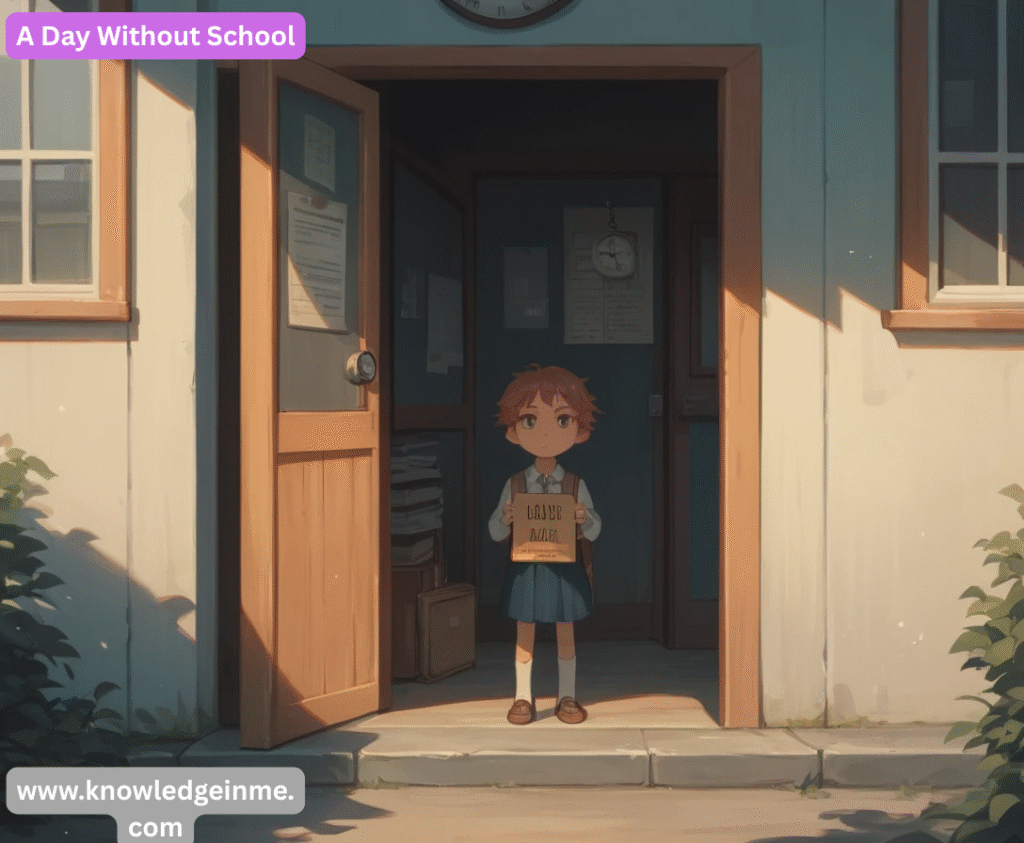

A Day Without School Of course! Here is a story and exploration of the concept of “A Day Without School.” The first sign was the silence. No distant roar of a school bus grinding its gears, no chorus of slamming car doors, no chatter of kids with backpacks trudging past the window. The digital clock on my bedside table glowed 8:17 AM. On any other Tuesday, I would have been in second period, staring at the slow tick of the classroom clock.
But not today. Today was different.
It had started with a phone call at 5:30 AM. A recorded voice, calm and robotic, announcing that the schools were closed due to a sudden, massive water main break. A “catastrophic infrastructure failure,” it called it. To me, it was a miracle.
The day unfolded not in periods of Math, Science, and English, but in chapters of unexpected freedom.
The Glorious Pajama Republic.
- The first few hours were a quiet rebellion. My sister and I built a fortress of couch cushions and blankets. We weren’t students; we were rulers of the Pajama Republic. We watched cartoons we were too old for, not out of genuine interest, but for the sheer, illicit pleasure of doing so at 10 AM on a weekday. The sunlight streamed through the living room window, highlighting dust motes dancing in the air—particles I’d never have seen from a classroom desk.
The Boredom and the Breakthrough.
- By noon, the novelty began to wear thin. The TV lost its glow, the fortress felt more like a prison. “I’m bored,” my sister announced, a universal truth on unscheduled days. That’s when Mom, working from home, emerged from her office. “The world is your classroom today,” she said, pointing to the backyard.
- We went outside. The lesson was Biology. We turned over rocks, examining the pill bugs and ants scurrying beneath. We felt the different textures of bark on the trees. We weren’t memorizing facts for a test; we were discovering a world. My sister, who hated reading, spent an hour with a field guide, trying to identify a bird by its song.
The Unplanned Project.
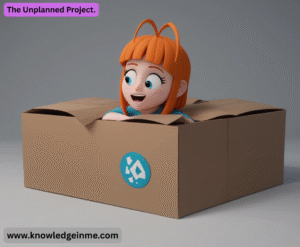
- The boredom sparked creativity. With no homework hanging over us, we decided to build a “robot” out of cardboard boxes, tin foil, and a lot of tape. It was lopsided and useless, but for three hours, we were engineers. We argued about design, we problem-solved how to make the antenna stay up, we celebrated our ridiculous, glitter-glue-covered creation. It was the most engaged I’d been in a project in months.
The Quiet Connection.
- The best part came in the late afternoon. My dad came home early. Instead of the usual rushed “how-was-school-fine” exchange, we sat on the porch steps. He told me a story about playing hooky once as a kid, and the guilt and thrill he felt. We just talked—about space, about his job, about nothing in particular. It was a conversation that wouldn’t have happened on a normal, overscheduled school night.
- As I got ready for bed that night, the familiar Sunday-night dread was absent. In its place was a quiet sense of fullness.
- A day without school wasn’t just an empty space. It was a different kind of education. I learned that boredom can be the mother of invention. I learned that my backyard is a fascinating ecosystem. I learned that my family has stories I’ve never heard.
The Parent’s Perspective
- The 5:45 AM phone call jolted me awake. School closure. My first thought wasn’t about the water main break; it was a panicked calculation of deadlines, meetings, and two suddenly liberated children.
- The day was a study in controlled chaos. My home office, once a sanctuary, became Grand Central Station.
- 9:02 AM: A heated debate over the last waffle erupts outside my door during a video call.
- 11:15 AM: I find my important client report has been “decorated” with crayon rainbows by my youngest.
- 1:30 PM: The words “I’m booooored” are chanted like a tribal mantra.
- 3:00 PM: The living room is now a Lego minefield. I sacrifice a bare foot to the cause.
- But then, around 4 PM, I hear it: laughter. Unstructured, unforced, pure laughter from the backyard. I look out to see them building an elaborate “fairy house” from sticks and moss, working together without a single argument.
- The workday was a write-off. The productivity graph is in the negatives. But as I tuck them in that night, their faces sun-kissed and tired from a day of actual play, I realize something. This unscheduled, frustrating, beautiful mess of a day gave them something a perfectly planned Saturday never could: the gift of unscripted time, and gave me a fleeting, exhausting, wonderful glimpse back into their world.
The Teacher’s Perspective
- A free day. No lesson plans, no grading, no crowd management. The silence in my empty classroom is profound.
- The first few hours are blissfully productive. I finally organize the resource closet, update the class website, and create next week’s quizzes. It feels like stealing time.
- But by lunch, a strange feeling settles in. The room feels too still. I miss the rustle of turning pages, the “aha!” moments when a concept clicks, the off-the-wall questions that derail my lesson plan in the best way possible. This room is a shell without its inhabitants.
- I use the extra time to do what I never can: I personalize. I write a short, encouraging note on a sticky pad for Maya, who’s been struggling with confidence. I find a perfect, challenging article for Alex, who’s always ahead. This isn’t in the curriculum; it’s the human work that often gets lost in the daily grind.
- A day without school reminds me why I’m here. It’s not just about delivering content. It’s about the energy, the connection, the lived-in, sometimes messy, always vibrant ecosystem of a classroom. Tomorrow, when the bell rings and they pour in, I’ll be ready for them, grateful for the break, but even more grateful for the return.
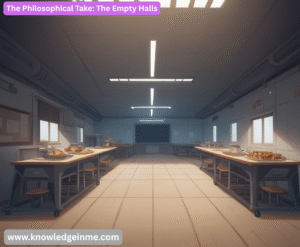
The Philosophical Take: The Empty Halls
- What is a school without students? It is a skeleton without a soul. The halls, usually rivers of adolescent energy, are silent tunnels. Sunlight falls in empty rectangles on the gym floor. The cafeteria, a place of roaring gossip and clattering trays, is a vast, hollow space.
- A day without school is a pause in the heartbeat of a community. It exposes the infrastructure—the bricks, the desks, the whiteboards—for what it truly is: a vessel. The real magic is the life that fills it.
- This day off is a societal breath held. It’s a reminder that our relentless forward motion—the bells, the schedules, the deadlines—can, and sometimes must, be stopped. It forces improvisation, breaks routines, and allows for a different kind of growth, one that can’t be measured by standardized tests. It is a mandatory recess for the human spirit.
The “What If?” Scenario: A Permanent Day Without School
Imagine if the announcement wasn’t for one day, but forever.
- Day 1: Elation. A perpetual weekend.
- Day 7: Confusion. The initial thrill wears off. What day is it? What do we do?
- Day 30: The Great Sorting. Natural curiosity begins to drive learning. Some kids cluster in libraries, devouring books on dinosaurs or coding. Others apprentice with mechanics, bakers, or gardeners. Learning becomes need-based and passion-driven.
- Day 100: The Social Fracture. Without a common, unifying institution, disparities widen. The structured support system school provided for many vanishes. Communities would have to radically reinvent how they socialize, educate, and care for their young.
- It becomes a grand, terrifying experiment. It would either unlock a new era of autodidacts and innovators or plunge a generation into isolation and ignorance. The “day without school” becomes a thought experiment about the very purpose of education in society.