
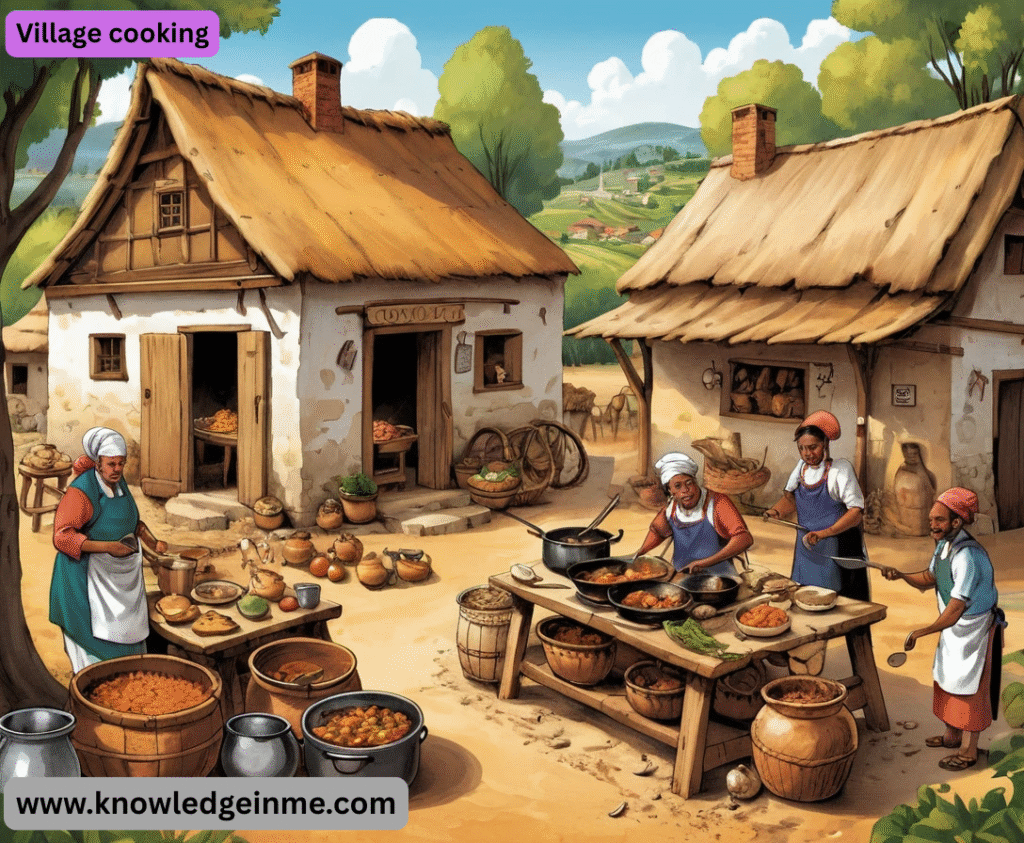

Village cooking Of course! Village cooking is a beautiful and diverse topic that refers to the traditional, rustic style of cooking found in rural communities all over the world. It’s not one single cuisine but a global concept defined by its principles and charm. Here’s a deep dive into the world of village cooking:
The Core Principles of Village Cooking
- Hyper-Local & There are no imported out-of-season ingredients.
- From Scratch & There’s no reliance on pre-packaged sauces or mixes. This includes milling flour, churning butter, making cheese, and grinding spices.
- Nose-to-Tail & Root-to-Stem: Nothing goes to waste.
- Community-Oriented: Cooking is often a social activity. It’s common to see families and neighbors cooking together, especially for festivals and large gatherings. Recipes are passed down through generations by word of mouth and demonstration.
- Simple Techniques, Deep Flavors: The techniques are often ancient and simple: wood-fire roasting, slow simmering in clay pots, steaming in leaves, and fermenting. These methods develop deep, complex, and honest flavors.
- Fuel-Efficient: Traditional methods are often designed to use fuel (like wood or charcoal) sparingly. Slow-cooked stews and one-pot meals are common because they use less energy.
Common Elements Across Different Villages
While ingredients change from region to region, you’ll often find these categories of food:
- Grains & Breads: A staple carbohydrate is the heart of every meal. This could be:
- Asia: Rice, millet, or noodles.
- Europe: Wheat, rye, or barley (often as bread or porridge).
- The Americas: Corn (maize) as tortillas or bread.
- The “Pot” (Stews, Soups, Curries): A one-pot dish is the ultimate village meal. It’s efficient, feeds many, and tenderizes tough cuts of meat and fibrous vegetables. Examples: Indian sambar, Nigerian egusi soup, French pot-au-feu, or a simple lentil dal.
- Preserved Foods: Crucial for surviving off-seasons. Techniques include:
- Drying: Fish, meats, fruits, and chilies.
- Fermenting: Yogurt, pickles, kimchi, sauerkraut.
- Curing: Meats and fish with salt and smoke.
- Fresh Produce: Whatever grows in the garden: tomatoes, onions, leafy greens, gourds, root vegetables, and local herbs.
- Protein Sources: Often small-scale: eggs from backyard chickens, dairy from a family goat or cow, fish from a local river, or meat from a community-hunted animal or festival sacrifice.
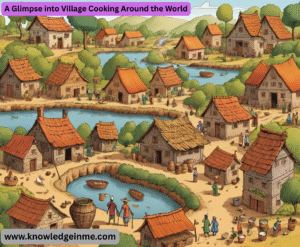
A Glimpse into Village Cooking Around the World
- India: A village hearth (chulha) is central. Dishes like makki ki roti (cornflat bread) with sarson ka saag (mustard greens), fish curry wrapped and steamed in banana leaves, or a simple khichdi (lentil and rice porridge) are classics.
- Think ribollita (a hearty bread and vegetable soup), pasta e ceci (pasta with chickpeas), and using every part of the animal.
- Mexico: Corn is king. Tortillas are made by nixtamalizing and grinding maize by hand. Mole sauces, made from dozens of locally toasted spices and chilies, are a labor of love for special occasions.
- West Africa: One-pot stews and starches are key. Fufu (pounded cassava or yam) is served with rich, oily stews like groundnut soup or jollof rice cooked over a wood fire.
- Thailand: Villages rely on their gardens and local water sources. Som Tam (green papaya salad) pounded in a mortar, grilled fish stuffed with lemongrass, and sticky rice steamed in bamboo tubes are standard fare.
The Modern Appeal & Why It’s Celebrated
- Authentic Flavors: People are tired of processed foods and crave the “real” taste of ingredients.
- Sustainability: This style of eating is inherently sustainable—local, seasonal, and low-waste.
- Health: Food is whole, unprocessed, and nutrient-dense.
- Cultural Connection: It offers a tangible link to heritage, history, and a simpler way of life.
Experience It Yourself
You don’t need to live in a village to cook like this!
- Shop at Farmers’ Markets: Buy what’s in season and local.
- Cook from Scratch: Start with dried beans, whole spices, and whole grains.
- Embrace “Ugly” Produce: Misshapen vegetables taste just as good.
- Try One-Pot Meals: Make a stew, soup, or daal.
- Learn a Preservation Technique: Try pickling cucumbers or making your own yogurt.
- Cook Over Fire: If you can, grill or roast something over charcoal for that irreplaceable smoky flavor.
The Sensory Experience: More Than Just Taste
- To truly understand village cooking, you have to imagine the full experience:
The Smells:
- The sharp, earthy scent of smoke from a wood fire, which clings to clothes and hair.
- The sweet, comforting smell of dough baking on the hot walls of a tandoor or over a griddle.
- The pungent, funky aroma of fermenting vegetables or fish, a sign of preservation at work.
The Sounds:
- The rhythmic thump-thump-thump of a large mortar and pestle pounding spices, herbs, or meat into a paste.
- The crackle and pop of a wood fire.
- The sizzle of tempering—oil poured over mustard seeds and dried chilies to finish a dish.
- The chatter and laughter of multiple generations working together in a shared kitchen space.
The Textures:
- Food is often heartier and more textured. Grains are less polished, breads are thicker, and vegetables are cooked but not mushy.
- The char and slight grit from cooking over an open flame.
- The tactile experience of eating with your hands—rolling a ball of fufu or scooping up dal with a piece of roti, connecting you directly to the food’s temperature and consistency.
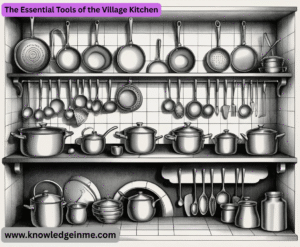
The Essential Tools of the Village Kitchen
These tools are extensions of the cook’s hands, refined over centuries:
- The Mortar and Pestle (Imam dasta in Persian, Molcajete in Spanish): The undisputed king. Used for grinding, pounding, and blending spices, pastes, and chutneys. It crushes rather than cuts, releasing oils and flavors in a way a modern blender cannot.
- The Grinding Stone (Sil Batta in Hindi): A larger, flat stone version used for grinding large quantities of grains or lentils into flour or batter.
- The Clay Pot (Cazuela in Spanish, Handi in Hindi): The original slow cooker. Clay distributes heat gently and evenly, allowing flavors to meld perfectly. It also adds a unique earthy minerality to the food.
- The Tawa / Griddle: A flat or slightly convex iron plate used for cooking flatbreads like tortillas, chapatis, and dosas.
- The Wok (Kadhai in India, Wok in China): The versatile, round-bottomed pan perfect for stir-frying, deep-frying, and steaming. Its shape ensures even heat distribution over a small fire.
- Earthen Oven (Tandoor, Horno): A large, cylindrical clay oven heated by charcoal or wood at the bottom. Used for baking naan, roasting meats, and imparting a incredible smoky flavor.
The Intangible Spirit: “Aaj Kya Banega?” (What shall we make today?)
The most important ingredient isn’t something you can buy.
- Improvisation (Jugaad in Hindi): A village cook is a master improviser. If there’s no tomato, use tamarind for sourness. If there’s no meat, use hearty vegetables or lentils. The recipe is a guide, not a law.
- Time is an Ingredient: There is no rushing.
- It’s not just food; it’s a calendar and a storybook.
- Respect for the Source: There is a deep understanding and respect for the origin of the food—the field it came from, the animal it was, the rain that helped it grow. This fosters a natural gratitude and a aversion to waste.
A Challenge: Cook One “Village Style” Meal
To truly get “more,” you must experience it. Choose one element to focus on:
- The Tool: Make a chutney or spice paste using a mortar and pestle instead of a blender. Taste the difference.
- The Technique: Slow-cook a bean or meat stew in a heavy pot for at least 2-3 hours on very low heat.
- The Ingredient: Go to a farmer’s market and build a meal around the one vegetable that looks the freshest and most beautiful.
- The Mindset: Cook with your family or friends. Assign tasks—someone chops, someone tends the fire (or stove), someone sets the table. Make it a communal activity.