
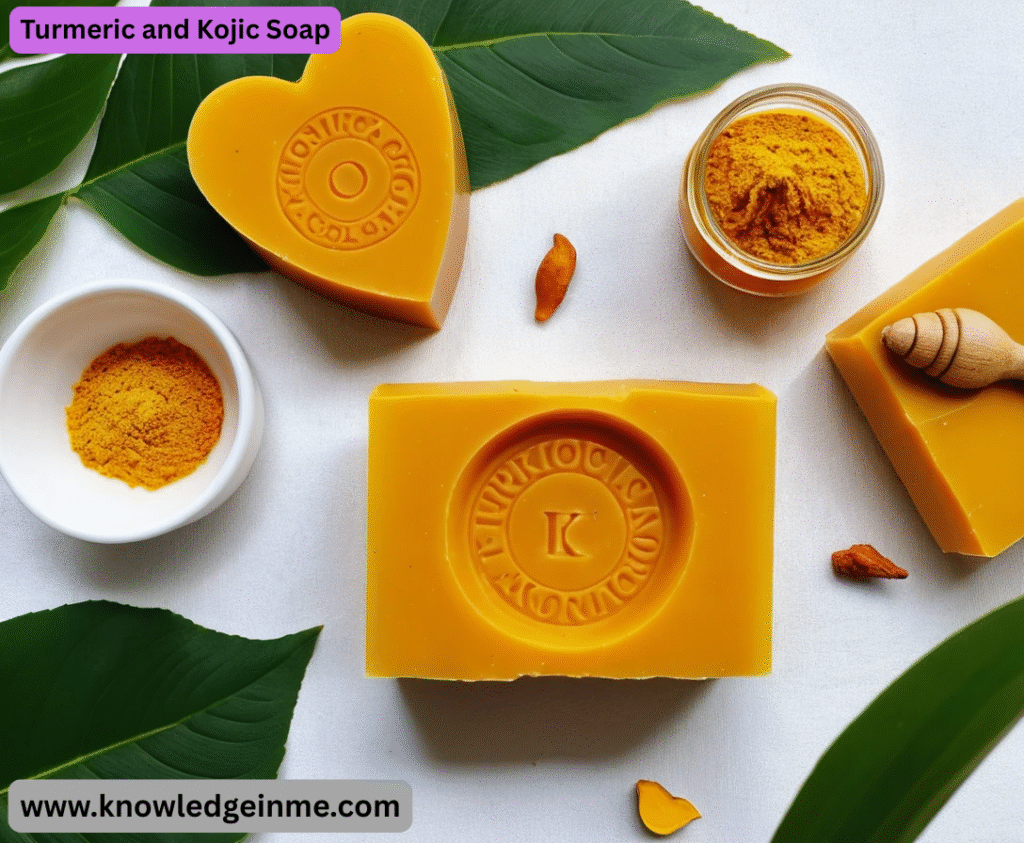

Turmeric and Kojic Soap Of course! Let’s break down everything you need to know about the popular combination of Turmeric and Kojic Acid Soap. This soap has become a skincare superstar, especially for those looking to brighten their complexion and address hyper pigmentation.
What Are the Key Ingredients?
Kojic Acid:
- Source: A natural by-product from the fermentation process of Japanese foods like rice wine (sake), soy sauce, and miso.
- Primary Function: Skin Lightening. It works by inhibiting the enzyme tyrosinase, which is necessary for your body to produce melanin (the pigment that gives skin its color).
- Targets: Dark spots, age spots, sun damage, acne scars, and melasma.
Turmeric:
- Source: A root/spice, famous in Asian cuisine and traditional medicine (like Ayurveda).
- Primary Function: Anti-inflammatory and Antioxidant. The active compound is curcumin.
- Targets: Acne, redness, and inflammation. It helps calm the skin, can give a healthy glow, and has antibacterial properties.
The Combined Benefits of the Soap
- When these two powerful ingredients are combined in a soap, they create a synergistic effect:
- Brightens and Evens Out Skin Tone: Kojic acid directly targets dark spots, while turmeric helps reduce redness and overall dullness, leading to a more radiant and uniform complexion.
- Fades Acne Scars and Dark Spots: This is its most famous benefit. The soap is highly effective at fading the post-inflammatory hyperpigmentation (PIH) left behind by pimples.
- Fights Acne: Turmeric’s anti-inflammatory and antibacterial properties help calm active breakouts and prevent new ones from forming.
- Provides Antioxidant Protection: Both ingredients have antioxidant properties that help protect the skin from environmental damage caused by free radicals.
- Gives a Healthy Glow: Regular use can slough off dead skin cells, revealing fresher, brighter skin underneath.
Important Considerations and Potential Side Effects
While effective, this soap is potent and must be used correctly.
- Skin Dryness: Both ingredients can be drying. Your skin may feel tight after washing.
- Skin Sensitivity & Irritation: Kojic acid can cause irritation, redness, or a mild burning sensation for some, especially those with sensitive skin.
- Patch Test is Crucial: Always do a patch test before using it on your face or body. Apply a small amount of lather behind your ear or on your inner arm and wait 24 hours to see if any reaction occurs.
- Sun Sensitivity: Kojic acid can make your skin more photosensitive (sensitive to the sun). This is the most important rule:
- You MUST use a broad-spectrum sunscreen during the day. If you don’t, you risk undoing all the benefits and potentially getting even darker.
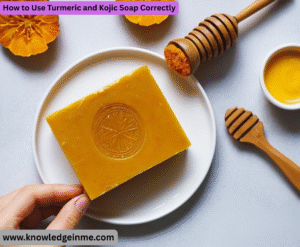
How to Use Turmeric and Kojic Soap Correctly
- Follow these steps for best results and to minimize side effects:
- Wet Skin: Use lukewarm water to wet your face or body.
- Lather Up: Rub the soap between your wet hands to create a rich lather.
- Apply Gently: Apply the lather to your skin using gentle, circular motions. Avoid the eye area entirely.
- Short Contact Time (Key Step): Let the lather sit on your skin for no more than 30-60 seconds to start. You can gradually increase to 1-2 minutes if your skin tolerates it, but do not leave it on for extended periods (like 5-10 minutes) as this greatly increases the risk of irritation.
- Rinse Thoroughly: Rinse off completely with cool or lukewarm water.
- Moisturize: Immediately follow up with a good, gentle, and fragrance-free moisturizer to combat dryness.
- Sunscreen (AM Routine): In the morning, finish with a high-SPF, broad-spectrum sunscreen.
- Frequency: Start by using it every other day, and only once a day (preferably in the evening). You can increase to daily use if your skin shows no signs of irritation.
Who Is It For?
- Individuals with dull skin looking for a brighter complexion.
- People struggling with acne scars, dark spots, sun spots, or melasma.
- Those with oily and acne-prone skin who can better tolerate its drying effects.
Who Should Avoid It or Be Cautious?
- People with very dry or sensitive skin. Individuals with eczema or rosacea.
- Anyone with a known allergy to kojic acid or turmeric.
The “Orange Stain” from Turmeric
- Don’t be alarmed if your skin has a slight yellow or orange tint immediately after washing. This is from the natural turmeric pigment and is temporary. It will rinse away completely after a few splashes of water or will fade within an hour.
Advanced Usage & Pro-Tips
The “Double-Cleansing” Method for Stubborn Spots:
- If you’re using it specifically for dark spots on your body (like knees, elbows, or underarms), try this:
First wash: Lather and rinse as normal to clean the surface.
- Second wash: Lather up again and let the thin film of lather sit on the damp skin for 2-3 minutes before rinsing. This increases the active time without being as harsh as a full, dry “mask.”
Targeted Spot Treatment:
- Instead of washing your entire face with it, you can use it as a targeted treatment. Lather a small amount, apply the lather only to your acne scars or dark spots, leave for 30-60 seconds, and then rinse.
Mitigating Dryness with the “Sandwich” Method:
- If you find the soap too drying, “sandwich” its use between hydrating products.
- Apply a light, water-based hydrating toner to your damp skin before washing with the soap. This provides a slight protective barrier.
Wash with the Turmeric & Kojic soap.
- Immediately while skin is still damp, apply a hyaluronic acid serum and a rich moisturizer to lock in hydration.
For Body Use:
- This soap is fantastic for addressing “chicken skin” (Keratosis Pilaris), back acne (“bacne”), and dark underarms. The combo helps exfoliate the bumps and lighten the associated hyper pigmentation.
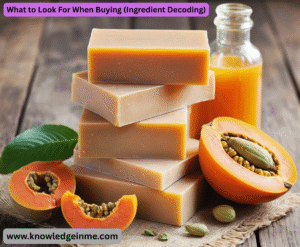
What to Look For When Buying (Ingredient Decoding)
- Not all Turmeric and Kojic soaps are created equal. Here’s what to check on the label:
- Kojic Acid Position on the List: The ingredient list is in descending order of concentration. If “Kojic Acid” is one of the last ingredients, its concentration is likely very low. Look for a soap where it appears in the first half of the list.
- Type of Kojic Acid: “Kojic Dipalmitate” is a more stable, gentler, and sometimes more effective derivative of pure Kojic Acid. Soaps containing this form are often a better choice for sensitive skin.
- Additional Beneficial Ingredients: Many brands enhance their formulas with other brightening or soothing agents. Look for:
- Papaya Extract: Contains the enzyme papain, a gentle exfoliant.
- Licorice Root Extract: A natural, potent brightener that is also anti-inflammatory.
- Glutathione: A powerful antioxidant that also lightens skin.
- Milk or Goat’s Milk: Adds lactic acid for gentle exfoliation and helps soothe dryness.
- Saffron or Carrot Oil: Often added for additional glow and antioxidant benefits.
- Avoid Harsh Additives: Steer clear of soaps that also contain strong physical scrubs (like walnut shells) or high concentrations of drying alcohol, as this can overly irritate the skin.
Debunking Common Myths
“It will make your skin paper-white.”
- TRUTH: It lightens hyper pigmentation, not your natural, base skin tone. Its goal is to even out your complexion by removing dark spots, not to drastically alter your inherent skin color.
“The longer you leave it on, the faster it works.”
- TRUTH: This is a fast track to a damaged skin barrier. Contact time of 1-2 minutes is sufficient. Longer exposure significantly increases the risk of irritation, redness, and chemical burns, which can actually worsen pigmentation in the long run.
“The yellow stain means it’s working.”
- TRUTH: The yellow stain is purely from the curcumin in turmeric and has no bearing on the soap’s efficacy. A well-formulated soap should rinse clean without leaving a strong stain.
Expected Timeline & Results
Managing expectations is key. This is not an overnight miracle.
- 2-4 Weeks: You may notice a slight “glow” and improvement in active acne. Skin might feel smoother.
- 4-8 Weeks: This is when you typically start to see a visible lightening of fresh acne scars and dark spots.
- 3-6 Months: Significant fading of older, more stubborn hyperpigmentation and a much more even skin tone.
- Remember: Consistency is crucial, but so is patience. If you experience persistent redness or peeling, scale back usage immediately.