


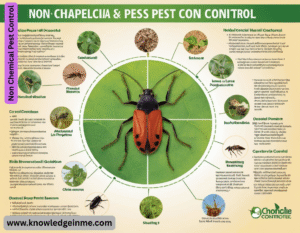
Non Chemical Pest Control Of course. Non-chemical pest control, often called natural or organic pest control, is a method of managing pests without using synthetic pesticides. It focuses on prevention, using biological agents, physical barriers, and ecological understanding to keep pest populations at manageable levels. Here is a comprehensive guide to non-chemical pest control methods, broken down by category.
Core Principles of Non-Chemical Pest Control
- Prevention is Key: The goal is to create an environment where pests are discouraged from taking hold in the first place.
- Identification: Correctly identify the pest to choose the most effective control method.
- Tolerance: Accept a low level of pest activity. The aim is management, not total eradication.
- Ecosystem Approach: Work with nature, not against it. Encourage a balanced garden ecosystem where beneficial insects keep pests in check.
Cultural Controls (Changing the Environment)
- This is the first and most important line of defense. By altering practices, you make your home or garden less attractive to pests.
- Crop Rotation: Avoid planting the same family of plants in the same spot year after year. This disrupts the life cycles of soil-borne pests and diseases.
- Companion Planting: Certain plants can repel pests or attract their natural predators. Examples:
- Marigolds repel nematodes and whiteflies.
- Basil repels mosquitoes and flies.
- Nasturtiums attract aphids away from more valuable plants.
- Dill, Fennel, Yarrow attract beneficial insects like ladybugs and parasitic wasps.
- Healthy Soil: Healthy plants grown in nutrient-rich soil are more resistant to pests and diseases. Use compost and organic fertilizers.
- Sanitation: Remove garden debris, fallen fruit, and weeds where pests can hide and breed. Indoors, keep kitchens clean and store food in airtight containers.
- Proper Watering: Water in the morning so leaves dry quickly, reducing fungal diseases. Avoid overwatering, which can attract pests like fungus gnats.
- Resistant Varieties: Choose plant varieties that are naturally resistant to common pests and diseases in your area.
Physical & Mechanical Controls (Barriers and Removal)
- These methods physically block, trap, or remove pests from the environment.
- Hand-Picking: For larger pests like caterpillars, slugs, and Japanese beetles, simply pick them off plants and drop them into soapy water. Effective for light infestations.
Traps:
- Sticky Traps: Brightly colored (yellow for aphids, whiteflies; blue for thrips) cards coated in a sticky substance to trap flying insects.
- Pheromone Traps: Use species-specific sex hormones to lure and trap pests like codling moths or Japanese beetles. (Best for monitoring populations, not total control).
- Beer Traps: A cup sunk into the soil filled with beer attracts and drowns slugs and snails.
Barriers:
- Row Covers: Lightweight fabric placed over plants creates a physical barrier against insects, birds, and other animals. (Remember to remove for pollination if needed).
- Copper Tape: Creates a small electrical charge that repels slugs and snails. Perfect for placing around raised beds or plant pots.
- Collars: Paperboard or aluminum foil collars placed around the base of seedlings (like brassicas) prevent cutworms from chewing through stems.
- Water Spray: A strong jet of water from a hose can dislodge aphids, spider mites, and other soft-bodied insects from plants.
- Vacuuming: Yes, literally! A small handheld vacuum can be remarkably effective at sucking up clusters of pests like leafhoppers or spider mites from plants.
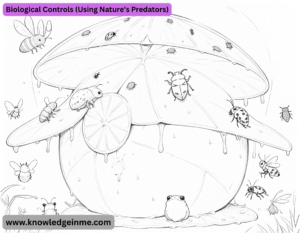
Biological Controls (Using Nature’s Predators)
This involves introducing or encouraging natural predators, parasites, or pathogens to control pest populations.
- Beneficial Insects (The “Good Bugs”): You can purchase these online or, even better, create a habitat to attract them naturally.
- Ladybugs & Lacewings: Voracious predators of aphids.
- Praying Mantises: General predators that eat a wide variety of insects.
- Parasitic Wasps: Tiny, non-stinging wasps that lay their eggs inside pests (like caterpillars or aphids), killing them.
- Beneficial Nematodes: Microscopic worms applied to the soil that seek out and kill grubs, flea larvae, and other soil-dwelling pests.
- Birds, Bats, and Toads: Encourage these animals to live in your garden.
- Birdhouses & Birdbaths attract insect-eating birds.
- A bat house can host a colony that consumes thousands of mosquitoes nightly.
- A toad house (a small, damp, overturned pot) provides shelter for a garden toad that eats slugs and insects.
Homemade & Natural Sprays (Botanical Controls)
- These are pesticides derived from natural sources. They are generally less toxic than synthetic ones but should still be used carefully as they can harm beneficial insects if applied indiscriminately.
- Insecticidal Soap: Effective against soft-bodied insects (aphids, mites, whiteflies). It works by breaking down the insect’s outer coating. You can buy it or make a dilute solution with pure castile soap.
- Horticultural Oil: (Neem oil is a popular type). Smothers insects and disrupts their feeding and hormonal systems. Neem oil is particularly effective and has fungicidal properties.
- Its microscopic sharp edges cut the exoskeletons of insects, causing them to dehydrate. Important: Use food-grade DE and wear a mask when applying. It only works when dry and is non-selective, so use it sparingly.
- Sprays with Strong Scents: Garlic, chili pepper, or onion sprays can act as repellents. Their effectiveness is often short-lived and requires frequent reapplication.
Putting It All Together: Integrated Pest Management (IPM)
IPM is the strategic combination of all these methods. It’s a process:
- Monitor and Identify: Regularly inspect your plants. What is the pest? How many are there?
- Set Action Thresholds: Decide what level of pest damage is acceptable. A few holes in a kale leaf might be fine.
- Prevent: Implement cultural controls to make problems less likely.
- Control: If the threshold is exceeded, choose the most targeted, least-toxic method first (e.g., hand-picking, spraying with water). If that doesn’t work, escalate to biological controls or natural sprays.
- Evaluate: Did the control work? What can you do differently next season to prevent it?
Advanced Strategies & Niche Techniques
- Beyond the basics, here are more sophisticated and targeted approaches.
Soil Health as the Ultimate Foundation:
- This cannot be overstated. A vibrant soil food web—teeming with beneficial bacteria, fungi, protozoa, and nematodes—is your greatest asset. Healthy soil grows strong plants that can out compete pests and diseases.
- Action: Regularly add high-quality compost and compost tea. Avoid tilling, which destroys fungal networks. Consider planting diverse cover crops to build soil organic matter.
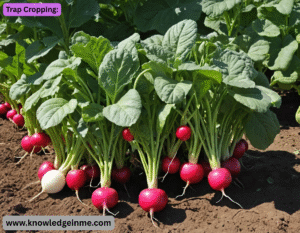
Trap Cropping:
- This is a strategic form of companion planting. You plant a crop that is more attractive to a pest than your main crop. The pests congregate on the trap crop, which you then sacrifice (by pulling it and bagging it, or spraying it with a natural insecticide).
- Example: Plant Blue Hubbard squash to attract squash bugs and squash vine borers away from your zucchini and pumpkins. Plant Cherry Belle radishes to lure flea beetles away from your eggplants and brassicas.
Induced Resistance:
- You can “vaccinate” your plants or boost their natural defenses using natural elicitors.
- Example: A spray made from seaweed extract (kelp) not only provides micronutrients but also contains compounds that strengthen plant cell walls and stimulate defense pathways. Similarly, silica supplements (from horsetail fern or other sources) make plant tissues tougher for pests to chew.
Genetic Diversity:
- Monocultures are a pest buffet. By mixing varieties and species, you create a confusing environment for pests and slow the spread of disease.
- Action: Instead of planting one long row of tomatoes, interplant them with basil, onions, and marigolds. Source seeds from different suppliers, as genetic stock can vary.