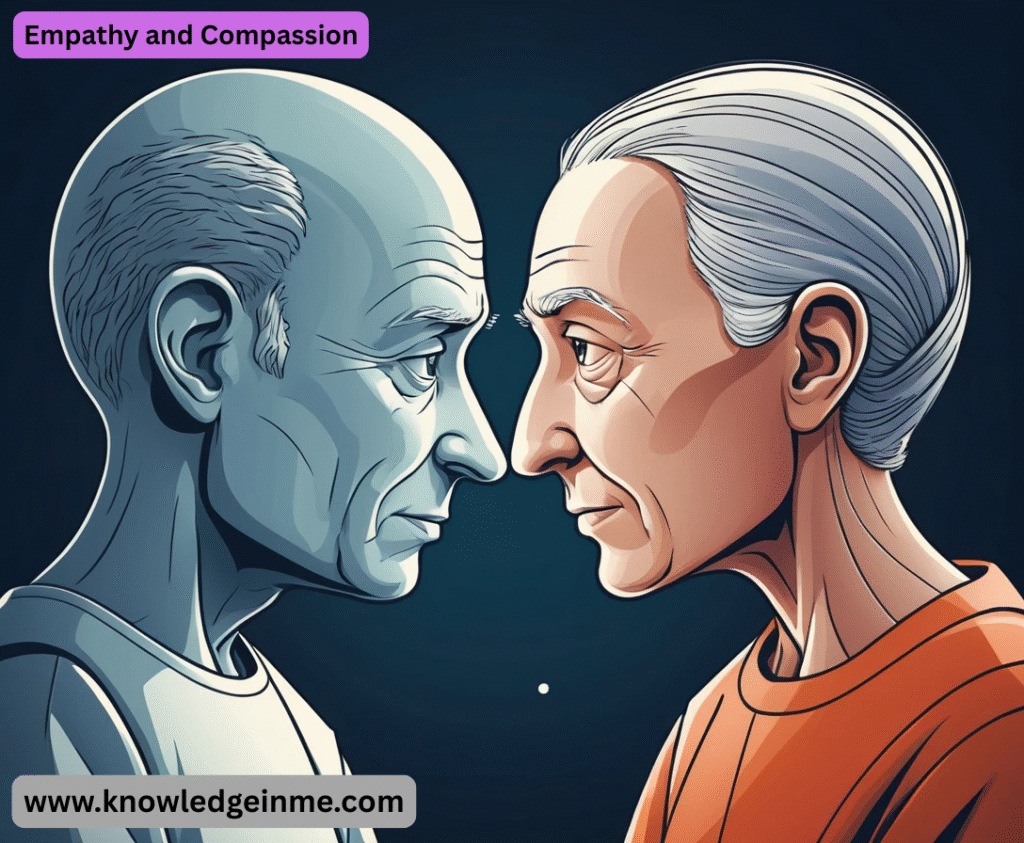

Empathy and Compassion Of course. While often used interchangeably, empathy and compassion are distinct but deeply interconnected concepts. Understanding the difference can transform how we relate to others and ourselves. Let’s break them down.
Empathy: Feeling With Someone
- Empathy is the ability to step into someone else’s shoes, to understand their feelings and perspectives, and to use that understanding to guide our actions. It’s the bridge of shared feeling.
Key Aspects:
- Cognitive Empathy: Understanding what another person might be thinking or feeling. It’s like a mental map of someone else’s perspective. (e.g., “I can see why that comment made him feel insecure.”)
- Emotional (or Affective) Empathy: Mirroring and sharing the feelings of another person. When you see someone cry and you start to feel sad yourself, that’s emotional empathy. It’s a visceral, shared experience.
- The Gift of Empathy: It connects us. It tells the other person, “You are not alone. I feel it, too.”
- The Pitfall of Empathy: It can lead to empathic distress or burnout. If you are constantly absorbing the pain and sorrow of others without a way to process it, it can become overwhelming and paralyzing. You can become so flooded with the other person’s emotion that you are no longer able to help.
- Analogy: Empathy is like receiving a radio signal. You are tuned to the same frequency and are experiencing the broadcast directly.
Compassion: Feeling For Someone, and Being Moved to Help
- Compassion takes empathy a step further. It’s the emotional response when we perceive suffering and feel a genuine desire to alleviate that suffering. It’s empathy plus action.
Key Aspects:
- Awareness: Recognizing that someone is suffering.
- Connection: Feeling emotionally moved by that suffering (this is where empathy feeds into compassion).
- Desire to Help: Having a genuine wish to help, to ease the pain.
- Compassion creates a slight emotional distance. Instead of merging with the other person’s pain, you hold it with care and are motivated to do something about it. This distance is what makes compassion sustainable.
- The Gift of Compassion: It is proactive and healing. It moves beyond shared feeling to supportive action. It fosters resilience in both the giver and the receiver.
- Analogy: Compassion is like hearing the distress signal on the radio (empathy), and then getting up to send help or offer comfort. You are moved by the signal, but you don’t become the signal
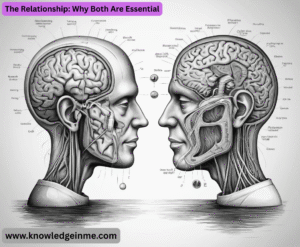
The Relationship: Why Both Are Essential
Think of empathy as the fuel and compassion as the engine.
- Empathy informs Compassion: You can’t have a truly compassionate response without first understanding what the other person is going through. Empathy provides the “why” for the help.
- Compassion makes Empathy sustainable: If we only feel empathy, we risk drowning in the sorrow of the world. Compassion gives that feeling a productive outlet, transforming shared pain into purposeful action.
Example: A Friend Who Lost Their Job
- Empathy: You feel a sinking feeling in your stomach as they tell you. You can imagine their fear, their blow to their self-esteem. You say, “That sounds incredibly tough and scary. I’m so sorry.”
- Compassion: Feeling that empathy, you are moved to act. You say, “Let me look over your resume,” or “Can I bring over dinner this week?” or simply, “I’m here for you every step of the way.”
Cultivating Both
To Cultivate Empathy:
- Practice active listening (without preparing your response).
- Read fiction to step into different characters’ lives.
- Be curious about people who are different from you.
To Cultivate Compassion:
- Practice self-compassion first (you can’t pour from an empty cup).
- When you feel empathy for someone, ask a simple question: “How can I help?” or “What would be supportive right now?”
- Practice loving-kindness meditation.
- Perform small, random acts of kindness.
The Neuroscience: How Our Brains Process Them
Modern neuroscience shows that empathy and compassion activate different, albeit overlapping, neural pathways.
- Empathy primarily lights up the brain’s “mirror neuron system” and regions like the anterior insula and anterior cingulate cortex. These are areas associated with simulating another’s experience and processing emotional pain. When you see someone get hurt, your brain’s pain matrix activates in a similar, albeit weaker, way. This is the biological basis for “feeling with.”
- Compassion, on the other hand, activates regions like the ventral striatum and medial orbitofrontal cortex—areas linked to reward, love, and affiliation. It also engages the septal area, which is involved in soothing and caregiving behaviors. This is why compassionate actions can feel good and rewarding; they trigger the brain’s “tend-and-befriend” system, releasing hormones like oxytocin.
- This explains why empathy can be exhausting (it literally fires up our pain centers) while compassion can be uplifting (it fires up our care and reward centers).
The Shadow Sides and Challenges
The Downsides of Unchecked Empathy:
- Empathic Distress: This is the overwhelming, aversive feeling that can lead to withdrawal. A healthcare professional who only feels their patients’ pain will burn out quickly.
- Bias and Parochialism: Empathy is naturally biased. We feel more empathy for people who look like us, think like us, or are physically close to us. This can lead to tribalism and exclusion of outsiders.
- Manipulation: Because empathy understands another’s emotional state, it can be used to manipulate or exploit, as a skilled salesperson or propagandist might do.
The Challenges of Compassion:
- Compassion Fatigue: This is a state of emotional and physical exhaustion that reduces one’s ability to empathize or feel compassion. It’s common among caregivers and first responders. It often arises when compassion is not supported by healthy boundaries and self-care.
- Pity vs. Compassion: A crucial distinction. Pity involves looking down on someone from a position of superiority (“Poor you”). Compassion is based on a sense of shared humanity and equality (“This is a human struggle we all face”).
- Ineffective Action: The desire to help is good, but without wisdom, it can lead to unhelpful or even harmful interventions (e.g., enabling dependency).
A Third Concept: Sympathy
- To make the picture complete, it’s helpful to add Sympathy to the mix.
- Sympathy is feeling for someone. It’s an acknowledgment of another’s hardship, often with a sense of concern or sorrow, but from a greater emotional distance.
- Empathy: “I feel with you.” (Shared feeling)
- Sympathy: “I feel sorry for you.” (Feeling about their feeling)
- Compassion: “I feel for you and I am moved to relieve your suffering.” (Feeling plus action)

Example of the Difference:
- A sympathy card says, “I’m sorry for your loss.”
- Empathy is sitting with the grieving person and feeling a fraction of their sadness with them.
- Compassion is dropping off a meal for them the following week.
Cultivating a Balanced Practice: From Theory to Action
- The goal is not to choose one over the other, but to develop a healthy flow: Empathy → Compassion → Wise Action.
For Sustainable Empathy:
- Label Your Feelings: When you feel overwhelmed by someone’s emotion, mentally label it: “This is my friend’s anxiety I am feeling.” This creates a small cognitive gap between their feeling and yours.
- Practice “Empathic Concern”: This is the sweet spot—caring about the person without necessarily absorbing their specific emotional state.
- Set Energetic Boundaries: Remind yourself that you are a “mirror,” not a “sponge.” Your role is to reflect understanding, not to absorb their pain.
For Effective Compassion:
- The “Just Like Me” Practice: Before engaging with someone difficult, silently reflect: “This person has feelings, just like me. This person has experienced pain and sorrow, just like me.” This builds the foundation for genuine compassion.
- Ask, Don’t Assume: A key compassionate act is to ask, “What would be most helpful right now?” instead of assuming you know.
- Start with Self-Compassion: Dr. Kristin Neff’s framework is essential here. When you are struggling, talk to yourself with the same kindness you’d offer a friend. This refills your tank and makes you a more resilient source of compassion for others.
In Leadership and Society:
- Empathy is crucial for understanding customer needs, team dynamics, and stakeholder perspectives.
- Compassion is what drives leaders to create supportive policies, provide constructive feedback, and foster a culture where people feel safe and valued.