
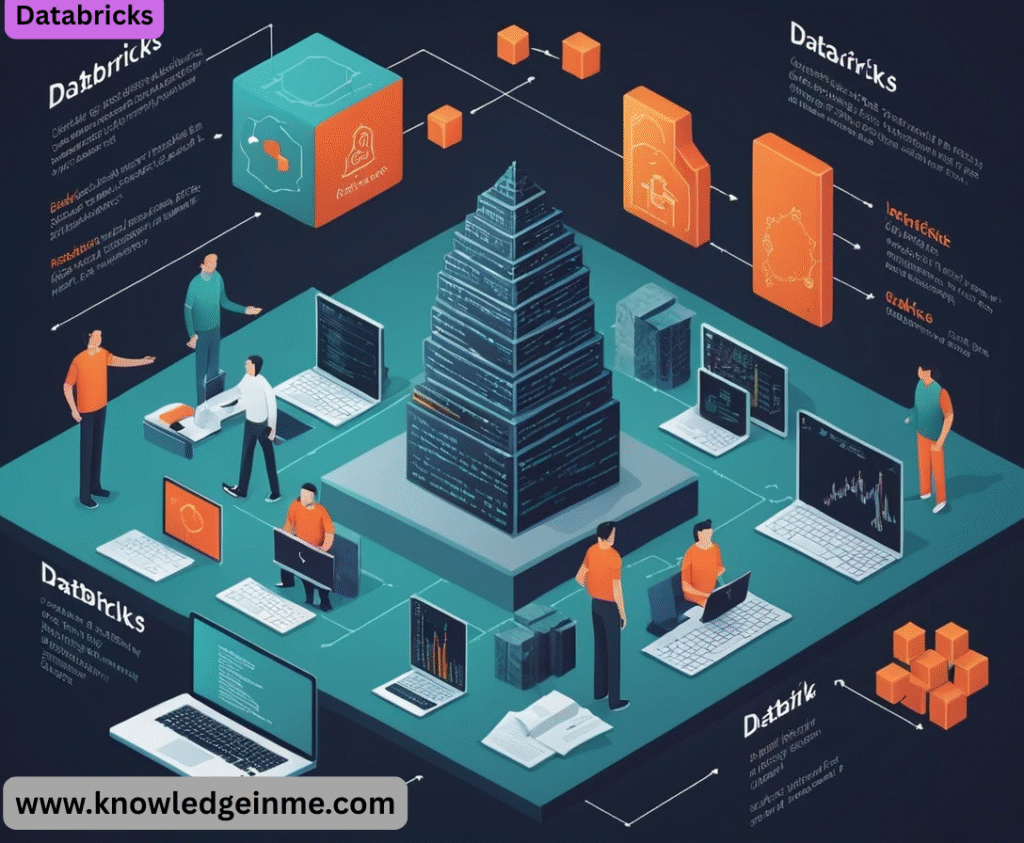

Databricks Of course! Databricks is a major player in the world of data and AI. Here’s a comprehensive overview of what it is, why it’s important, and its core components.
What is Databricks?
- At its core, Databricks is a unified, cloud-based data analytics platform designed to simplify and accelerate the process of building and managing data pipelines, machine learning models, and analytics applications.
- It was founded by the original creators of Apache Spark, and this heritage is central to its identity. Think of it as a “super-powered” workspace on top of Spark that adds collaboration, management, and integrated tooling.
- The Core Problem Databricks Solves: The “Data Silo” Problem
Traditionally, companies had separate teams and tools for different tasks: - Data Engineers used one tool (like ETL scripts) to prepare data.
- Data Scientists used another tool (like Jupyter notebooks) to build models on sampled data.
- Business Analysts used yet another tool (like Tableau) to create dashboards.
- This led to inefficiencies, inconsistencies, and data governance nightmares. Databricks unifies these workloads on a single platform.
Main Components of the Databricks Platform
- Databricks Workspace: The collaborative web-based UI where all the magic happens. It’s your project workspace for notebooks, dashboards, and experiments.
- Delta Lake: The foundational open-source storage layer that brings reliability (ACID transactions), performance (Z-Ordering, file skipping), and unified streaming/batch processing to your data lake.
- Unity Catalog: A unified governance solution for data and AI on the Lakehouse. It provides:
- Centralized Governance: A single place to manage access policies for data, ML models, and files across all workspaces.
- Data Discovery: A catalog of all your data assets.
- Lineage: Track the lineage of data and ML models.
Compute:
- All-Purpose Compute Clusters: For interactive development in notebooks.
- Job Compute Clusters: For running automated production tasks.
- SQL Warehouses: High-performance, serverless SQL endpoints for running BI queries at scale.
Workload-Specific Tools:
- Databricks SQL: A suite of tools for data analysts to run fast SQL queries on the Lakehouse and build dashboards.
- Databricks Data Science & Engineering: The core platform for data engineers and scientists to build ETL pipelines and ML models using notebooks and workflows.
- Databricks Machine Learning: An integrated end-to-end ML environment including feature store, experiment tracking (MLflow), model serving, and more.
Key Features and Capabilities
- Collaborative Notebooks: Multi-language notebooks (Python, R, Scala, SQL) that teams can work on together.
- Delta Live Tables: A declarative framework for building reliable, maintainable, and testable data pipelines.
- MLflow: An open-source platform for the complete machine learning lifecycle (tracking experiments, packaging code, deploying models). Tightly integrated with Databricks.
- Photon Engine: A native, vectorized query engine written in C++ that is 100% compatible with Apache Spark APIs but dramatically faster, especially for SQL workloads.
- Serverless Compute: Automatically manages and optimizes cloud infrastructure, so users can focus on code, not cluster configuration.
Advanced Components & Technologies
Delta Lake Deep Dive
- Delta Lake is the backbone of the Databricks Lakehouse. Key advanced features:

ACID Transactions:
- Guarantees data consistency even with concurrent reads/writes
- Uses a transaction log that tracks all changes
Prevents corrupted or partial writes
Optimizations:
- Z-Ordering: Co-locates related data in same files
- Data Skipping: Automatically skips irrelevant files
- Liquid Clustering: Automatic data organization (next-gen of Z-Ordering)
Model Registry:
Version control for models
- Stage transitions (Staging → Production)
- Webhooks for CI/CD integration
Feature Store:
- Central repository for ML features
- Point-in-time correct feature lookup
- Automatic feature serving
- Advanced Architecture Patterns
Medallion Architecture
- Databricks recommends this layered approach:
- Bronze (Raw Layer):
- Raw ingested data
- Append-only immutable data
- Schema enforcement but not validation
Silver (Validated Layer):
- Cleaned, filtered, enriched data
- Deduplicated and conformed
Ready for analytics
- Gold (Business Layer): Aggregate business metrics Feature-ready data for ML
Optimized for consumption
- Data Mesh on Databricks Implementing data mesh principles:
- Domain-Oriented Ownership: Each business unit manages their data products
- Self-Serve Platform: Databricks as the underlying platform
- Federated Governance: Unity Catalog for centralized governance
- Product Thinking: Data as a product
- Ecosystem Integration
Cloud-Native Services
AWS:
- S3 for storage IAM for authentication CloudWatch for monitoring
- Azure:
- ADLS Gen2 for storage Azure Active Directory Azure Monitor
GCP:
- Google Cloud Storage IAM integration Cloud Monitoring
Third-Party Tools
- BI & Visualization: Tableau, Power BI, Looker Native integration through SQL Warehouse
- Data Integration: Fivetran, dbt, Airflow Kafka, Debezium for CDC Future Directions
AI & Generative Data Intelligence
- Databricks AI: Foundation model serving
- LakehouseIQ: Semantic layer understanding
- Mosaic AI: End-to-end generative AI platform
Industry-Specific Solutions
- Healthcare: HIPAA-compliant analytics
- Financial Services: Fraud detection patterns
- Retail: Customer 360 analytics
Enhanced Unity Catalog
- Cross-cloud unity Enhanced data sharing protocols Advanced privacy-preserving analytics
Key Differentiators Summary
- Unified Platform: Single platform for ETL, streaming, ML, and BI
- Open Standards: Built on open source (Spark, Delta, MLflow)
- Lakehouse Architecture: Best of data lakes + data warehouses
- AI-Native: Designed for the modern AI/ML workload
- Enterprise-Grade: Security, governance, and compliance built-in
- Cloud-Native: Optimized for all major clouds
- Collaborative: Multi-persona support for entire data team