
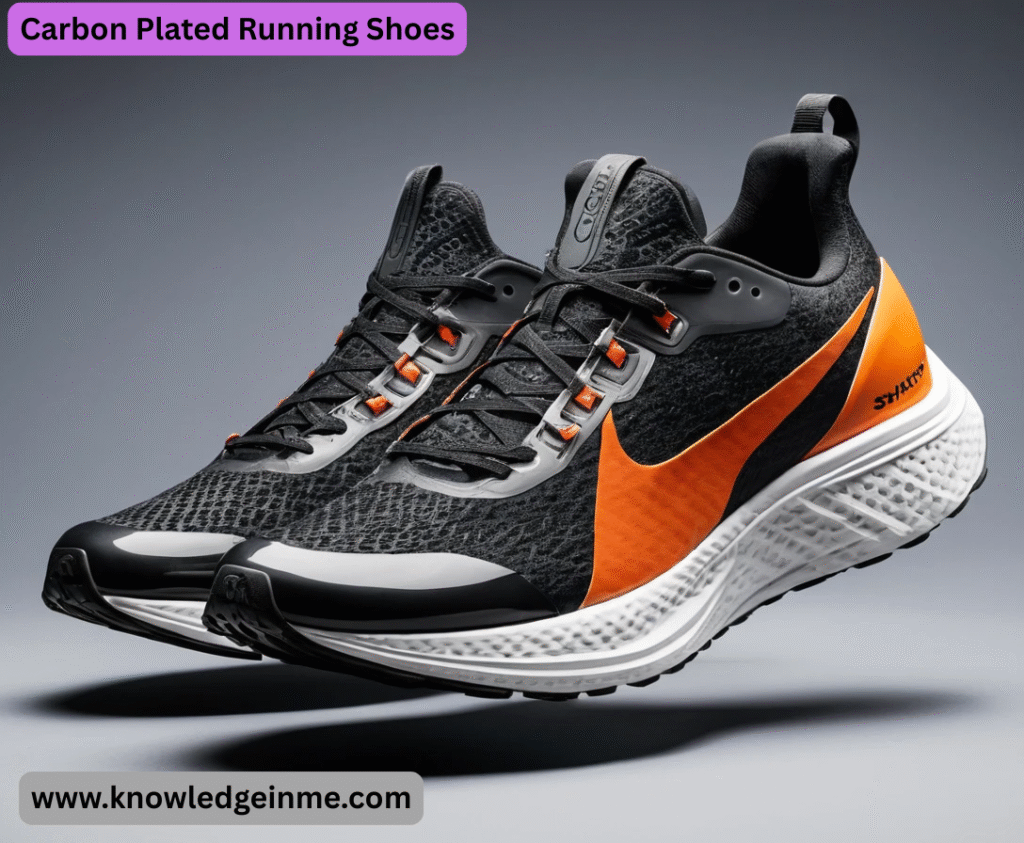

Carbon Plated Running Shoes Of course! Let’s break down everything you need to know about carbon-plated running shoes.
The Elevator Pitch
- Carbon-plated running shoes are high-performance footwear that feature a rigid, carbon-fiber plate embedded in the midsole. They are scientifically proven to improve running economy, meaning you can run faster with the same effort, or maintain your pace with less energy expenditure.
- They exploded in popularity after Eliud Kipchoge’s 2017 “Breaking2” attempt and became a mainstream phenomenon following his sub-2-hour marathon in 2019.
How Do They Work? The Science Simplified
- The magic isn’t just the plate itself, but the combination of the plate and a super high-rebound, lightweight foam (like Nike’s ZoomX, PUMA’s Nitro Elite, or Adidas’s Lightstrike Pro).
- The primary mechanism is “longitudinal bending stiffness.” Here’s what that means for you:
- Energy Return: The super foam compresses and stores energy when your foot lands, then releases it like a spring as you push off.
- The “Lever” Effect: The rigid carbon plate acts as a lever. It doesn’t let your foot and ankle muscles work as hard to stabilize and push off. This reduces the energy cost of running.
- Improved Toe-Off: The plate helps “roll” you forward from mid-stance to toe-off more quickly and efficiently. This is often described as a “rocking” or “propulsive” sensation.
- Stability at Speed: The combination provides a stable platform for pushing off powerfully, even when you’re fatigued.
- Myth Buster: The “tearing a hole in the ground” or “springboard” analogy is an oversimplification. The main benefit is reducing the work your calf and ankle muscles have to do.
Pros and Cons: Is It for You?
Pros:
Increased Speed & Efficiency: The #1 reason people wear them. You will be faster for the same perceived effort.
Reduced Fatigue: Your legs feel fresher for longer, especially in the later stages of a race or long run.
Psychological Boost: The “fast” feeling and sound of the crunching foam can provide a real mental edge.
Cons:
- High Cost: These are the most expensive running shoes, typically ranging from $200 to $300.
- Reduced Durability: The high-performance foams are often less durable than standard EVA foam. Expect 150-250 miles of peak performance, compared to 300-500 for a daily trainer.
- Not for Everyday Use: They are designed for speed. Using them for all your runs can lead to muscle weakness (as they do some of the work for you) and is an expensive habit.
- Stability Concerns: The high stack height and focus on propulsion can make them less stable, which can be an issue for runners with certain gait patterns or a history of ankle issues.
Who Are They For?
- Racers: Ideal for race day—from the 5k to the marathon.
- Competitive Runners: Anyone looking to set a new Personal Best (PB).
- Fast Training Sessions: For use in key workouts like tempo runs or long intervals to practice race pace.
- Experienced Runners: Runners with a strong base and efficient form tend to benefit the most.
Who Might Want to Think Twice?
- Beginners: If you’re building your base, focus on form and durability with a good daily trainer.
- Injury-Prone Runners: The aggressive geometry and stiffness can exacerbate some issues.
- Runners on a Tight Budget: The performance gains are real, but not essential for enjoying the sport.
- Those Seeking a “Daily Driver“: These are specialty tools, not all-purpose shoes.
Key Considerations Before You Buy
- Fit: These shoes often have a performance-oriented, narrow fit. Always try them on if possible, and consider going up a half size as your feet swell during long runs.
- Practice: Never race in a carbon-plated shoe you haven’t trained in first. Do at least one or two key workouts in them to get used to the unique feel.
- Feel: The sensation is not for everyone. Some love the propulsive “pop,” while others find it too stiff or awkward.
- It’s Still About the Engine: The shoe provides a 2-4% efficiency boost on average. It won’t turn a 5-hour marathoner into a 3-hour marathoner. Your training, nutrition, and mindset are still 99% of the battle.
The Evolution: From Super Shoes to Super Trainers
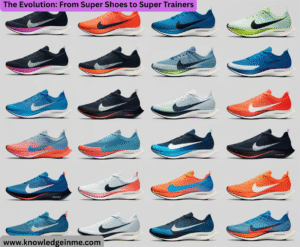
- The initial wave (Nike’s Vaporfly) created a new category: “Super Shoes.” The current wave has expanded that category into two distinct segments:
- Super Shoes (Racing): The pinnacle of performance, using the lightest, most energetic foams (PEBA-based) and the most aggressive carbon plates or rods. They are built for race day.
- Examples: Nike Alphafly 2, Adidas Adios Pro 3, Saucony Endorphin Elite.
- Super Trainers: These use many of the same technologies but are designed for daily high-mileage training. They might use a slightly less expensive (but still high-rebound) foam, a composite (nylon) plate, or a less aggressive geometry to be more versatile and durable.
- Examples: Saucony Endorphin Speed (nylon plate), New Balance FuelCell SuperComp Trainer, HOKA Mach X (composite plate).
- This blurring of lines means you can now get a “plate-like” experience for more of your runs without the high cost and low durability of a full super shoe.
The Technology Deep Dive: Plates vs. Rods & Foam Matters
The Plate Isn’t Just a Flat Sheet Anymore:
- Full-Length Carbon Plates: The standard. A rigid plate that runs the length of the shoe for maximum propulsion.
- Spoon-Shaped/Curved Plates: Many plates are curved upward (rockered) to enhance the rolling motion.
- Carbon Fiber Rods (e.g., Adidas EnergyRods): Instead of a solid plate, several individual rods allow for more flexibility and independent movement, which some find more natural.
- Forks & Split Plates: Some plates are split at the forefoot (like a fork) to reduce stiffness and allow for more natural toe splay.
- Composite/Nylon Plates: Offer some of the propulsive benefits of carbon with more flexibility and a lower cost. A great entry point.
The Foam is the Real Star:
- While the plate gets the headlines, the super foam is responsible for the majority of the energy return. The key material is PEBA (Polyether Block Amide), often used in its expanded form (ePEBA).
- PEBA-based Foams: (ZoomX, Lightstrike Pro, FuelCell, PWRRUN HG) are the gold standard. They are incredibly lightweight, bouncy, and resilient.
- The Trade-off: These foams are less durable and more expensive than traditional EVA foam. They can also be less stable due to their softness.
Beyond the Big Brands: Other Notable Players
The technology has trickled down to nearly every major brand. - ASICS: The Metaspeed series (Sky+ and Edge+) is designed for different types of stride patterns (cadence runners vs. stride runners) and is a top-tier contender.
- Puma: The Deviate Nitro Elite 2 uses a carbon plate and excellent Nitro Elite foam, often praised for its grip and snappy ride.
- ON: The Cloudboom Echo 3 uses a “Speedboard” (traditionally a composite) now made of Helion™ super foam infused with carbon, for a
unique, firmer feel.
- Brooks: The Hyperion Elite is their flagship racer, focused on a lightweight, balanced ride.
Advanced Considerations & The Future
- The “Bounce” vs. “Pop” Feel: Different shoes have different sensations. Nike Alphafly is known for a massive, bouncy feel. The Saucony Endorphin Pro feels more like a rapid “pop.” The Adidas Adios Pro feels like a smooth, efficient rocker. Personal preference is huge.
- Racing Flats are Dead: The traditional, minimal, low-to-the-ground racing flat has been almost entirely replaced by the high-stack, cushioned super shoe. Even for 5k and 10k distances, the efficiency gains are now considered worth the slight weight penalty.
- The Durability Question: Don’t judge the shoe’s life by the outsole alone. The midsole foam packages out (loses its bounce) before the physical shoe wears out. After 200 miles, it might still feel good, but it likely has lost its magical pop.
- The Environmental Conversation: The complex combination of glues, foams, and carbon plates makes these shoes very difficult to recycle. This is a growing concern within the running community.