
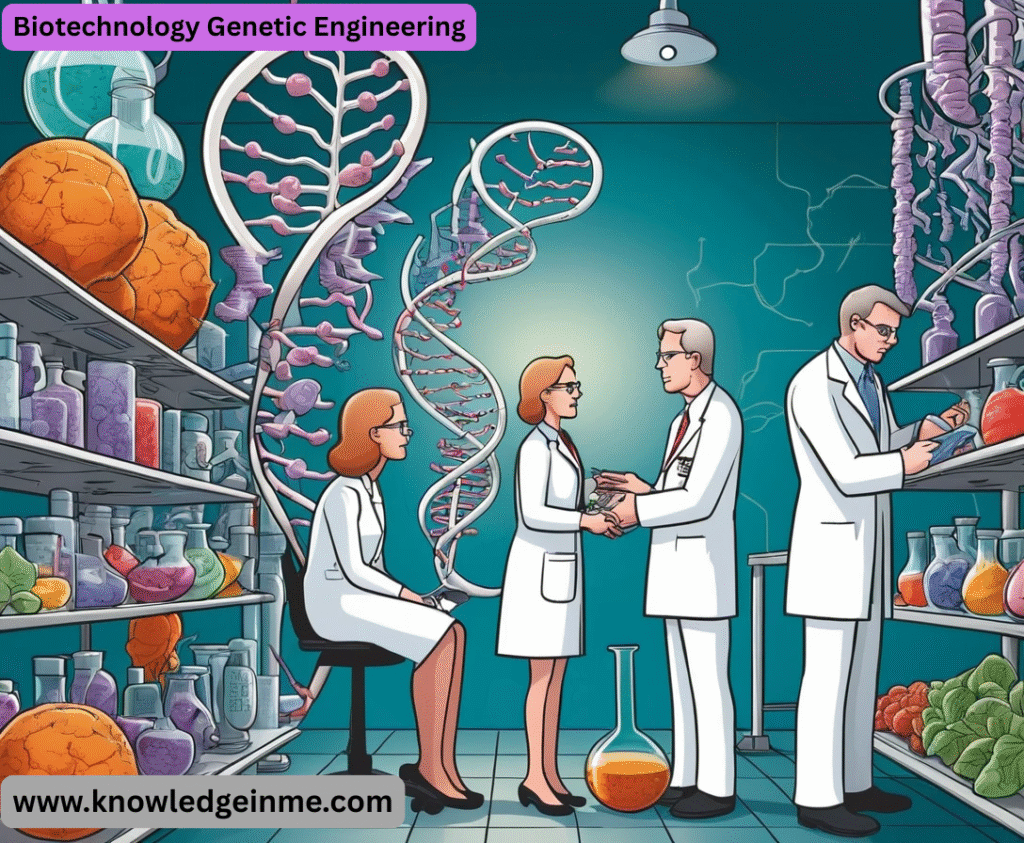

Biotechnology Genetic Engineering Of course. Let’s break down the relationship between Biotechnology and Genetic Engineering, and then dive into the key concepts, applications, and ethical considerations.
The Core Relationship: Biotechnology and Genetic Engineering
Think of them as a general field and a specific, powerful tool within it.
- Biotechnology is the broader field. It’s any technological application that uses biological systems, living organisms, or their derivatives to make or modify products or processes for specific use.
- Examples: Using yeast to make bread or beer (ancient biotechnology), using bacteria to produce insulin (modern biotechnology), brewing antibiotics from fungi.
- Genetic Engineering is a specific technique within biotechnology. It involves the direct manipulation of an organism’s genes using laboratory technologies. It’s essentially the “toolkit” for altering the blueprints of life.
- Examples: Inserting a human insulin gene into a bacterium, creating genetically modified (GM) crops resistant to pests, using CRISPR to correct a genetic mutation.
- In short: All genetic engineering is biotechnology, but not all biotechnology is genetic engineering.
What is Genetic Engineering?
- Genetic Engineering (also called genetic modification) is the process of altering the genetic makeup of an organism by adding, deleting, or changing specific pieces of DNA.
The Key Tools and Techniques:
- CRISPR-Cas9: The most revolutionary tool. Scientists use a guide RNA (the “find” function) to lead the Cas9 enzyme (the “scissors”) to a precise location in the genome to cut the DNA. The cell’s natural repair mechanisms are then harnessed to disable a gene or insert a new one.
- Restriction Enzymes & DNA Ligase: The “scissors and glue” of traditional genetic engineering. Restriction enzymes cut DNA at specific sequences, and DNA ligase joins DNA fragments together.
- PCR (Polymerase Chain Reaction): A method to make millions of copies of a specific DNA segment, essential for analyzing and working with genes.
- Gene Guns & Vectors: Methods for delivering new DNA into a cell. Vectors are often viruses that have been modified to be safe and carry the desired gene instead of their viral DNA.
Major Applications of Genetic Engineering
The applications span medicine, agriculture, and industry.
In Medicine (Red Biotechnology)
- Recombinant Protein Production: The first major success. Engineering bacteria or yeast to produce human proteins like insulin for diabetics, human growth hormone, and clotting factors for hemophilia.
- Gene Therapy: Treating genetic disorders by introducing a correct copy of a faulty gene into a patient’s cells. Early successes are now being seen with diseases like Spinal Muscular Atrophy and certain inherited forms of blindness.
- Pharmaceutical Development: Creating genetically engineered cell lines and animal models (like “oncomice” with human cancer genes) to better understand diseases and test new drugs.
- mRNA Vaccines: The technology behind COVID-19 vaccines. While not altering human DNA, it uses engineered genetic material (mRNA) to instruct our cells to make a harmless piece of virus, triggering an immune response.
- CAR-T Cell Therapy: Engineering a patient’s own immune cells (T-cells) to better recognize and attack cancer cells.
In Agriculture (Green Biotechnology)
Genetically Modified (GM) Crops:
- Herbicide Tolerance: Allows farmers to spray herbicides to kill weeds without harming the crop (e.g., Roundup Ready soybeans).
- Insect Resistance: Crops like Bt corn produce a bacterial protein that is toxic to specific insect pests, reducing the need for chemical pesticides.
- Improved Traits: Engineering for drought tolerance, disease resistance, improved nutritional content (e.g., Golden Rice with enhanced Vitamin A).
- Genetically Modified Livestock: Engineering animals for faster growth, disease resistance, or to produce pharmaceuticals in their milk (“pharming”).
In Industry (White Biotechnology)
- Biofuels: Engineering microbes (bacteria, yeast, algae) to more efficiently produce biofuels like ethanol and biodiesel from plant matter.
- Enzymes and Bioplastics: Creating engineered enzymes for detergents, food processing, and bio-degradable plastics.
- Environmental Cleanup: Developing microorganisms that can digest pollutants like oil spills or toxic chemicals in a process called bioremediation.
Ethical, Social, and Safety Considerations (The GMO Debate)
This is a critical part of the conversation. Concerns include:
Safety of GMOs:
- Human Health: Are GM foods safe to eat? (Overwhelming scientific consensus says yes, but public skepticism remains).
- Environmental Impact: Could GM crops cross-pollinate with wild relatives? Could they harm non-target insects?
- Ethics of “Playing God”: Concerns about the moral implications of altering the fundamental building blocks of life.
- Gene Drives and Ecological Consequences: Using CRISPR to spread a genetic modification rapidly through an entire wild population (e.g., to eradicate malaria-carrying mosquitoes) has unpredictable ecosystem risks.
- Human Germline Editing: Editing the DNA of sperm, eggs, or embryos. This creates heritable changes that would be passed to all future generations. It is currently widely banned due to profound ethical and safety concerns.
- Equity and Access: Will these technologies widen the gap between rich and poor? Who has access to expensive gene therapies?
The Future
The field is moving at a breathtaking pace, primarily driven by CRISPR. Future directions include:
- Precision Medicine: Tailoring medical treatments to an individual’s genetic profile.
- Xeno transplantation: Engineering pig organs to be compatible for transplantation into humans.
- De-extinction: Attempts to use genetic engineering to bring back extinct species.
- Synthetic Biology: Going beyond editing existing life to designing and constructing entirely new biological parts and systems.
Leveling Up: Advanced Concepts in Genetic Engineering
Beyond the basic “cut and paste” of DNA, the field has evolved to include more sophisticated goals:
- Synthetic Biology: This is the next evolutionary step from genetic engineering. Instead of just editing one or two genes, synthetic biology aims to design and construct new biological parts, devices, and systems that do not exist in the natural world, or to re-design existing biological systems for useful purposes.
- Analogy: If genetic engineering is like editing a sentence in a book, synthetic biology is writing a whole new chapter or creating an entirely new book from scratch.
- Example: Engineering yeast to produce the antimalarial drug artemisinin by inserting a complex pathway of genes from plants, bacteria, and the yeast itself.
- Gene Drives: A powerful and controversial application of CRISPR. Normally, a gene has a 50-50 chance of being inherited. A gene drive is a genetic engineering technology that biases inheritance so that a particular gene is much more likely to be passed on to the next generation (approaching 100%).
- Application: Potentially eradicating vector-borne diseases by driving a “sterility” gene through a population of mosquitoes, causing it to crash. The ecological consequences are a major area of debate and research.
- Multiplexed Genome Editing: Using tools like CRISPR to edit multiple genes at once.
- Epigenetic Engineering: Instead of changing the DNA sequence itself, this involves editing the “epigenome”—the chemical tags on DNA and its associated proteins that turn genes on and off. This allows scientists to manipulate gene expression without altering the underlying genetic code.
The GMO Debate: A Deeper Dive
- The public debate around GMOs is often polarized. Let’s look at the arguments with more nuance.
Arguments Often Raised Against GMOs:
- Corporate Control: The dominance of a few large agrochemical companies over the seed supply, patenting life, and creating dependency for farmers.
- Labeling and Consumer Right to Know: The argument that regardless of safety, consumers have a right to know what is in their food and how it was produced.
- Biodiversity Loss: The concern that widespread use of a few patented, uniform GM cultivars could reduce genetic diversity in our food supply.
- Unexpected Allergenicity: The (theoretical) risk that introducing a gene from one species (e.g., a Brazil nut) into another (e.g., a soybean) could unknowingly transfer an allergen. (This is rigorously tested for, and known allergens are avoided).
- The “Precautionary Principle”: The idea that we should not adopt new technologies until they are proven to have zero risk, especially regarding long-term and environmental impacts.
Scientific Consensus and Counterpoints:
- Safety: Major international scientific bodies (like the U.S. Hundreds of long-term and multi-generational animal feeding studies have found no credible evidence of harm.
- Environmental Benefits: Specific GM traits have led to documented reductions in insecticide use, increased adoption of no-till farming (which improves soil health and carbon sequestration), and higher yields that can reduce pressure to convert wild lands to agriculture.
- The “Natural” Fallacy: Proponents argue that “natural” is not synonymous with “safe” (many of the most potent toxins are natural), and that all crop breeding, from ancient artificial selection to modern mutagenesis, alters genomes. Genetic engineering is simply more precise.
The Regulatory Landscape
- United States: A coordinated framework involving three agencies:
- FDA (Food and Drug Administration): Ensures food and feed safety for humans and animals.
- USDA (U.S. Department of Agriculture): Ensures GM plants are safe to grow and don’t pose a risk to other plants.
- EPA (Environmental Protection Agency): Regulates pesticides, including plants engineered to produce their own pesticides (like Bt corn).
- European Union: Takes a more precautionary approach. Approval processes are lengthy, and there are strict labeling laws.
- Rest of the World: A mixed picture. Countries like China and Brazil are major investors and producers of GM crops, while others in Africa and Asia are cautiously adopting them.
The Frontier: Emerging Applications
- Human Germline Editing: The 2018 case of Chinese scientist He Jiankui creating the first gene-edited babies (to confer HIV resistance) sent shockwaves through the global scientific community.
- Microbiome Engineering: Editing the bacteria in our gut (the microbiome) to treat diseases like inflammatory bowel disease, obesity, or even mental health disorders.
- Materials Science: Engineering bacteria or yeast to produce spider silk (a material stronger than steel by weight) for use in textiles and medical sutures, or to create self-healing concrete using bacteria.
- DNA as a Data Storage Medium: Encoding digital information (like text, images, and video) into synthetic DNA strands.