
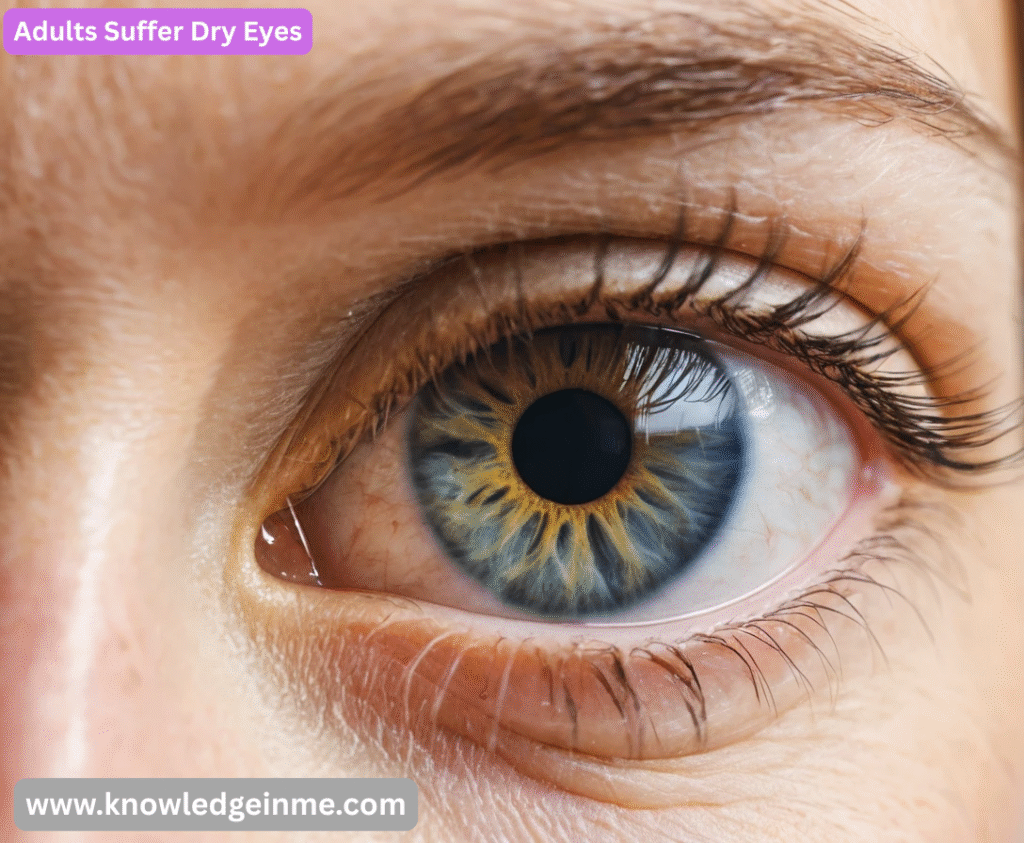

Adults Suffer Dry Eyes Of course.Here’s a comprehensive look at why adults suffer from dry eyes, the symptoms, and what can be done about it.
The Core Problem: Unhealthy Tears
- Dry eye disease (DED) isn’t just about a lack of tears; it’s about a problem with the quality or quantity of the tear film that coats and protects our eyes.
A healthy tear film has three essential layers:
- Oily (Lipid) Layer: The outermost layer, produced by meibomian glands in the eyelids. It smooths the tear surface and prevents tears from evaporating too quickly.
- Watery (Aqueous) Layer: The middle layer, produced by lacrimal glands. It cleanses the eye and washes away particles.
- Mucin (Mucous) Layer: The inner layer, produced by goblet cells. It helps the tear film stick to the surface of the eye.
- When any of these layers are compromised, dry eye symptoms occur.
Why Adults are Particularly Prone: Common Causes & Risk Factors
- Adults face a perfect storm of factors that contribute to dry eyes:
Age
- This is the single biggest risk factor. As we age, tear production naturally decreases. The meibomian glands also tend to become less effective, leading to faster tear evaporation.
Prolonged Screen Time (Computer Vision Syndrome)
- When we stare at screens (computers, phones, tablets), our blink rate decreases significantly—from a normal 15-20 times per minute to only 5-7 times. Incomplete blinking also becomes more common, preventing the tear film from spreading evenly.
Environmental Factors
- Dry Air: Air conditioning in offices and homes, and heating in the winter.
- Wind and Smoke: Being outdoors on a windy day or exposed to smoke.
- Low Humidity: Common in arid climates and during winter months.
Contact Lens Wear
- Contact lenses rest on the tear film and can absorb moisture, leading to irritation and dryness. They can also disrupt the normal oxygen flow to the cornea.
Medications
Many common medications have dry eye as a side effect. These include:
- Antihistamines (for allergies)
- Decongestants
- Blood pressure medications
- Antidepressants
- Hormone Replacement Therapy (HRT) and some birth control pills
Hormonal Changes
- This is a major factor, especially for women. Fluctuations in estrogen and androgen levels during menopause, pregnancy, and while using oral contraceptives can disrupt tear production.
Medical Conditions
Several systemic diseases are linked to dry eyes, such as:
- Autoimmune Diseases: Sjögren’s syndrome, rheumatoid arthritis, lupus, and thyroid disorders.
Diabetes
- Blepharitis: Inflammation of the eyelids that clogs the oil-producing glands.
Lifestyle Factors
Dehydration: Not drinking enough water.
- Diet: A diet low in Omega-3 fatty acids (found in fish, flaxseed, and walnuts), which have anti-inflammatory properties.
Common Symptoms to Watch For
Dry eyes are more than just a feeling of dryness. Symptoms can include:
- A stinging, burning, or scratchy sensation
- Stringy mucus in or around the eyes
- Redness and irritation
- Watery eyes (as the eye overproduces the watery layer in response to irritation)
- Blurred vision or eye fatigue
- Sensitivity to light
- Difficulty wearing contact lenses
- Difficulty with nighttime driving
- What Can Be Done? Management and Treatment
- The good news is that dry eye is manageable
Lifestyle and Environmental Changes (First Line of Defense)
- Blink Consciously: Make a habit of full, complete blinks.
- Use a Humidifier: Add moisture to the air in your home or office.
- Stay Hydrated: Drink plenty of water throughout the day.
- Wear Wraparound Sunglasses: Protect your eyes from wind and dry air outdoors.
- Improve Your Diet: Increase intake of Omega-3 fatty acids.
Over-the-Counter (OTC) Solutions
- Artificial Tears: These are lubricating eye drops. For moderate to severe cases, look for preservative-free versions in single-use vials.
- Lubricating Ointments/Gels: Thicker than drops, these are excellent for use at bedtime as they can cause temporary blurry vision.
Medical Treatments
If OTC solutions aren’t enough, an eye doctor (optometrist or ophthalmologist) can offer:
- Adults Suffer Dry Eyes Prescription Eye Drops: Medications like Cyclosporine (Restasis) or Lifitegrast (Xiidra) work to reduce inflammation and help your body produce more of its own natural tears.
- Punctal Plugs: Tiny, sterile inserts placed in the tear ducts to block drainage. This keeps your natural tears on the surface of your eye longer.
- In-Office Procedures: Treatments like Lipiflow or Intense Pulsed Light (IPL) therapy can unclog and stimulate the meibomian glands to improve the oily layer of the tear film.
When to See a Doctor
- Symptoms are persistent, worsening, or causing significant discomfort.
- Over-the-counter drops aren’t providing relief.
- You have redness or pain that is severe.
- Your vision is affected.
- They can perform specific tests to diagnose the type and cause of your dry eye and recommend a targeted treatment plan.
The Two Primary Types of Dry Eye: It’s Not One-Size-Fits-All
Understanding which type you have is key to effective treatment. Most people have a combination of both, but one is usually dominant.
Aqueous-Deficient Dry Eye (You don’t make enough tears)
- What it is: The lacrimal glands fail to produce enough of the watery (aqueous) component of your tears.
- Common Cause: Often linked to autoimmune diseases (like Sjögren’s syndrome), aging, or damage to the lacrimal glands from inflammation or radiation.
Evaporative Dry Eye (Your tears evaporate too quickly)
- What it is: This is the most common form of dry eye (~85% of cases). It’s caused by Meibomian Gland Dysfunction (MGD). These glands in your eyelids produce the oily (lipid) layer that seals the tear film. If they are clogged or produce poor-quality oil, tears evaporate rapidly.
- Common Cause: Blepharitis (eyelid inflammation), hormonal changes, and screen use (which reduces blinking, essential for expressing the glands).
Beyond the Basics: Deeper Causes and Contributors
- The Lid Factor: Blepharitis: This chronic inflammation of the eyelids is a massive contributor. It creates a hostile environment for your tear film, with bacteria releasing toxins and causing scaling and clogging of the meibomian glands. Daily lid hygiene is crucial.
- The Neurological Component: The surface of your eye is covered with sensitive nerves that signal the brain to produce tears. Damage to these nerves (from long-term contact lens wear, eye surgery like LASIK, or diabetes) can disrupt this feedback loop, leading to reduced tear production.
- The Systemic Inflammation Link: Dry eye is now recognized as a chronic inflammatory condition. Underlying systemic inflammation from conditions like rosacea, autoimmune disorders, or even a poor diet high in processed foods can fuel the inflammatory cycle in your eyes.

The Daily Management Toolkit: A Proactive Approach
The Warm Compress Revolution:
- Adults Suffer Dry Eyes Why: Heat melts the solidified oils stuck in your meibomian glands.
- How-To: Use a dedicated warm compress (that holds heat well) for 10-12 minutes. The temperature should be comfortably warm, not hot. The key is duration; 5 minutes is often not enough to fully melt the oils.
- Follow-up: After the compress, gently massage your eyelids. With your eyes closed, use your finger to roll upward on the lower lid and downward on the upper lid to help express the now-liquid oils.
Eyelid Hygiene is Non-Negotiable:
- Use pre-moistened lid wipes or a gentle, diluted baby shampoo with a clean washcloth to scrub the base of your eyelashes daily. This removes debris and bacteria that cause blepharitis.
Nutritional Supplementation:
- Omega-3s: The evidence is strong. Look for high-EPA/DHA supplements from fish oil or algae oil. They work by reducing systemic inflammation and improving the quality of the meibomian gland oil.
- Vitamin A: Crucial for eye surface health. Found in foods like sweet potatoes, carrots, and leafy greens. (Note: High-dose supplements can be toxic; consult a doctor).
- Vitamin D: Emerging research suggests a link between low Vitamin D levels and dry eye severity.
Environmental Mastery:
- Position your screen: Place your computer screen slightly below eye level. This encourages a more closed eyelid position, reducing the surface area for tear evaporation.
- Car air vents: Never point them directly at your face.
- Ceiling fans: Avoid sleeping with them on directly over you.
The Mind-Body Connection: Dry Eye and Mental Health
This is a critical and often overlooked aspect.
- The Strain: Constant discomfort, fluctuating vision, and light sensitivity can make reading, driving, and working on a computer exhausting and stressful.
- The Impact: Studies have shown a clear correlation between dry eye disease and higher rates of anxiety and depression. The chronic, unrelenting nature of the condition is a significant stressor.
- The Vicious Cycle: Stress and anxiety can exacerbate inflammation in the body, potentially making dry eye worse.
Conclusion:
- Managing dry eye in adults requires a shift from seeing it as a simple annoyance to understanding it as a chronic, multifactorial disease. Effective management is often a long-term journey that combines:
Accurate Diagnosis (What type of DED do I have?)
- Consistent Daily Habits (warm compresses, lid hygiene, diet)
- Environmental Modifications
- Appropriate Medical Interventions (from OTC drops to in-office procedures)