
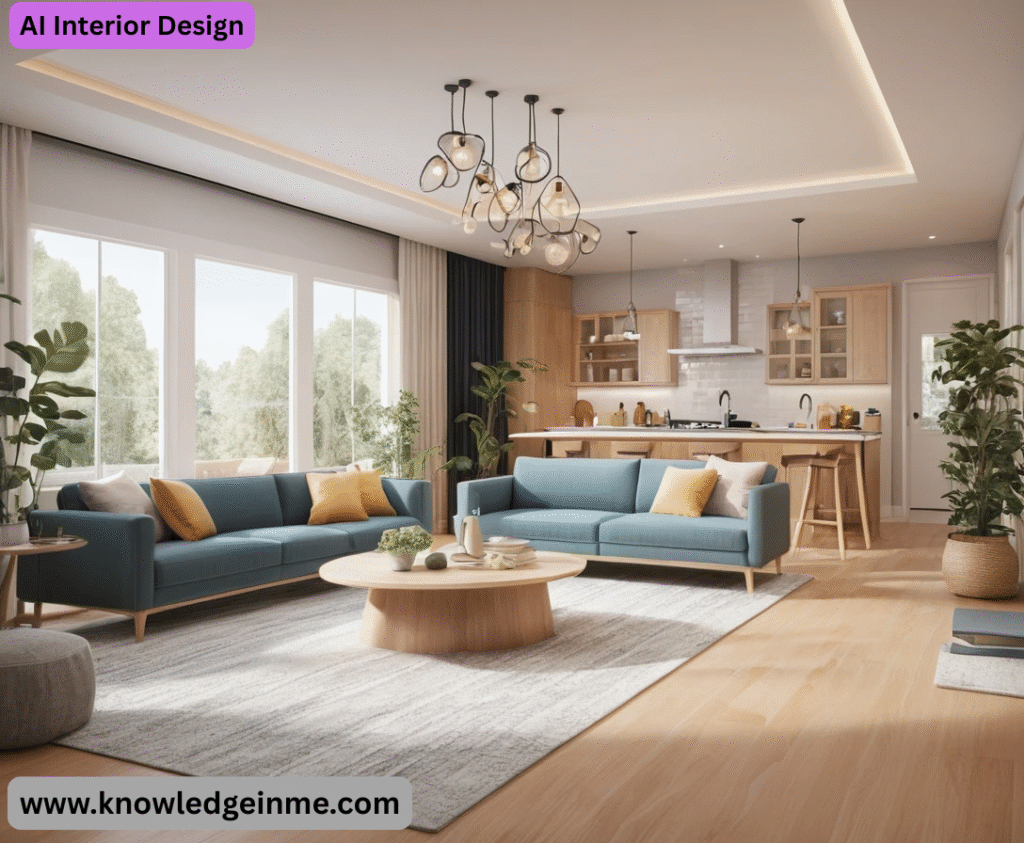

AI Interior Design Of course! “AI Interior Design” is a rapidly growing field that uses artificial intelligence to help people design, visualize, and plan their living spaces.
Here’s a comprehensive breakdown of what it is, how it works, the key players, and its future.
What is AI Interior Design?
- AI Interior Design refers to the use of algorithms and machine learning to automate and enhance various aspects of interior design. It can range from simple tools that suggest color palettes to complex systems that generate photorealistic images of a fully furnished room from a text description or a basic sketch.
How Does It Work? Core Technologies
- Generative AI & Image Synthesis: This is the most visible technology. Models like Stable Diffusion and DALL-E are trained on massive datasets of images and text. When you give them a prompt like “a minimalist living room with a green velvet sofa and oak flooring,” they generate a new image that matches that description.
- Augmented Reality (AR) & Virtual Staging: Apps use your phone’s camera to overlay virtual furniture and decor into your actual space. This lets you see how a piece would look in terms of size, style, and color before you buy it. Virtual staging uses the same principle to furnish empty rooms for real estate listings.
- Style Analysis & Recommendation Engines: AI analyzes thousands of product images to understand styles (e.g., Mid-Century Modern, Industrial, Scandinavian). It can then recommend products that match a user’s stated preference or the existing style of a room.
- 3D Modeling & Space Planning: Some tools can convert a 2D floor plan into a 3D model and then use AI to suggest optimal furniture layouts based on principles of ergonomics and traffic flow.
Benefits of Using AI for Interior Design
- Accessibility & Affordability: Most tools are low-cost or free, making design help accessible to everyone, not just those who can hire a professional designer.
- Speed and Efficiency: Generate dozens of design concepts in minutes, something that would take a human designer days.
- Visualization and “Try Before You Buy”: Drastically reduces the risk of making expensive mistakes. You can see how a paint color or a large piece of furniture will look in your actual space.
- Inspiration and Overcoming Creative Block: If you’re stuck, AI can provide endless, unexpected ideas and combinations you might not have considered.
- Personalization: The best AI tools learn from your feedback and preferences to refine its suggestions, creating a design that is uniquely tailored to you.
Current Limitations and Challenges
- Lack of True Understanding: AI doesn’t understand context, emotion, or subtle human needs like “a cozy reading nook for rainy days.” It works with patterns and data, not intuition.
- Inconsistent Accuracy: AI can sometimes “hallucinate,” generating weird or impossible elements (e.g., a chair with five legs, a lamp floating in mid-air).
- Tactile and Quality Blindness: AI can suggest a “velvet sofa” but cannot tell you if the fabric is high-quality, how it feels, or how well it will hold up over time.
- Overwhelming Options: The sheer number of generated ideas can sometimes be paralyzing rather than helpful.
- Ethical and Originality Concerns: AI models are trained on the work of human artists and designers, raising questions about copyright and the originality of the generated designs.
The Future of AI Interior Design
The future is a collaborative one between humans and AI.
- The AI-Human Hybrid Model: Professional designers will use AI as a powerful tool to handle the tedious parts of their job (generating initial concepts, creating multiple iterations, virtual staging), freeing them up to focus on client relationships, complex problem-solving, and sourcing unique, high-quality items.
- Hyper-Personalization: AI will integrate with your smart home and personal data to create spaces that not only look good but also adapt to your lifestyle, mood, and health needs (e.g., lighting that adjusts to your circadian rhythm).
- Generative 3D Models & Procurement: You won’t just get an image; you’ll get a full 3D model of your designed room. From there, AI will provide a direct link to purchase every single item shown, or even suggest similar, more budget-friendly alternatives.

Advanced Applications & Niche Uses
- Beyond redecorating a living room, AI is solving specific, complex design challenges:
- Architectural Integration & Renovation: Advanced tools can now suggest structural changes. Upload a photo of a room, and the AI can propose ideas like:
- “Open up this wall to create an open-plan kitchen-living area.” (and show you a visualization)

“Add a skylight to this dark hallway.”
“Reconfigure this awkward corner into a built-in bookshelf.”
- Sustainability & Eco-Design: AI can be prompted to prioritize sustainable materials.
- Prompt Example: “A bathroom design using reclaimed wood, recycled glass tiles, and water-efficient fixtures, with plenty of natural light to reduce energy use.” The AI can generate visuals that embody this eco-conscious aesthetic.
- Accessibility-First Design: For designing inclusive spaces, AI can be invaluable.
- Prompt Example: “A kitchen layout for a wheelchair user, with lower countertops, roll-under sinks, and wide aisles for easy maneuverability, in a bright and cheerful style.”
- Branded Commercial Spaces: Businesses are using AI to design offices, restaurants, and retail spaces that reflect their brand identity.
- Prompt Example: “A coffee shop interior that blends ‘Japanese wabi-sabi’ aesthetics with ‘modern tech startup’ elements, using the brand’s primary colors: navy blue and burnt orange.”
- The Professional Designer’s Toolkit: A Collaborative Workflow
- For a professional interior designer, AI is not a threat but a powerful new assistant that integrates into their workflow. Here’s how:
- Phase 1: Discovery & Mood Boarding
- Tool: ChatGPT, Midjourney, DALL-E.
- Use: The designer asks the client to describe their dream space in words. The designer then uses these prompts to generate 5-10 wildly different mood images. This is far faster than scouring Pinterest and helps align vision with the client instantly. “Do you prefer Concept A or
Concept B?”
- Phase 3: Client Presentation & Iteration
- Tool: All of the above.
- Use: Instead of presenting one polished concept, the designer can present a “primary” concept and then use AI to generate real-time alternatives in the meeting. Client says, “I love it, but what if the sofa was navy?” The designer can generate a new image in minutes, not days.
- Phase 4: Sourcing & Procurement
- Tool: Platforms like Houzz, Wayfair (with AI search).
- Use: While the AI-generated image might show a perfect, non-existent sofa, the designer uses their expertise to find a real-world product that matches the style, quality, and dimensions. The AI vision serves as the ultimate brief.
The Ethical Frontier and Unanswered Questions
As the technology evolves, so do the complex questions surrounding it.
- The “Style Training” Problem: If an AI is predominantly trained on images of “Scandinavian” design from the 2010s, can it ever generate a truly new style? Or will it simply remix the past? This leads to a potential homogenization of design.
Intellectual Property & Credit:
- If a designer uses an AI-generated image as the core of their concept, who owns the design? The designer, the client, or the AI company?
- Is the designer’s value now their “prompting skill” and their taste, rather than their drafting or sourcing skill?
- The “Taste Curator” Role: In a world flooded with infinite AI-generated options, the human role shifts from creator to curator. The most valuable skill will be the ability to sift through thousands of AI concepts and say, “This one. This is the one that has soul, that fits the budget, and that will work in the real world.”