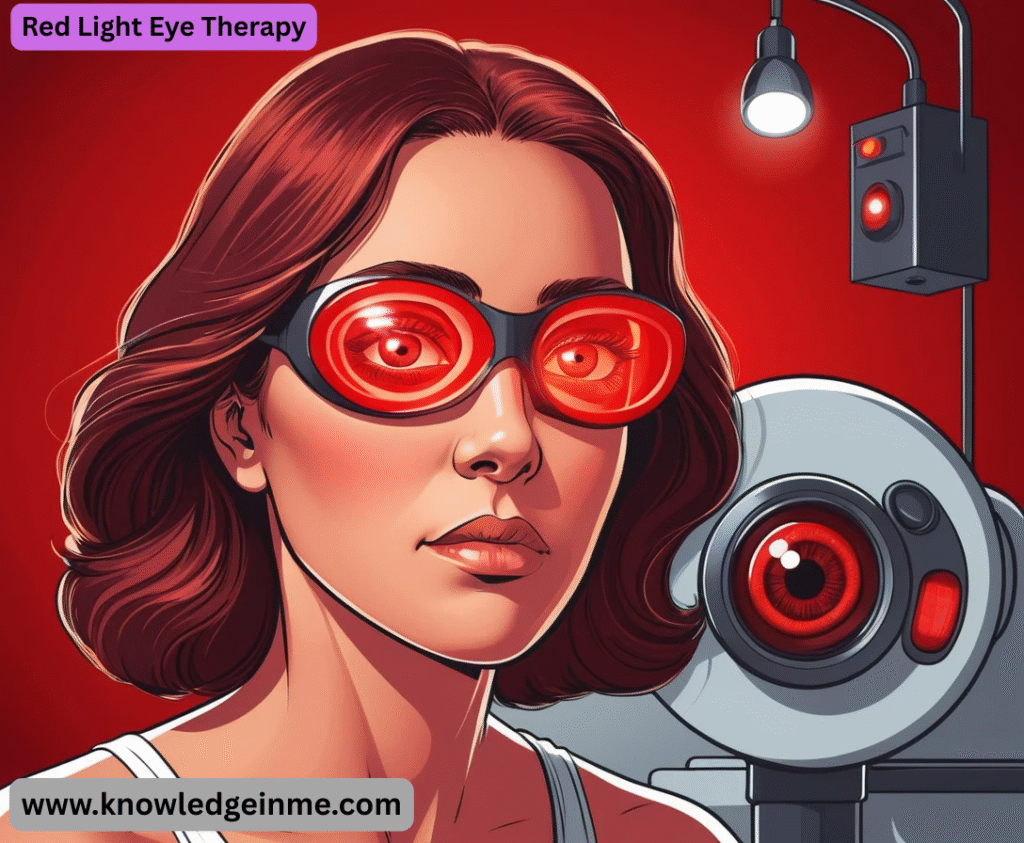

Red Light Eye Therapy Of course. Here is a comprehensive guide to Red Light Eye Therapy, covering what it is, the proposed benefits, the science behind it, the risks, and how to use it safely.
What is Red Light Therapy (for the Eyes)?
- Red Light Therapy (RLT), also known as Low-Level Ligh
- t Therapy (LLLT) or Photobiomodulation (PBM), is a therapeutic technique that uses specific wavelengths of red and near-infrared (NIR) light to stimulate cellular function.
- When used for the eyes, it involves shining a very low-power, “cool” light—typically in the range of 630-670nm (red) and 810-850nm (near-infrared)—directly onto the closed eyelids. The light penetrates the tissues and is absorbed by the mitochondria within your cells, particularly in the retina.
The Proposed Benefits: What Does the Science Say?
- The research on red light therapy for eye health is promising but still in its early stages. Most of the strongest evidence comes from small, peer-reviewed studies.
- Improving Age-Related Vision Decline and Mitochondrial Function:
- The Theory: The retina has one of the highest energy demands and densities of mitochondria in the body. As we age, these mitochondria become less efficient at producing energy (ATP). This decline is a key factor in age-related vision issues.
- The Science: A landmark 2021 study from University College London found that brief exposure to 670nm red light in the morning significantly improved color contrast vision (by up to 20%) in individuals aged 40 and over. The researchers concluded that the red light “recharges” the retinal mitochondria, boosting their energy production.
Reducing Dry Eye Disease Symptoms:
- The Theory: The light is thought to reduce inflammation and stimulate the meibomian glands in the eyelids to produce more and better-quality oils, which are crucial for a stable tear film.
- The Science: Several studies have shown that RLT can be an effective treatment for dry eye, often in combination with other therapies like intense pulsed light (IPL). It’s believed to help by improving gland function and reducing ocular surface inflammation.
Aiding in Recovery from Photoreceptor Damage:
- The Theory: Red and near-infrared light have been shown to have anti-inflammatory and anti-apoptotic (preventing cell death) effects.
- The Science: Research, primarily in animal models, suggests that RLT can help protect photoreceptor cells from light-induced damage. This has potential implications for conditions like retinitis pigmentosa and macular degeneration, though much more human research is needed.
Reducing Eyestrain and Fatigue:
- The Theory: For people who spend long hours in front of digital screens, eye muscles can become fatigued. RLT may help by improving blood circulation and reducing inflammation in the eye area.
- The Science: This is a more anecdotal benefit, but it aligns with the general anti-inflammatory and circulation-boosting effects of RLT observed in other parts of the body.
How Does It Work? The Mechanism
The primary mechanism is Photobiomodulation. Here’s a simplified breakdown:
- Absorption: The photons of red and near-infrared light penetrate through the eyelids and sclera (the white of the eye) and are absorbed by a photoreceptor enzyme in the mitochondria called cytochrome c oxidase.
- Stimulation: This absorption stimulates the mitochondria to produce more adenosine triphosphate (ATP), the fundamental energy currency of all cells.
- Cascade of Benefits: Increased ATP production leads to:
- Enhanced cellular repair and regeneration.
- Reduced oxidative stress and inflammation.
- Improved blood flow and circulation.
- For the retina, this means the photoreceptor cells have more energy to function optimally, leading to potential improvements in visual acuity.
Important Risks and Safety Considerations
Safety is paramount when dealing with your eyes.
- The #1 Rule: Never look directly at a high-power red light or laser with your eyes open. The devices designed for eye therapy are very low-power and are used on closed eyelids.
- Device Quality: The market is unregulated. It is crucial to choose a device from a reputable company that specifies the exact wavelengths and low power output (in milliwatts, mW) that are proven safe for ocular use. Avoid cheap, unbranded gadgets.
- Wavelength Matters: For eye-specific benefits, studies point to 670nm (red) as the most effective wavelength for retinal health. Near-infrared (e.g., 810nm) penetrates deeper but has less research specifically for retinal mitochondria.
- Underlying Conditions: If you have any pre-existing eye conditions (e.g., macular degeneration, glaucoma, diabetic retinopathy), you must consult your ophthalmologist before starting any at-home light therapy.
- Potential Side Effects: Side effects are rare with proper use but can include temporary mild headache, visual disturbances (like seeing floaters), or eye strain.
How to Use a Red Light Eye Device
- If you and your doctor decide to proceed, a typical at-home protocol might look like this:
- Cleanliness: Ensure your face and eyelids are clean. Remove any makeup.
- Position: Sit comfortably. Place the device gently over your closed eyes. Most devices are designed as goggles or masks.
- Duration: A typical session lasts 2 to 3 minutes, once per day. The UCL study used a 3-minute morning session. Follow the specific instructions for your device.
- Consistency: This is a cumulative therapy, not an instant fix. Benefits are typically seen after several weeks or months of consistent use.
Summary: Is It Right For You?
Red Light Eye Therapy is a promising, non-invasive technology with growing scientific backing, particularly for addressing age-related decline in retinal function and dry eye.
Deeper Dive into the Science & Mechanisms
The Circadian Rhythm Connection:
The groundbreaking University College London (UCL) study found that timing matters. The benefits were only observed when the therapy was performed between 8 am and 9 am. Our retinal cells have a circadian rhythm, and their mitochondrial function peaks at certain times. The theory is that the morning “boost” from red light sets the cells up for a more efficient day. Applying the light in the afternoon or evening did not produce the same positive effects and could even be slightly detrimental. This is a critical detail often overlooked in marketing materials.

The Biphasic Dose Response (The “Goldilocks Zone”):
- Photobiomodulation follows a biphasic dose response. This means:
- Too Little Energy: No therapeutic effect.
- The “Sweet Spot”: Optimal energy (a specific combination of wavelength, power density, and duration) that provides the maximum benefit.
- Too Much Energy: Can become inhibitory or even damaging.
- This is why using a device not designed for the eyes (like a high-powered panel from too close) is risky. The “dose” must be correct for the delicate ocular tissues.
Key Cellular and Molecular Effects:
- Beyond just boosting ATP, red light therapy triggers a cascade of beneficial events:
- Reactive Oxygen Species (ROS) Modulation: It doesn’t just eliminate ROS (free radicals); it causes a brief, mild increase that signals the cell’s own antioxidant systems to activate, making the cell more resilient to future stress.
- Nitric Oxide (NO) Release: The light can cause the release of nitric oxide, a molecule that improves blood flow (vasodilation) and has protective effects.
- Gene Transcription: It can influence the expression of genes related to cell survival, repair, and antioxidant defense.