

Wedding Ring Stack Of course! A wedding ring stack is a beautiful and popular way to wear your engagement and wedding rings. It’s a versatile style that allows for personalization and can evolve over time.
Here’s a complete guide to everything you need to know about wedding ring stacks.
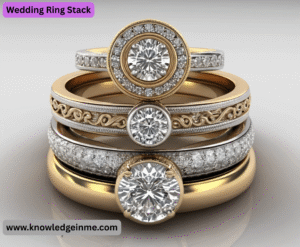
What is a Wedding Ring Stack?
- A wedding ring stack is a set of two or more rings worn together on the same finger, typically the left ring finger. At its most basic, it includes an engagement ring and a wedding band. However, it often expands to include:
An engagement ring
- A wedding band
- An anniversary band (or “eternity band”)
- Other accent bands or “ring guards”
- The rings can be soldered together for security or left separate for flexibility.
Popular Stacking Styles & Ideas
The Classic Bridal Set
- This is the traditional starting point: an engagement ring paired with a single, simple wedding band.
Look: Timeless and elegant.
- Best For: Those who love a clean, traditional look.
The Curved or Contoured Stack
- If your engagement ring has a low-set or prominent center stone, a curved or notched wedding band is designed to “hug” the engagement ring perfectly.
- Look: A seamless and custom-fit appearance.
- Best For: Solitaire or halo engagement rings with low profiles.
The Mixed Metal Stack
- Don’t be afraid to mix metals! Combining yellow gold, white gold, and rose gold adds depth and modern flair.
- Look: Eclectic, personalized, and very stylish.
- Best For: The fashion-forward individual who wants a unique look.
The Symmetrical Stack
- This involves placing your engagement ring in the center with identical bands on either side. These are often anniversary bands added later.
Look: Balanced, intentional, and luxurious.
- Best For: Those who love symmetry and plan to grow their collection.
The “Mismatched” But Cohesive Stack
- Instead of a perfect match, choose bands that complement the engagement ring through a common element, like a shared metal, diamond cut, or milgrain detail.
- Look: Collected-over-time, artistic, and personal.
- Best For: Creative souls who value individuality.
The Statement Stack with an Eternity Band
- An eternity band (fully circled with diamonds) adds serious sparkle. Placing it between the engagement ring and a plain band is a popular and stunning choice.
- Look: Maximum sparkle and glamour.
- Best For: Anyone who loves bling.
The Minimalist Stack
- Feature thin, delicate bands—often all plain metal or with very small, subtle stones.
- Look: Modern, dainty, and understated.
- Best For: Those with a minimalist aesthetic or active lifestyles.
- Key Considerations When Building Your Stack
Ring Profile & Comfort
- Height: If you have a tall engagement ring, a tall band might not sit flush and could feel bulky. Consider a curved band or a spacer ring.
- Width: Adding multiple bands increases the total width on your finger. Make sure it feels comfortable for all-day wear.
Metal Hardness
- Durability: If rings are not soldered, they will rub against each other, causing wear over time. This is normal but more pronounced with softer metals like 14k or 18k gold. Platinum is more durable and develops a patina rather than losing metal.
Stone Settings
- Pavé Bands: Bands with small stones (pavé) can be delicate. The constant friction from other rings can loosen the tiny prongs over time. Regular check-ups with a jeweler are essential.
- Channel-Set Bands: A more secure option for diamonds in a stack, as the stones are protected within a channel of metal.
To Solder or Not to Solder?
Solder (Permanently fuse together):
- Pros: Prevents spinning, reduces wear between rings, keeps the set perfectly aligned.
- Cons: You can no longer wear the rings separately.
Keep Separate:
- Pros: Maximum flexibility to mix, match, and wear rings individually.
- Cons: Rings can spin out of alignment and will wear down faster.
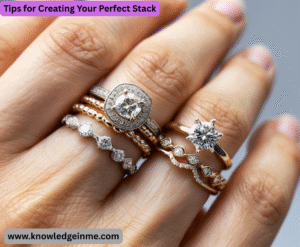
Tips for Creating Your Perfect Stack
- Start with Your Engagement Ring. It’s the star of the show. Build your stack around its style, metal, and profile.
- Try Everything On. What looks good in pictures might not feel or look right on your hand. Bring your engagement ring to the jewelry store to try different band combinations.
- Think Long-Term. Your stack can grow! Start with the wedding band and add an anniversary band for a 5th or 10th anniversary.
- Don’t Forget the Fit. With multiple rings, the fit can feel tighter. Your jeweler can help you find the perfect size for a comfortable stack.
- Embrace Your Personal Style. There are no hard rules! Whether you love a classic, bohemian, or ultra-modern look, your stack should reflect you.
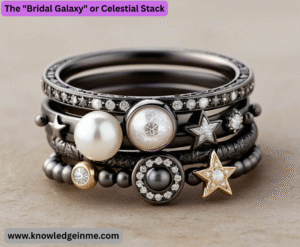
The “Bridal Galaxy” or Celestial Stack
Incorporate motifs from the cosmos.
- Elements: Bands with star and moon engravings, diamond “star” accents, dark oxidized metal to represent the night sky, or a pearl to symbolize the moon.
- How to Wear: Use a celestial-accented band as a spacer between your engagement ring and wedding band.
The Nature-Inspired Stack
Bring the outdoors in with organic forms.
- Elements: Bands with leaf, vine, or floral engraving; twig-like textures (like “branch” rings); raw or rose-cut diamonds that look like dewdrops; green gemstone accents like emerald or sapphire.
- How to Wear: Pair a nature-themed wedding band with a classic solitaire for a touch of earthy elegance.
The Art Deco Stack
Channel the glamour and geometry of the 1920s.
- Elements: Bags of fortune-shaped or emerald-cut diamonds, black onyx or enamel inlays, intricate filigree metalwork, and sharp geometric patterns.
- How to Wear: An Art Deco engagement ring looks stunning flanked by simpler, geometric black and white bands.
The Vintage & Heirloom Stack
Incorporate family history into your modern stack.
- Elements: Using your grandmother’s wedding band, resetting stones from an heirloom piece into a new band, or finding a vintage-style reproduction ring.
- How to Wear: Place an heirloom band next to your new rings. The mix of old and new is incredibly meaningful and stylish.
The Colored Gemstone Stack
Break the “all-diamond” rule for a burst of personal color.
- Elements: Bands with sapphires (blue or pink), emeralds, rubies, or even less traditional stones like black diamonds, morganite, or aquamarine.
- How to Wear: Use a colored gemstone band as your anniversary ring. You can also choose your partner’s birthstone or a gem that symbolizes something for your relationship.
Practical Deep Dive: The “Spacer Band”
- This is a crucial but often overlooked element in a functional and beautiful stack.
- What is it? A simple, usually plain metal band that is placed between two more delicate rings.
- Why use one?
- Protection: It creates a buffer between an engagement ring with a prong-set stone and a pavé diamond band, preventing them from scratching and damaging each other.
- Comfort: It can fill a gap if your engagement ring and band don’t sit flush, creating a more comfortable, unified feel.
- Visual Break: It can add a sleek, modern line between two ornate rings, making each piece stand out more clearly.
- Material: A spacer band should be made of a durable metal, like platinum or palladium, to withstand the friction.
How to Manage a Stack Day-to-Day
A large stack isn’t always practical. Here’s how to adapt.
- The “Day Stack” vs. “Evening Stack”: Wear just your wedding band(s) for work, the gym, or errands. Put on your full, sparkling stack for dinners and events.
- The Travel Stack: When traveling, consider leaving your irreplaceable engagement ring at home in a safe and wearing a simpler, less expensive stack of just bands.
- The “Stack Necklace“: On days you don’t want to wear rings on your finger, slide them onto a sturdy chain and wear them as a necklace. This is a beautiful way to keep them close and secure.