

AI Recruitment Tools Of course. Here is a comprehensive overview of AI Recruitment Tools, covering what they are, how they work, their benefits, drawbacks, and future trends.
What are AI Recruitment Tools?
- AI Recruitment Tools are software applications that use artificial intelligence (AI)—including machine learning (ML), natural language processing (NLP), and predictive analytics—to automate, streamline, and enhance various stages of the talent acquisition process. They are designed to make recruiting faster, more efficient, and data-driven.
How Do They Work? Key Functions and Features
- AI tools are integrated into different parts of the recruitment lifecycle:
Sourcing & Candidate Discovery:
- Resume Scanning & Parsing: AI can instantly scan thousands of resumes from job boards and databases, extracting key information like skills, experience, and education into a structured format.
- Proactive Sourcing: Tools scour platforms like LinkedIn, GitHub, and Behance to find “passive candidates” (people not actively job hunting) who match specific role requirements.
- Talent Rediscovery: The AI searches a company’s own existing database of past applicants to find suitable candidates for new roles, saving sourcing costs.
Screening & Shortlisting:
- Automated Resume Screening: The tool ranks candidates based on how well their profiles match the job description, allowing recruiters to focus on the most qualified applicants.
- Bias Reduction: Advanced tools can be configured to ignore demographic information (like name, age, gender, university) to reduce unconscious bias and promote diversity. However, this is a complex area with caveats (see “Challenges” below).
- Skill & Psychometric Assessments: AI-powered platforms administer and automatically grade coding tests, situational judgment tests, or personality assessments.
Engagement & Communication:
- AI-Powered Chatbots: Chatbots on career sites can answer candidate questions 24/7, schedule interviews, and pre-screen applicants, providing a instant response and improving the candidate experience.
- Personalized Outreach: AI can help recruiters draft and personalize outreach messages to potential candidates at scale.
Analytics & Predictive Insights:
- Predictive Analytics: The tool analyzes data to forecast outcomes, such as which candidate is most likely to accept an offer, perform well, or stay with the company long-term.
- Process Optimization: AI can identify bottlenecks in the hiring pipeline (e.g., where candidates are dropping off) and provide insights to improve the process.
Major Benefits of AI Recruitment Tools
- Efficiency & Speed: Drastically reduces the time-to-hire by automating repetitive, time-consuming tasks like resume screening and scheduling.
- Improved Quality of Hire: By analyzing large datasets, AI can help identify candidates with the right skills and potential for success, who might be missed by a human recruiter.
- Reduced Unconscious Bias: When properly configured, AI can help create a more level playing field by focusing on skills and qualifications rather than demographic characteristics.
- Enhanced Candidate Experience: Quick responses, 24/7 support via chatbots, and a streamlined process make a positive impression on candidates.
- Data-Driven Decision Making: Moves recruitment from a “gut-feeling” process to one based on quantifiable data and predictive insights.
Significant Challenges and Criticisms
- Algorithmic Bias: This is the biggest risk. For example, if a company historically hired more men for tech roles, the AI may learn to penalize resumes with words associated with women.
- Lack of Human Touch & Context: AI cannot understand nuance, unique career paths, or exceptional circumstances. A highly talented candidate with an unconventional resume might be incorrectly screened out.
- The “Black Box” Problem: Some complex AI models don’t clearly explain why they made a certain decision, making it difficult for recruiters to challenge or understand the output.
- Candidate Privacy Concerns: The collection and analysis of vast amounts of personal data (including video and voice analysis) raise serious privacy and ethical questions.
- Over-reliance on Technology: Recruiters may become too dependent on the tool, abdicating their own judgment and potentially missing great candidates who don’t fit the algorithm’s mold.
- Legal and Compliance Risks: The use of AI in hiring is coming under increased regulatory scrutiny (e.g., in New York City, where AI hiring tools must undergo a bias audit). Companies can face legal liability for discriminatory outcomes.
Popular Examples of AI Recruitment Tools
- Eightfold.ai: Uses deep learning for talent intelligence, sourcing, and career pathing.
- Ideal: Focuses on automated screening and bias reduction within Applicant Tracking Systems (ATS).
- HireVue: Known for its on-demand video interviews with AI-driven assessment (and associated controversy).
- Phenom: An AI-powered Talent Experience Platform for sourcing, engagement, and marketing.
- SeekOut: Helps in sourcing hard-to-find technical and diverse talent.
- Fetcher (formerly Scout): Automates candidate sourcing and outreach.
- Greenhouse & Lever: Leading ATS platforms that are increasingly integrating AI features into their systems.
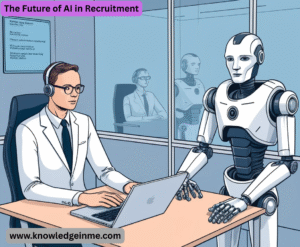
The Future of AI in Recruitment
- Focus on Ethical AI & Explainability: There will be a stronger push for transparent, auditable, and fair AI models to combat bias and meet new regulations.
- Skills-Based Hiring: AI will shift focus from pedigree (e.g., university) to actual skills and competencies, analyzing project portfolios and online activity.
- Hyper-Personalization: AI will create highly personalized candidate journeys, recommending relevant jobs and content throughout the talent lifecycle.
- Internal Mobility: Companies will use AI more aggressively to map internal skills and connect existing employees to new opportunities within the organization.
- Advanced Predictive Analytics: Models will become more sophisticated in predicting not just performance, but also team fit, learning agility, and long-term potential.
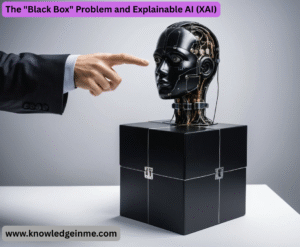
The “Black Box” Problem and Explainable AI (XAI)
- The “black box” problem refers to the inability to see how a complex AI model arrives at a specific decision. For a recruiter, this means the tool might rank Candidate A as the #1 choice but provide no clear, human-understandable reason why.
Why it’s a problem:
- Lack of Trust: Recruiters and hiring managers are unlikely to trust a recommendation they can’t understand.
- Legal Risk: If a rejected candidate claims discrimination, the company must be able to explain the decision-making process. A black box makes this impossible.
- Missed Nuance: The AI might be weighting a minor keyword too heavily or missing the context of a candidate’s experience.
- The Solution – Explainable AI (XAI): The next generation of tools is focusing on XAI. This means the AI doesn’t just give a score; it provides a rationale, such as:
Advanced Concepts: Bias Mitigation vs. Bias Removal
- It’s critical to understand that AI cannot “remove” bias; it can only be designed to mitigate it. Bias can creep in at multiple points:
- Training Data Bias: The model is trained on historical company data that reflects past biased decisions.
- Feature Selection Bias: The humans building the model choose input variables (features) that may be proxies for bias. For example, using “postal code” can be a proxy for socioeconomic status or race.