
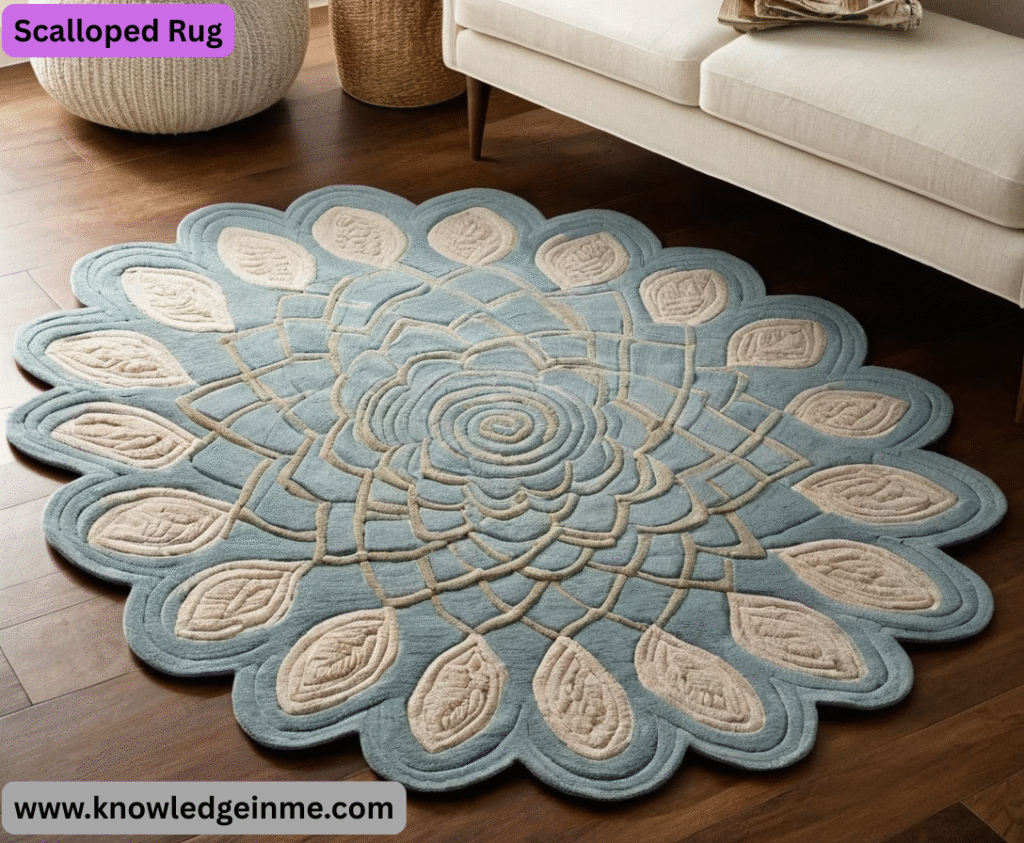

Scalloped Rug Of course! “Scalloped rug” refers to a style of rug characterized by a wavy, shell-like edge, as opposed to a straight or fringed one. This design element creates a soft, decorative, and often feminine or traditional look.
Here’s a comprehensive guide to everything you need to know about scalloped rugs.
What is a Scalloped Rug?
- A scalloped rug has edges that are cut or woven into a series of semi-circular curves, resembling the edge of a scallop shell (hence the name) or a series of waves. This detail can be subtle or very pronounced and can appear on all four sides or just two opposite sides.
Key Characteristics:
Wavy, Curved Edges: The defining feature.
- Decorative Border: The scalloping often acts as a built-in, textural border.
- Varied Sizes: Scallops can be large and dramatic or small and delicate.
- Common in Traditional Styles: Frequently found in Oriental, Persian, and European classic designs, but also adapted for modern styles.
Styles and Designs
- Scalloped rugs come in a wide variety of designs to suit different aesthetics:
- Traditional & Oriental: This is the most common association. Many Persian, Oushak, and Turkish-style rugs feature intricate scalloped edges that frame the central medallion and field patterns.
Image Search Tip: Look for “Antique Oushak rug with scalloped border.”
- Vintage & European: Aubusson and Savonnerie rugs from France often have elaborate scalloped borders that complement their ornate, floral designs.
Image Search Tip: “French Aubusson rug scalloped edge.”
- Modern & Contemporary: Designers have reimagined the scallop for modern interiors. You’ll find them in solid colors, bold geometric patterns, or with asymmetrical scallop placements.
Image Search Tip: “Boho tassel scalloped rug.”
- Coastal & Nautical: The shell-like shape naturally fits a coastal theme. These rugs often feature lighter colors like ivory, sea glass blue, and sandy beige.
Image Search Tip: “Coastal scalloped jute rug.”
Materials
Scalloped rugs are made from various materials, each offering a different look and feel:
- Wool: The gold standard for durability, softness, and pile retention. Ideal for traditional and high-quality modern rugs.
- Cotton: Great for flat-weave or low-pile rugs (like Kilims). Often used for lighter, more casual, and washable rugs.
- Jute & Sisal: Natural fibers that add wonderful texture. The scalloped edge softens the sometimes rough feel of these materials. Popular in coastal and boho styles.
- Synthetic (Polypropylene, Polyester): Affordable, stain-resistant, and durable. Excellent for high-traffic areas or homes with kids and pets.
- Silk & Viscose: Used in high-end rugs for a luxurious sheen and intricate detail, but less durable for heavy foot traffic.
Pros and Cons of Scalloped Rugs
Pros:
- Aesthetic Appeal: Adds a unique, soft, and decorative touch that straight-edged rugs lack.
- Style Versatility: Works with a surprising range of decor styles, from traditional to modern.
- Defines Space: The curved edges can help soften the hard lines of a room’s architecture and furniture.
- Hides Irregularities: The wavy border can be more forgiving than a straight line if the rug isn’t perfectly positioned.
Cons:
- Potential Tripping Hazard: The raised, curved edges can be a slight tripping concern, especially in high-traffic hallways. This is less of an issue with low-pile or flat-weave rugs.
- Dirt Trapping: The indentations can sometimes trap dirt and debris more easily than a straight edge.
- Fraying: The curved edges, if not well-finished, can be more prone to fraying over time compared to a clean, bound straight edge.
- Can Look Dated: If not chosen carefully, a very ornate traditional scalloped rug can make a room feel old-fashioned.
How to Style a Scalloped Rug in Your Home
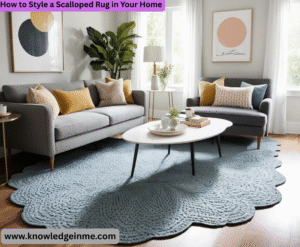
- In the Living Room: Center a large scalloped rug under your coffee table, allowing the curves to soften the space. Ensure your main furniture pieces (like the sofa) are either fully on or off the rug.
- In the Bedroom: Place a scalloped rug so it emerges from under the bottom two-thirds of the bed, creating a soft, welcoming landing for your feet.
- As an Accent: Use a smaller scalloped rug in an entryway, hallway, or bathroom to add a punch of pattern and texture.
- Layering: A scalloped rug looks fantastic layered over a larger, neutral jute or sisal rug. This adds depth, texture, and highlights the beautiful edge.
Where to Buy
- Anthropologie: Known for their unique, bohemian-inspired scalloped rugs with tassels and great texture.
- West Elm: Offers a range of modern and transitional scalloped rugs.
- Etsy: A great source for vintage scalloped rugs and handmade options from global artisans.
- Rugs USA & Wayfair: Have a wide selection of affordable scalloped rugs in various styles.
- High-End Retailers: Companies like Serena & Lily (coastal), Pottery Barn, and The Rug Company offer designer options.
Detailed Styling Guide & Room-by-Room Breakdown
Living Room: The Centerpiece
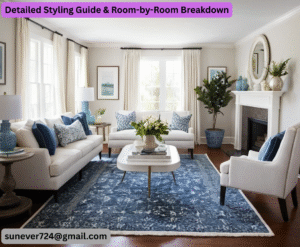
- Sizing is Key: The most common mistake is using a rug that’s too small. For a standard seating arrangement, ensure the front legs of your sofa and chairs are resting on the rug. This anchors the furniture to the rug and makes the scalloped edge a frame for the conversation area.
Pattern Mixing:
- With a Bold Scallop: If the rug itself has a strong pattern (like a traditional Heriz with a dramatic scalloped border), keep your upholstery and walls more neutral. Let the rug be the star.
- With a Subtle Scallop: A solid-colored scalloped rug is a perfect foundation for mixing other patterns in your throw pillows and curtains. The scallop adds visual interest without competing.
- Furniture Pairing: The curved edge beautifully contrasts with the sharp lines of a modern, square-edged sofa or a glass coffee table. It also complements curvy furniture, like a camelback sofa, for a fully traditional look.
Bedroom: Softness Underfoot
Placement Options:
- Large Runner Style: Place two identical smaller scalloped rugs on either side of the bed. This is symmetrical and practical.
- Full Coverage: Use a large rug that extends far beyond the sides and foot of the bed. A common size for a queen bed is 8×10, allowing you to step onto a soft surface from every angle.
- Creating a Sanctuary: The organic, wavy shape of a scalloped rug enhances the soft, serene, and inviting atmosphere you want in a bedroom. A plush wool scalloped rug in a neutral tone is pure luxury.
Dining Room: A Formal Affair
- Critical Sizing Rule: The rug must be large enough so that when chairs are pulled out, they remain on the rug. A chair catching on the scalloped edge every time someone sits down is a recipe for frustration and wear.
- Shape Harmony: A rectangular scalloped rug under a rectangular table is classic. For a round table, seek out a round rug with a circular scalloped edge—a stunning and less common combination that feels very custom and elegant.
- Material Matters: In the dining room, choose a low-pile, durable material like a flat-weave wool or a sturdy synthetic. These are easier to clean and for chair legs to glide over.
Entryway & Hallways: A Grand First Impression
- Durability First: These are high-traffic areas. Choose a rug made of polypropylene, a tightly woven wool, or a natural fiber like coir. These materials hide dirt well and can withstand heavy use.
- A Pop of Personality: An entryway is a perfect place for a bold, colorful scalloped rug. It makes a strong style statement the moment guests enter your home.
- Safety Note: Ensure the rug has a high-quality non-slip pad underneath. This is crucial for preventing trips and slips on the potentially raised edges in a transitional space.