
The Message of Measles by Nick Paumgarten Of course. “The Message of Measles” is a long-form article by Nick Paumgarten published in The New Yorker in 2019. It’s a masterful piece of journalism that uses a measles outbreak in Clark County, Washington, as a lens to examine the much larger story of the anti-vaccination movement, public health, and societal trust. Here is a summary of its key themes and messages.
Overview
- The article is not just a report on a disease outbreak; it’s a deep dive into the cultural, psychological, and social forces that led to the resurgence of a disease that was declared eliminated in the U.S. in 2000. Paumgarten profiles several families affected by the outbreak—both those whose children contracted measles and those who chose not to vaccinate—to understand their motivations and worldviews.
Key Themes and “Messages”
The Collision of Two Worlds:
- The article vividly portrays the clash between the world of public health, science, and mainstream medicine and the world of alternative health, suspicion of authority, and personal belief. The epicenter of the outbreak was a community with a high rate of vaccine exemptions, and Paumgarten explores how these two communities, often neighbors, live in parallel realities with different sources of truth.
The Anti-Vaxxer Psyche:
Paumgarten approaches the parents who refuse vaccines not as villains, but as complex individuals. He identifies several driving factors:
- Fear: A deep-seated fear of vaccine injury, often fueled by the long-debunked 1998 study by Andrew Wakefield linking the MMR vaccine to autism.
- Distrust: A profound distrust of pharmaceutical companies, government agencies (like the CDC and FDA), and the medical establishment, often viewing them as corrupt and profit-driven.
- The “Natural” Ideal: A belief in a “pure” and “natural” approach to health, where building immunity through illness is seen as superior to the “artificial” immunity from vaccines.
- Information Silos: The role of the internet and social media in creating echo chambers where anti-vaccine misinformation thrives and is reinforced.
The Real Cost of Hesitancy:
- The “message” of measles is also a brutal reminder of the disease’s severity. Paumgarten details the harrowing medical realities: high fevers, the distinctive rash, and the dangerous complications like pneumonia and encephalitis (brain swelling). He emphasizes that measles is not a harmless childhood rite of passage but a serious and highly contagious illness. The article makes it clear that the choice to not vaccinate is not a personal one; it has consequences for the entire community, especially for those who are too young to be vaccinated or are immunocompromised.
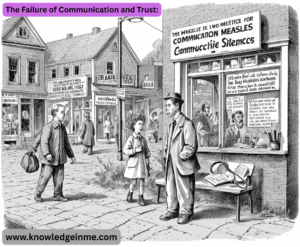
The Failure of Communication and Trust:
- The Message of Measles by Nick Paumgarten A central theme is the breakdown in communication. Public health officials often speak in the language of statistics and population science, which can feel cold and impersonal to parents motivated by fear for their individual child. The article suggests that simply telling people “the science is settled” is ineffective when trust has been eroded.
Personal Responsibility vs. The Collective Good:
- The measles outbreak becomes a case study in the tension between individual liberty and communal welfare. The anti-vaccine parents often frame their choice as one of personal freedom and parental rights. In contrast, public health is fundamentally about the protection of the herd through herd immunity. Paumgarten shows how this philosophical conflict plays out in school board meetings, courtrooms, and hospital wards.
Notable Characters and Anecdotes
- Tyson and Amber: Parents who did not vaccinate their children and whose son contracted a severe case of measles. Their journey shows the internal conflict and fear that can arise when a theoretical risk becomes a terrifying reality.
- The “Vaxxed” Bus: Paumgarten attends a screening of the anti-vaccine film “Vaxxed,” organized by followers of Andrew Wakefield. This scene powerfully illustrates the fervent, almost evangelistic nature of the movement.
- Public Health Officials: He shadows health department workers as they engage in the painstaking work of contact tracing, quarantine enforcement, and public communication, highlighting the immense effort required to contain a preventable outbreak.
Deeper Analysis: Narrative Structure and Rhetorical Strategies
- Paumgarten doesn’t just report facts; he constructs a narrative that allows the reader to inhabit the conflicting worldviews. Here’s how he does it:
The “You Are There” Opening:
- The article doesn’t start with statistics. It starts with a scene: a family, the Bettners, whose vaccinated child caught measles. We feel their confusion and fear as they navigate the diagnosis and the public health response. This immediately humanizes the abstract concept of an “outbreak” and establishes the stakes.
The Anatomy of an Outbreak:
Paumgarten meticulously traces the contagion chain, naming specific locations—a pediatric clinic, a charter school, a Costco, a church, a Portland Trail Blazers game. This serves two purposes:
- This fact becomes a chilling character in the story.
- It shatters the “bubble” illusion: The outbreak isn’t confined to the unvaccinated community. It leaks into the wider world, showing how individual choices have unavoidable collective consequences.
The Sympathetic (but not Absolving) Portrayal of Anti-Vaxxers:
This is the article’s core strength. Paumgarten avoids caricature. He spends time with families like Tyson and Amber, who are loving, concerned parents.
- He details their journey: from initial vaccine hesitancy, to consuming information from “natural health” influencers like Joseph Mercola and Andrew Wakefield, to the eventual, severe measles infection of their son.
- He captures their internal logic: their belief that they were doing “more research” than parents who simply followed the CDC schedule.
- The crucial turn in the narrative comes when their son gets sick. Paumgarten shows their dawning realization and cognitive dissonance without reveling in it. It’s a tragic, not a triumphant, moment.
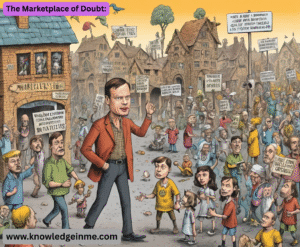
The Marketplace of Doubt:
The article brilliantly explores the ecosystem of anti-vaccination. It’s not just a few rogue ideas; it’s a thriving industry with:
- Gurus: Figures like Andrew Wakefield, who is portrayed as a charismatic pied piper, and “medical freedom” activists.
- Media: The film Vaxxed, which Paumgarten goes to see, describing its manipulative emotional tactics.
- Community: Online forums and Facebook groups that provide validation, support, and a shared identity. Leaving this community can feel like a profound social and ideological loss.
The Exhausted Guardians of Public Health:
- Paumgarten gives equal weight to the public health officials, like Dr. Alan Melnick, the Clark County health officer. He portrays their work as a desperate, resource-draining battle against a problem that shouldn’t exist. The language of science—”95% herd immunity threshold”—constantly crashes against the wall of personal belief and fear.
Key Quotes and Conceptual Framing
What is the message?
- The Message of Measles by Nick Paumgarten For Public Health: The message is a warning that our collective immunity—both immunological and social—is breaking down.
- For the Anti-Vaxxers: Some, paradoxically, saw the outbreak as a “cleansing” or a necessary “shedding” event, a belief Paumgarten exposes as dangerous pseudoscience.
- For the Reader: The message is that measles is a “revenant”—something dead that has returned.
- The anti-vaccine community seizes on the “leakiness” to discredit them, while ignoring the fact that exposure without a raincoat (immunity) is far more dangerous.
The Larger Philosophical Conclusion
Paumgarten ends the article not with a simple resolution, but with a profound and unsettling question. He describes the work of a historian of medicine who compares the anti-vaccination movement to a “doomsday cult.”
- The chilling insight is this: The cult’s beliefs are unfalsifiable.
- If a vaccinated child is healthy, it’s because they were “genetically resilient.”
- If a vaccinated child gets sick, it’s because of the vaccines.
- If an unvaccinated child gets sick, it’s because of toxins in the environment, or it’s a necessary detoxification process.