
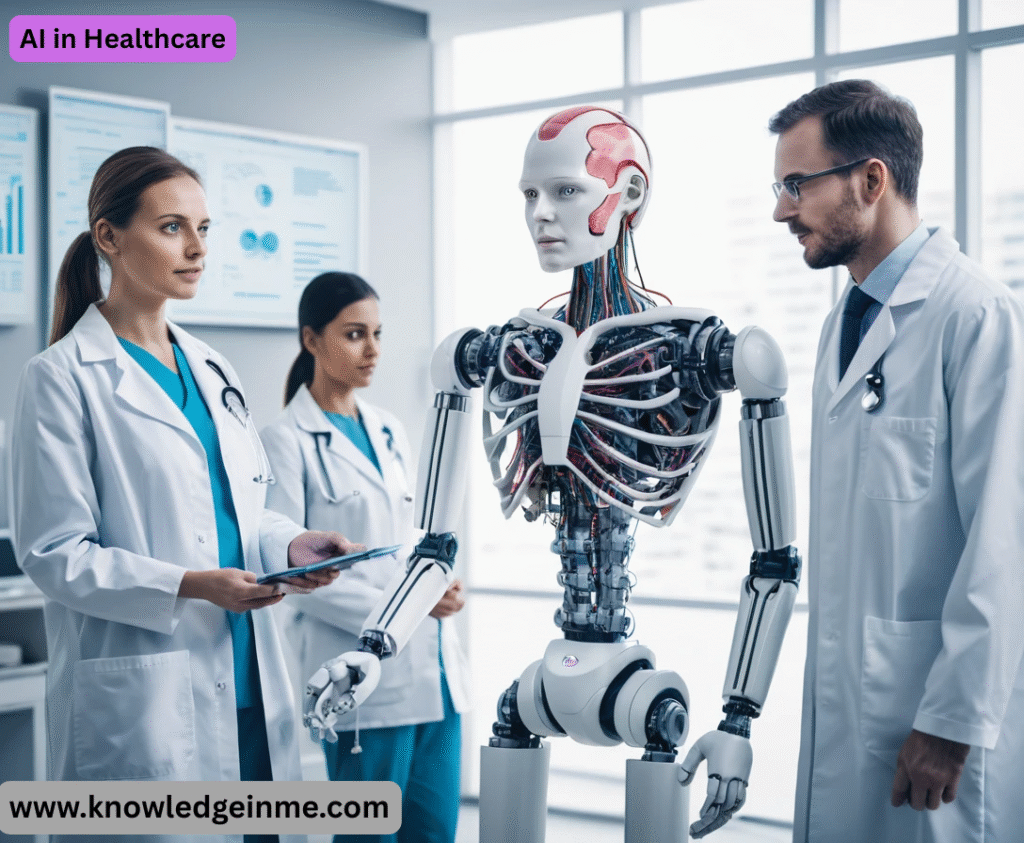

AI in Healthcare Of course. Here is a comprehensive overview of AI in Healthcare, covering its applications, benefits, challenges, and future directions.
Introduction: What is AI in Healthcare?
- AI in healthcare refers to the use of complex algorithms and software to emulate human cognition in the analysis, interpretation, and comprehension of complicated medical and healthcare data. The primary aim is to analyze relationships between prevention or treatment techniques and patient outcomes.
- It’s not about replacing doctors, but about augmenting their capabilities, making healthcare more predictive, preventive, personalized, and efficient.
Key Applications of AI in Healthcare
The applications are vast and growing, but they can be categorized into several key areas:
Medical Imaging and Diagnostics
This is one of the most mature and successful areas for AI.
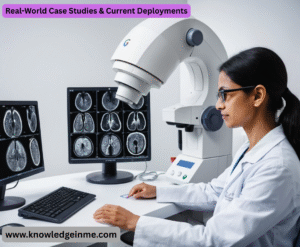
- Radiology: AI algorithms can analyze X-rays, CT scans, and MRIs to detect anomalies like tumors, fractures, or hemorrhages often with speed and accuracy rivaling or exceeding human radiologists. They can also prioritize critical cases.
- Pathology: AI can scan digital images of tissue samples (biopsies) to identify cancerous cells, reducing the pathologist’s workload and improving detection rates for diseases like breast cancer.
- Ophthalmology: AI systems can screen for diabetic retinopathy and age-related macular degeneration by analyzing retinal scans, enabling early intervention.
Drug Discovery and Development
The process of bringing a new drug to market is incredibly long and expensive. AI is accelerating this.
- Target Identification: AI can analyze vast databases of genetic, metabolic, and clinical information to identify new drug targets.
- Compound Screening: Machine learning models can predict how different chemical compounds will behave, virtual screening millions of molecules to find the most promising candidates.
- Clinical Trial Optimization: AI can help design more efficient trials, identify suitable patients, and predict potential adverse effects.
Personalized Medicine
AI can tailor treatment plans to individual patients.
- Genomics: By analyzing a patient’s genome, AI can predict susceptibility to certain diseases and recommend personalized prevention strategies.
- Treatment Recommendations: Systems like IBM Watson for Oncology (though with mixed results) aimed to provide evidence-based treatment options by analyzing a patient’s medical record against a vast corpus of oncology literature and clinical trials.
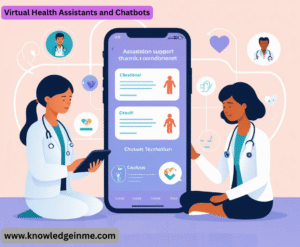
Virtual Health Assistants and Chatbots
These tools provide 24/7 support and triage.
- Symptom Checkers: Patients can input their symptoms, and the AI provides possible causes and recommendations (e.g., “see a doctor within 24 hours”).
- Mental Health Support: Chatbots like Woebot provide Cognitive Behavioral Therapy (CBT) techniques and check-ins for users with anxiety or depression.
- Chronic Disease Management: AI assistants can remind patients to take medication, monitor their condition, and provide educational content.
Robotic Surgery
AI-enhanced robotic systems assist surgeons in performing complex procedures.
- Precision: Robots can make more precise and steady movements than the human hand.
- Minimally Invasive Surgery: AI helps in navigating and performing surgeries through small incisions, leading to faster recovery.
- Surgeon Augmentation: Systems like the da Vinci Surgical System provide a magnified 3D view and enhanced dexterity.
Administrative Workflow Automation
A significant portion of healthcare costs is administrative. AI can streamline this.
- Automated Documentation: Natural Language Processing (NLP) can transcribe and structure doctor-patient conversations directly into Electronic Health Records (EHRs).
- Prior Authorization: AI can automate the time-consuming process of getting pre-approval from insurance companies for procedures.
- Revenue Cycle Management: AI can help with coding, billing, and claims management, reducing errors and denials.
Major Benefits of AI in Healthcare
- Improved Accuracy and Efficiency: Reduces human error in diagnostics and automates repetitive tasks.
- Early Disease Detection: Identifies diseases like cancer at earlier, more treatable stages.
- Cost Reduction: Lowers operational costs through automation and prevents costly complications through early intervention.
- 24/7 Availability: Virtual assistants and monitoring systems provide constant support.
- Data-Driven Insights: Uncovers patterns in large datasets that are impossible for humans to discern, leading to new medical discoveries.
Significant Challenges and Risks
- Data Privacy and Security: Handling sensitive patient data requires robust security measures and compliance with regulations like HIPAA (in the U.S.) and GDPR (in Europe).
- Bias and Inequality: If AI models are trained on biased data (e.g., mostly from one ethnicity), they will perform poorly for underrepresented groups, potentially exacerbating health disparities.
- Regulatory Hurdles: Getting AI-based software approved as a medical device (like by the FDA) is a complex and evolving process.
- The “Black Box” Problem: Some complex AI models are opaque, making it difficult for doctors to understand why a certain diagnosis or recommendation was made, which can hinder trust and adoption.
- Integration with Clinical Workflows: Getting busy healthcare professionals to adopt new technology is a challenge. The AI must fit seamlessly into existing systems.
- Liability: Who is responsible if an AI system makes a wrong diagnosis—the doctor, the hospital, or the software developer? Legal frameworks are still catching up.
The Future of AI in Healthcare
The future is moving towards a more integrated and predictive model:
- AI-powered Predictive Health: Moving from reactive care to predictive health, where AI analyzes data from wearables (e.g., Apple Watch, Fitbit) and EHRs to predict individual health risks before they become critical.
- Generative AI for Drug Discovery: Using models similar to ChatGPT to design novel drug molecules and treatment protocols from scratch.
- The “Ambient” Clinical Assistant: An AI that listens to the natural conversation between a doctor and patient in the exam room and automatically generates clinical notes, orders tests, and creates a summary letter, freeing the doctor to focus entirely on the patient.
- Federated Learning: A technique where AI models are trained across multiple decentralized devices (like different hospitals) without sharing the raw data, thus preserving privacy while still benefiting from large, diverse datasets.
The Engine Room: Core Technologies Powering Healthcare AI
The term “AI” is broad. In healthcare, it’s powered by several key technologies:
- Machine Learning (ML) & Deep Learning: The workhorses of medical imaging.
- Natural Language Processing (NLP): This allows computers to understand and process human language. It’s crucial for:
- Mining Electronic Health Records (EHRs): Extracting structured data (like a diagnosis or medication) from unstructured doctor’s notes.
- Voice-to-Text Transcription: As mentioned, creating clinical notes automatically.
- Analyzing Medical Literature: Scanning thousands of research papers to answer a specific clinical question.
- Robotic Process Automation (RPA): The “dull” side of AI. It automates high-volume, repetitive administrative tasks like data entry, claims processing, and appointment scheduling.
Real-World Case Studies & Current Deployments
Google Health & DeepMind:
- Diabetic Retinopathy: Developed an AI system that analyzes retinal scans to detect diabetic retinopathy with accuracy exceeding that of human experts. This is being deployed in clinics in India and Thailand, where specialist access is limited.
- Breast Cancer Screening: Created a model that reduced false positives and false negatives in mammogram analysis compared to radiologists.
Stanford University:
- Skin Cancer Detection: A deep learning model was trained to identify skin cancer from images with accuracy comparable to board-certified dermatologists, a step towards making dermatological screening more accessible via smartphones.
Mayo Clinic:
- ECG Analysis: Using AI to analyze electrocardiograms (ECGs) to detect asymptomatic heart dysfunction, like weak heart pumps, that would otherwise go unnoticed until symptoms appear.
NVIDIA CLARA:
- Federated Learning Platform: Provides a framework for hospitals worldwide to collaboratively train AI models without sharing patient data, directly addressing the data privacy challenge.
The Human Factor: Challenges in Depth
- The “Last Mile” Problem: This is the critical gap between a well-performing AI model in a lab and its successful integration into a busy clinician’s daily workflow. A doctor won’t use a tool that takes 10 extra clicks or doesn’t integrate with their EHR.
- Explainability (XAI) – Beyond the Black Box: A radiologist is legally and ethically responsible for their diagnosis. If an AI flags a tumor, the radiologist needs to understand why—what features in the scan led to that conclusion? Explainable AI (XAI) is a growing field focused on creating visualizations (like heatmaps) that highlight the areas of an image the model used to make its decision.
- Data Scarcity and Quality: For rare diseases, there simply isn’t enough data to train a robust model.
- . It used healthcare costs as a proxy for health needs.
The Cutting Edge: Emerging Frontiers
- Synthetic Data Generation: To overcome data scarcity and privacy issues, companies are using Generative Adversarial Networks (GANs) to create highly realistic, completely artificial patient data. This synthetic data can be used to train AI models without any privacy risk.
- Digital Twins: Creating a virtual, AI-driven replica of a patient (their physiology, genetics, lifestyle). Doctors could then simulate how a disease might progress or how a specific drug would affect that specific individual before ever prescribing it.
- AI in Surgery – Next Level: Moving beyond assistance to semi-autonomous tasks. For example, an AI system could automatically stabilize a surgical robot’s instruments when a surgeon’s hand trembles or even perform specific, repetitive parts of a procedure like suturing.
- Neurosymbolic AI: Combining the pattern recognition power of deep learning (neural networks) with the logical, rule-based reasoning of symbolic AI. This could create systems that not only spot a tumor but also explain its decision using medical knowledge and logic, making it far more trustworthy.
The Ethical Imperative: A Framework for Responsible AI
The deployment of AI in healthcare demands a robust ethical framework:
- The final decision and responsibility must always lie with a human clinician.
- Accountability and Redress: Clear lines of legal liability must be established. There must be a process for patients to challenge an AI-influenced decision and seek redress for harm.