
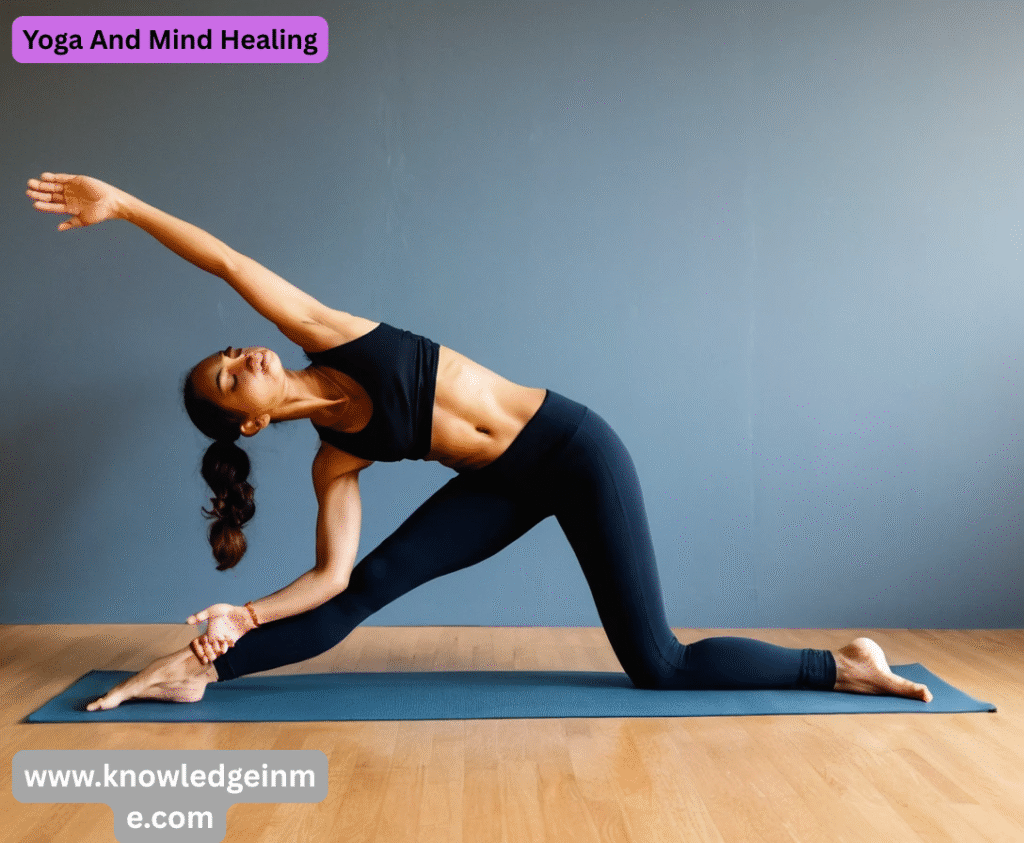

Yoga And Mind Healing Of course. “Yoga and Mind Healing” is a profound and powerful synergy. It’s not just about physical exercise; it’s a holistic system for calming the mind, processing emotions, and fostering profound psychological well-being. Let’s break down how they work together to create a path of healing.
The Core Idea: The Mind-Body Connection
- Modern science and ancient wisdom agree: the mind and body are inextricably linked. When you are stressed, anxious, or traumatized, your body holds onto that energy in the form of muscle tension, altered breathing, and a dysregulated nervous system.
- Conversely, when you release physical tension and regulate your breath, you send signals of safety to the brain, calming the mind. Yoga is the practice that directly facilitates this conversation.
How Yoga Acts as a Tool for Mind Healing
The Physical Postures (Asanas): Releasing Stored Tension
- Sensation vs. Pain: Yoga teaches you to feel sensations in your body without judgment. This helps you differentiate between healthy stretch and harmful pain, a metaphor for navigating emotional discomfort.
- Releasing the Armor: We often hold emotional stress in specific areas (shoulders, hips, jaw). Poses like Child’s Pose, Forward Folds, and Hip Openers gently encourage the release of this physical “armor,” which can lead to an emotional release.
- Empowerment: Holding a challenging pose like Warrior II builds mental resilience and a sense of accomplishment, counteracting feelings of helplessness.
The Breath (Pranayama): The Remote Control for the Nervous System
This is perhaps the most direct link to healing.
- Calming the Stress Response: When you’re anxious, your breath becomes shallow and rapid. Conscious, deep breathing (like Diaphragmatic Breathing or Nadi Shodhana – Alternate Nostril Breathing) activates the parasympathetic nervous system (“rest and digest”), slowing your heart rate and lowering blood pressure.
- Regulating Emotions: You cannot be in a state of panic while breathing slowly and deeply. Pranayama gives you a tool to regulate your emotional state in real-time.
Meditation & Mindfulness (Dhyana): Rewiring the Brain
- Observing the Thought Stream: Yoga and meditation train you to watch your thoughts without getting swept away by them. You learn that “you are not your thoughts.” This is crucial for healing from anxiety, depression, and rumination.
- Cultivating Present-Moment Awareness: A suffering mind is often trapped in the past (regret, trauma) or the future (worry). Yoga anchors you in the present moment—in the feeling of your feet on the mat, the rhythm of your breath—which is the only place where healing can happen.
The Deeper Principles (Yamas & Niyamas): The Ethical Foundation
The eight limbs of yoga provide a framework for living that inherently supports mental health. For example:
- Santosha (Contentment): Cultivating contentment counteracts the constant striving and comparison that leads to unhappiness.
- Ahimsa (Non-violence): Practicing compassion towards yourself on the mat (e.g., not pushing into pain) is a foundation for self-love and healing self-talk off the mat.
- Svadhyaya (Self-study): Yoga encourages looking inward to understand your patterns, a essential part of any healing journey.
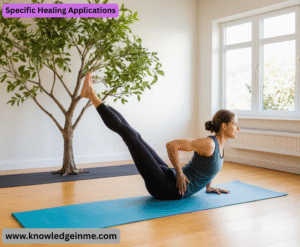
Specific Healing Applications
- For Anxiety: A practice focusing on grounding poses (e.g., Mountain Pose, Tree Pose), long exhalations, and restorative postures (e.g., Legs-Up-the-Wall) can be incredibly calming.
- For Depression: Gentle, fluid sequences that build energy and warmth (like a slow Sun Salutation) can help. Backbends (e.g., Bridge Pose, Cobra Pose) are known to be uplifting, as they open the heart center.
- For Trauma (Trauma-Sensitive Yoga): This is a specific approach that emphasizes choice, interoception (feeling the body from within), and present-moment experience over perfect form. The goal is to help individuals feel safe and empowered in their bodies again, rebuilding the connection that trauma often severs.
- For General Stress: Any consistent practice that combines movement, breath, and relaxation will lower cortisol levels and improve resilience to daily stressors.
How to Start a Healing Yoga Practice
- Yoga And Mind Healing Set an Intention: Before you practice, set a simple intention like, “I practice today to find calm,” or “I move with self-compassion.”
- Focus on Feeling, Not Form: Pay more attention to how a pose feels than how it looks. Your body is unique.
- Combine with Breath: Never hold your breath. Let the movement be guided by the inhalation and exhalation.
- End with Silence: Always end your practice with at least 5-10 minutes of Savasana (Corpse Pose) or a seated meditation. This is when the nervous system integrates the benefits.
- Seek Guidance: Consider joining a class, especially one labeled “Gentle,” “Restorative,” “Yoga for Anxiety,” or “Mindfulness-Based Yoga.” A good teacher can offer invaluable support.
- Be Patient and Consistent: Healing is not linear. A regular, gentle practice is far more powerful than an intense, sporadic one.
The Deeper Science: How Yoga Rewires Your Brain and Nervous System
The healing power of yoga isn’t just philosophical; it’s biological. Here’s what happens inside you:
- Nervous System Regulation: The single most important mechanism. Your autonomic nervous system (ANS) has two main branches:
- Sympathetic Nervous System (SNS): “Fight-or-Flight.” Activated by stress, it increases heart rate, blood pressure, and cortisol.
- Parasympathetic Nervous System (PNS): “Rest-and-Digest.” Promotes calm, relaxation, and healing.
- Chronic stress, anxiety, and trauma trap you in a state of SNS dominance. Yoga, especially through conscious breathing (Pranayama) and relaxation, is a direct switch to activate the PNS. Practices like slow, deep breathing stimulate the vagus nerve, the superhighway of the PNS, telling your body it’s safe to calm down.
- Neuroplasticity: Your brain can change. Yoga and meditation have been shown to:
- Increase Gray Matter in the prefrontal cortex (responsible for decision-making, focus, and emotional regulation).
- Decrease the Size of the Amygdala (the brain’s fear center), which becomes overactive in anxiety and PTSD. A smaller, less reactive amygdala means you’re less prone to stress and overwhelm.
- GABA Boost: Gamma-aminobutyric acid (GABA) is a neurotransmitter that calms neural activity. Low levels are linked to anxiety and depression. Studies show that a consistent yoga practice can significantly increase GABA levels, producing a natural calming effect similar to some anti-anxiety medications.
- Interoception: The Key to Trauma Healing: This is the ability to feel what’s happening inside your body (e.g., your heartbeat, breath, subtle sensations). Trauma often leads to dissociation—a disconnection from the body because it feels unsafe.
Yoga gently rebuilds interoceptive awareness. By focusing on the physical sensation of a stretch or the breath, you learn to tolerate and befriend bodily sensations without being overwhelmed by them. This is the cornerstone of trauma-sensitive yoga.
A Practical Toolkit: Yoga Practices for Specific Mental States
Think of these as “prescriptions” you can try. Remember, the goal is feeling, not perfect performance.
- For Overwhelming Anxiety & Panic: The Grounding Sequence
- Intention: To feel safe, solid, and present.
Poses (Asanas):
- Balasana (Child’s Pose): A primal resting pose. The forehead on the floor signals safety. Feel the weight of your body sinking into the earth.
- Tadasana (Mountain Pose): Stand firmly. Feel all four corners of your feet connecting to the ground.This counters the “ungrounded” feeling of anxiety.
- Vrksasana (Tree Pose): Challenges your balance, forcing your mind into the present moment to avoid falling.
- Breath (Pranayama): Extended Exhalation. Inhale for a count of 4, exhale slowly for a count of 6 or 8. Long exhalations are the most direct way to stimulate the PNS.
- Meditation: 5-4-3-2-1 Grounding Technique. Notice and name: 5 things you can see, 4 things you can feel, 3 things you can hear, 2 things you can smell, 1 thing you can taste.
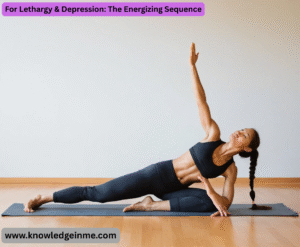
For Lethargy & Depression: The Energizing Sequence
- Intention: To create warmth, movement, and vitality.
Poses (Asanas):
- Bhujangasana (Cobra Pose) & Urdhva Mukha Svanasana (Upward-Facing Dog): Gentle backbends open the chest and heart center, counteracting the slumped posture of depression. They are physically and symbolically uplifting.
- Warrior Poses (I, II): Build strength, stability, and a sense of inner power. Hold them and breathe deeply into the strength of your legs.
- Yoga And Mind Healing Surya Namaskar (Sun Salutations): A flowing sequence that builds heat, coordinates breath with movement, and energizes the entire system.
- Breath (Pranayama): Kapalabhati (Skull-Shining Breath). A series of sharp, forceful exhalations that cleanse and invigorate. (Avoid if you have high blood pressure or are pregnant).
- Meditation: Loving-Kindness (Metta) Meditation. Direct phrases of goodwill towards yourself and others. E.g., “May I be happy. May I be safe. May I be healthy. May I live with ease.” This directly counters the negative self-talk of depression.
- For Grief & Emotional Release: The Heart-Opening Sequence
Intention: To create space for emotion without being consumed by it.
Poses (Asanas):
- Supported Heart Opener: Place a bolster or rolled blanket vertically under your spine while lying down. Let your arms fall open. This pose passively opens the chest and allows emotions to surface in a supported way. It’s common to feel vulnerable or even cry here—that’s a release.
- Anahatasana (Melting Heart Pose): A gentle puppy-like stretch that opens the heart and shoulders.
- Gentle Twists (Supine Twist): Symbolically and physically “wringing out” stagnant energy and emotions.
- Breath (Pranayama): Simple Awareness. Just watch the natural flow of your breath, noticing where it feels tight or free in your chest. Don’t force it.
- Meditation: Journaling after practice. After these poses, sit quietly and write. What came up? Don’t judge it, just let it flow onto the paper.
The Next Level: Integrating Yoga Philosophy for Lasting Change
The mat is a training ground for life. The Yamas and Niyamas offer profound psychological insights:
- Aparigraha (Non-Attachment): Practice letting go of physical tension in a pose. This trains the mind to let go of grudges, outdated stories, and the need to control outcomes.
- Tapas (Discipline): The “fire” of showing up for your practice even when you don’t feel like it. This builds the mental muscle to persevere through difficult times off the mat.
- Ishvara Pranidhana (Surrender): In a deep stretch, there’s a point where you stop forcing and simply allow. This is the practice of surrender—accepting what is, without giving up. This is crucial for healing from things we cannot change.