
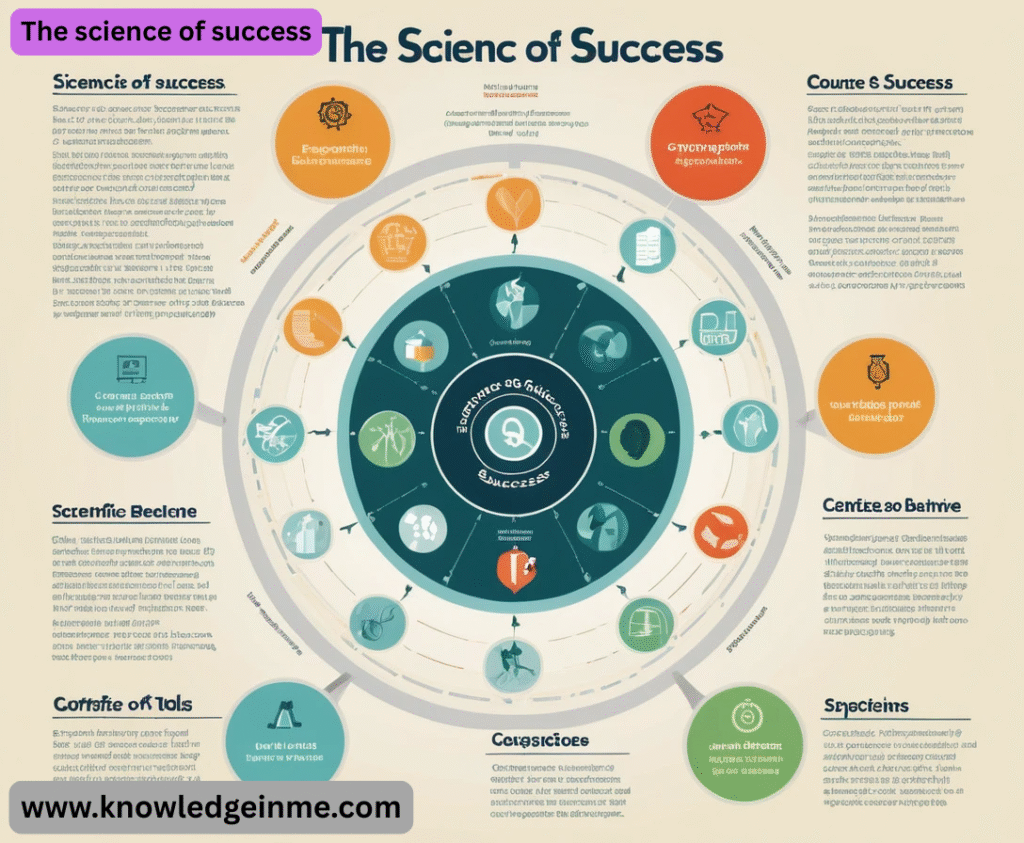

The science of success Of course. The “science of success” is a fascinating field that moves beyond vague motivational advice and into evidence-based principles from psychology, neuroscience, and behavioral economics. It suggests that success isn’t just about innate talent or luck, but about specific, learnable patterns of thought and behavior. Here is a breakdown of the key scientific principles that contribute to success.
The Foundation Mindset The Work of Carol D weck
This is arguably the most important starting point. Psychologist Carol D weck’s research distinguishes between two core mindsets:
- Fixed Mindset: The belief that intelligence, talent, and abilities are static, innate traits. People with this mindset avoid challenges for fear of failure, which they see as a reflection of their inherent limitations.
- Growth Mindset: The belief that abilities can be developed through dedication, hard work, and learning from mistakes. Failure is not a verdict but a data point for improvement.
- The Science: Individuals with a growth mindset are more resilient, embrace challenges, and ultimately achieve more over the long term because they are oriented toward learning and persistence.
The Engine Grit (The Work of Angela Duck worth)
- Psychologist Angela Duck worth defined grit as “passion and perseverance for long-term goals.” Her research found that grit was a more reliable predictor of success than IQ or talent in contexts ranging from West Point Military Academy to the National Spelling Bee.
- The Science: Grit is the ability to sustain effort and interest over years despite failure, adversity, and plateaus in progress. It’s about stamina, not just intensity.
The Road map Deliberate Practice (The Work of Anders Ericsson)
- The popular “10,000-Hour Rule” (from Malcolm Glad well’s Outliers) is a simplification of Anders Ericsson’s research on deliberate practice. It’s not just about putting in time; it’s about how you use that time.
The Science: Deliberate practice involves:
- Working on a Specific Goal: Not just “playing tennis,” but “improving my first-serve percentage.”
- Getting Immediate Feedback: From a coach or by recording yourself.
- Pushing Outside Your Comfort Zone: Operating at the edge of your abilities.
- Full Focus and Concentration: It is mentally demanding and cannot be sustained for hours on end.
The Framework Habits (The Science of Behavioral Loops)
Much of our daily behavior is automatic, governed by habits. Success often comes from building positive habits that automate progress. consists of:
- Cue: A trigger that tells your brain to go into automatic mode.
- Routine: The behavior itself.
- Reward: A positive stimulus that tells your brain the loop is worth remembering.
- The Science: By consciously designing cues and rewards, you can “hack” your brain to build habits that lead to success (e.g., exercise, focused work) and break ones that hinder it.
The Fuel Willpower and Self-Control (The Muscle Model)
- Roy Baumeister’s research popularized the idea of ego depletion—the concept that willpower is a finite resource, like a muscle that gets tired. While recent studies have nuanced this view, the core idea holds: self-control is a key predictor of success.
- The Science: Successful people don’t just have more willpower; they conserve it.
- They use habits (see point 4) to automate good behaviors, so they don’t have to decide each time.
- They structure their environment to minimize temptations.
- They prioritize important tasks for when their willpower is highest (usually the morning).
The Multiplier Emotional Intelligence (EQ)
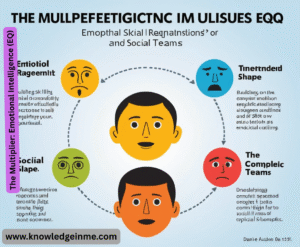
- Pioneered by Daniel Gole man, Emotional Intelligence (EQ) is the ability to recognize, understand, and manage our own emotions and to recognize, understand, and influence the emotions of others.
The Science: High EQ is critical for leadership, teamwork, and navigating social complexities. It comprises:
- Self-Awareness: Knowing your own emotional state.
- Self-Regulation: Managing disruptive impulses.
- Empathy: Understanding others’ emotional makeup.
- Social Skill: Building rapport and leading teams.
The Launchpad A Bias Toward Action
- A key scientific insight is the power of starting, even imperfectly.
The Science:
- The Zeigarnik Effect: Psychologist Bluma Zeigarnik found that people remember uncompleted or interrupted tasks better than completed ones. This mental tension motivates us to finish what we’ve started. Simply beginning a task creates a cognitive itch that drives you to complete it.
- Iterative Learning: In fields like software development, the concept of “agile” methodology emphasizes starting with a minimum viable product and improving through cycles of feedback. This is often more effective than trying to create a perfect plan from the outset.
Synthesizing the Science A Practical Formula
You could think of the science of success as a formula:
- Success = (Growth Mindset + Grit) x (Deliberate Practice + Effective Habits)
- Guided by: Emotional Intelligence & A Bias for Action
- Powered by: Conserved Willpower & a Supportive Environment
Important Caveats
- Luck and Privilege: Science acknowledges the role of randomness, opportunity, and socioeconomic starting points. The principles above are about maximizing your potential within your circumstances.
- Definition of Success: “Success” is subjective. The scientific principles of grit and deliberate practice apply whether you define success as becoming a CEO, a master carpenter, or a dedicated community volunteer.
The Paradox of Success The Power of Negative Thinking Strategic Pessimism
- While a positive growth mindset is crucial for long-term development, research in strategic planning and performance anxiety reveals a surprising ally: defensive pessimism.
- The Science: Defensive pessimism is the cognitive strategy of setting low expectations and mentally working through everything that could go wrong. Unlike optimists who stay calm by focusing on the best-case scenario, defensive pessimists harness their anxiety by preparing for the worst.
- How it Works: By vividly imagining potential obstacles and failures, they are not caught off guard. This process allows them to create detailed contingency plans, which actually reduces anxiety and increases performance when the time comes to act.
- Application: This isn’t about having a negative self-image (which is harmful). It’s about stress-testing your plan. Before a big presentation or product launch, asking “What are the top 5 things that could fail, and what will I do if they do?” is a practical application of this science.
The Environment Over Willpower Situational Design
- As hinted at with willpower, the most profound finding is that your environment often shapes your behavior more powerfully than your internal resolve. This draws from the fundamental Fundamental Attribution Error in psychology—our tendency to over-attribute others’ behavior to their character and under-attribute it to their situation.
- The Science: Successful people don’t just have strong willpower; they are masters of choice architecture. They design their surroundings to make the right action the easiest action and the wrong action more difficult.
Examples:
- Writing: Author Victor Hugo would have his servant take his clothes away, forcing him to stay in his study and write naked.
- Productivity: Using apps that block social media during work hours.
- Health: Keeping junk food out of the house and placing a fruit bowl on the counter.
- Application: Instead of asking “Do I have the discipline to do this?”, ask “How can I design my environment so that this behavior happens automatically?”
The Critical Role of Rest The Science of Recovery
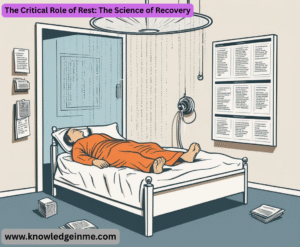
- The culture of “hustle” glorifies non-stop work, but neuroscience and sports science prove this is counterproductive. Success is a marathon, not a sprint, and requires strategic recovery.
The Science:
- Sleep and Memory: During deep sleep, the brain consolidates memories and skills learned during the day (a process crucial for deliberate practice).
- The Ultradian Rhythm: The body operates in 90-120 minute cycles. After this period of high focus, the brain needs a 15-20 minute break to recover. Pushing through leads to diminishing returns and burnout.
- Insight and Incubation: Breakthrough ideas often occur when you are not working—during a walk, a shower, or while resting. This is the “incubation period” where your subconscious mind continues to work on the problem.
- Application: Schedule breaks as seriously as you schedule work. Prioritize 7-9 hours of sleep. View rest not as laziness, but as a non-negotiable part of the performance cycle.
The Social Component The Conveyor Belt of Relationships
Success is rarely a solo end eavor. Sociologist Ron Burt’s research on social capital highlights the concept of “structural holes.”
- The Science: Individuals who build bridges between disparate groups or networks (“filling the structural holes”) have a significant advantage. They are exposed to diverse information, perspectives, and opportunities earlier than others.
- Application: This isn’t just about “networking.” It’s about being the connector. It’s the engineer who also spends time with the marketing team, or the academic who collaborates with industry professionals. These individuals become sources of innovation and are often seen as invaluable leaders.
The Feedback Loop of Progress The Progress Principle
- Teresa Amabile’s research in The Progress Principle found that of all the things that can boost emotions, motivation, and perceptions during a workday, the single most important is making meaningful progress.
- The Science: The brain rewards us with a hit of dopamine when we achieve a goal. This “progress principle” creates a positive feedback loop: small wins boost motivation, which leads to more effort, which creates more wins.
- Application: This is why breaking down large, long-term goals (grit) into tiny, daily wins (habits) is so critical. The feeling of “moving forward” is a powerful psychological fuel. Keep a “done list” to visually track your progress, especially on long projects.
Putting It All Together A Systems View
- The ultimate scientific insight is that success is not about a single magical trait. It’s a dynamic system where each component reinforces the others.
A Practical Example: Writing a Book
- Growth Mindset: You believe you can become a better writer through practice.
- Grit & Deliberate Practice: You commit to writing 500 words daily (grit). You don’t just write; you focus on a specific skill like dialogue (deliberate practice) and get feedback from an editor.
- Habits & Environment: You write every morning at 7 AM (cue) at a clean desk with your phone in another room (environment design). The feeling of accomplishment is your reward.
- Strategic Pessimism: You anticipate writer’s block. Your plan? If you’re stuck, you’ll free-write for 10 minutes without judgment.
- Rest & Recovery: You stop after 90 minutes and take a walk (ultradian rhythm). You protect your sleep to allow for creative consolidation.
- Progress Principle: You track your word count on a chart. Seeing the line go up provides a dopamine hit that motivates you for the next day.
- Social Capital: You join a writer’s group, connecting with editors and agents, bridging a “structural hole.”