
Role of Sunlight Of course. The role of sunlight is fundamental and multifaceted, extending far beyond simply “providing light.” It is the primary driver of almost all life and processes on Earth. Its role can be broken down into several key areas:

The Ultimate Source of Energy for Life (Photosynthesis)
This is arguably sunlight’s most critical role.
- Process: Plants, algae, and some bacteria convert sunlight, water, and carbon dioxide into chemical energy (sugars/glucose) and oxygen.
- Impact: This process forms the base of nearly every food web on Earth. Herbivores eat plants, carnivores eat herbivores, and so on. The energy we get from food, and even the energy in fossil fuels (which come from ancient plant and animal matter), can be traced back to the sun.
Driver of Earth’s Climate and Weather
Sunlight is the engine of our planet’s climate system.
- Differential Heating: The sun does not heat all parts of the Earth equally. This temperature difference creates global atmospheric circulation patterns (wind) and ocean currents as the planet works to redistribute this heat.
- Water Cycle: Sunlight provides the energy for evaporation, lifting water from oceans, lakes, and land into the atmosphere. This is the first and most crucial step in the water cycle, which leads to cloud formation, precipitation, and weather events.
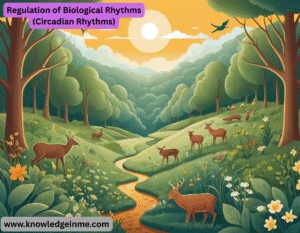
Regulation of Biological Rhythms (Circadian Rhythms)
Sunlight is the primary timekeeper for most organisms.
- Sleep-Wake Cycle: In humans and animals, exposure to sunlight, especially in the morning, helps regulate the production of hormones like melatonin and serotonin. This sets our internal 24-hour clock, influencing sleep patterns, alertness, mood, and metabolism.
- Animal Behavior: It guides migration, hibernation, foraging, and reproductive cycles for countless species. Plants also use light cues to time their flowering and growth seasons (photoperiodism).
Vital for Human Health
- Beyond regulating sleep, sunlight is directly necessary for health.
- Vitamin D Synthesis: When UV-B rays from sunlight hit our skin, they trigger the production of Vitamin D. This vitamin is essential for:
- Calcium absorption and strong bone health.
- Immune system function.
- Reducing inflammation.
- Mental Health: Exposure to sunlight is known to boost serotonin levels, which can improve mood, focus, and help combat conditions like Seasonal Affective Disorder (SAD) and depression.
Geological and Environmental Role
- Weathering: Sunlight contributes to the thermal expansion and contraction of rocks, a form of physical weathering that breaks them down over time.
- Energy Source: In the modern era, solar power is a rapidly growing technology that harnesses sunlight directly to generate clean, renewable electricity, reducing our reliance on fossil fuels.
A Simple Analogy: The Sun as the “Heart” of the Solar System
Think of the Sun as the heart of our planetary system. Just as the heart pumps blood to deliver oxygen and nutrients to every cell in your body, the Sun “pumps” energy in the form of sunlight to Earth. This energy:
- Powers life (like oxygen in blood).
- Drives systems (like blood driving metabolic processes).
- Sets rhythms (like a heartbeat setting a pace).
Evolutionary Driver and Selective Force
Sunlight has been a primary architect of life’s evolution.
- Adaptation: The need to capture sunlight led to the evolution of chlorophyll and complex photosynthetic machinery. It also drove the development of eyesight in animals, as detecting light and shadow offered a massive survival advantage for finding food and avoiding predators.
- Camouflage and Coloration: The colors of plants and animals are often adaptations related to sunlight. Flowers evolved bright colors to attract pollinators in well-lit environments. Animal camouflage patterns are designed to work under specific light conditions. Even human skin pigmentation is an evolutionary adaptation to regulate the amount of UV radiation absorbed.
The Physics of Light: Beyond Visible Spectrum
- Sunlight is much more than the light we see. It’s a full spectrum of electromagnetic radiation, each part playing a unique role.
- Ultraviolet (UV) Light: Causes sunburn, but also sterilizes surfaces by damaging the DNA of microorganisms. This is a natural sanitizing process.
- Infrared (IR) Light: This is primarily heat energy. Infrared rays are what warm the Earth’s surface and atmosphere directly.
- Visible Light: The band used for vision and photosynthesis. Plants primarily use red and blue light for growth.
Regulator of Earth’s Energy Balance (The Albedo Effect)
Sunlight is central to a delicate planetary balancing act.
- Albedo: This is the measure of how much sunlight a surface reflects. Ice and snow have a high albedo (they reflect most sunlight back to space), while dark ocean water has a low albedo (it absorbs most sunlight).
- Feedback Loops: This is critical for climate science. For example, as global warming melts Arctic ice, it replaces a high-albedo surface (ice) with a low-albedo surface (dark ocean). The ocean absorbs more heat, which leads to more melting, which leads to more absorption—a powerful positive feedback loop accelerating warming.

Cultural, Social, and Economic Role
Human civilization has been shaped by the sun.
- Agriculture and Timekeeping: The invention of agriculture was entirely dependent on understanding seasonal sun cycles. Ancient structures like Stonehenge and the pyramids are precisely aligned with solstices and equinoxes, showing the sun’s role as a calendar.
- Culture and Religion: The sun is a nearly universal deity or symbol of power, life, and rebirth (e.g., Ra in Egyptian mythology, Inti for the Incas, Surya in Hinduism). The concept of “solar power” is ancient.
- Architecture and Urban Planning: From the orientation of ancient Greek homes to modern “passive solar” building design, sunlight has always dictated how we construct our shelters for optimal light and heat.
Psychological and Behavioral Effects
The influence extends beyond basic circadian rhythms.
- Productivity and Cognition: Studies show that access to natural light in workplaces and schools improves productivity, concentration, and overall cognitive performance.
- Social Behavior: People tend to be more socially active and positive during sunnier seasons and in sunnier climates. Outdoor activities are facilitated by sunlight, fostering community and exercise.
The Negative Roles and Dangers:
- It’s important to note that sunlight’s role is not exclusively beneficial.
- DNA Damage and Cancer: Overexposure to UV radiation is the primary cause of skin cancer, as it can cause mutations in the DNA of skin cells.
- Photo degradation: Sunlight breaks down materials like plastics, paints, and fabrics through a process called photo degradation, causing them to fade, weaken, and become brittle over time.
- Drought and Desertification: The same solar energy that powers the water cycle can, in excess and combined with other factors, lead to the evaporation of vital water sources, contributing to drought and the expansion of deserts.