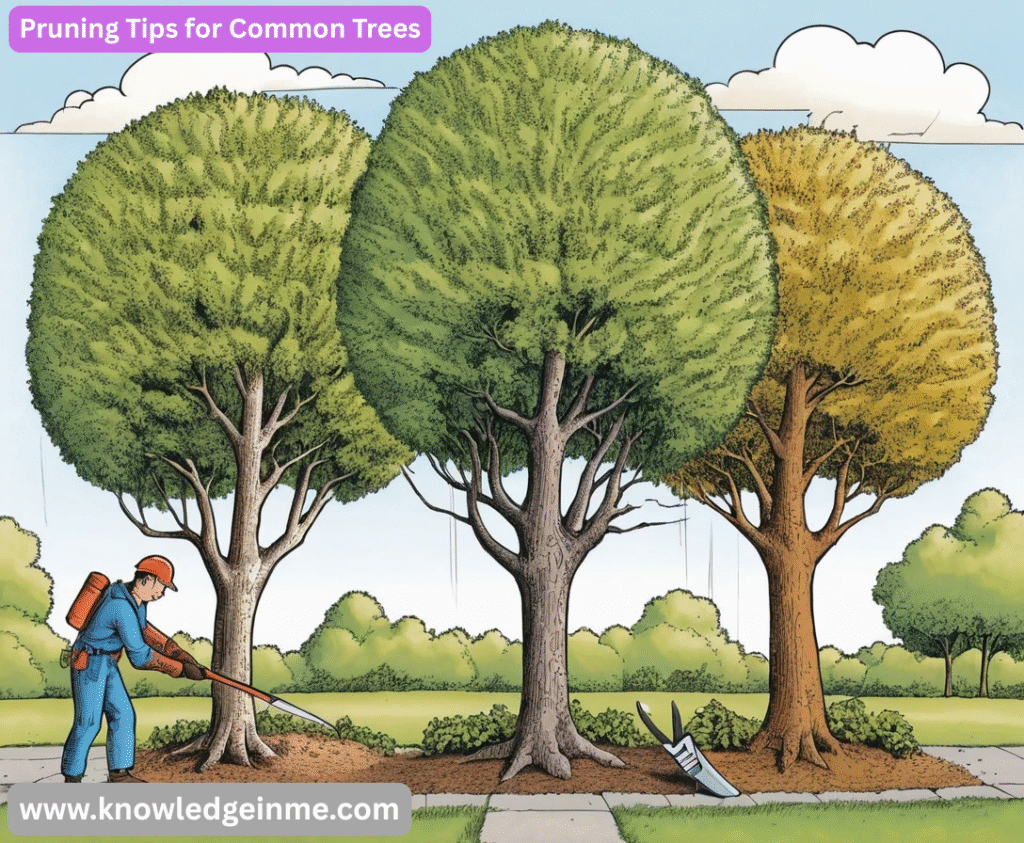

Pruning Tips for Common Trees Of course! Here is a comprehensive guide to pruning common trees, covering the “why,” “when,” “how,” and specific tips for popular species.
The Golden Rules: Why, When, and How
Why Prune? (The Goals)
- Health: Remove dead, diseased, damaged, or crossing branches.
- Safety: Eliminate hazardous branches that could fall on structures, power lines, or people.
- Structure: Encourage a strong, resilient form for the tree’s long-term life.
- Aesthetics: Improve shape, encourage flowering, or manage size.
- Airflow & Light: Open the canopy to allow more light and air to penetrate, reducing disease risk.
When to Prune? (The Timing)
- Timing is critical to avoid harming the tree or sacrificing blooms.
- General Rule: The best time for major pruning is during the dormant season (late fall to late winter). The tree is not actively growing, so it experiences less stress, and wounds heal quickly as spring growth begins. It’s also easier to see the branch structure without leaves.
Exceptions:
- Spring-Flowering Trees (e.g., Dogwood, Cherry, Redbud, Lilac): Prune immediately after they finish flowering. If you prune in winter, you will cut off the flower buds.
- Summer-Flowering Trees (e.g., Crape Myrtle): Prune in late winter or early spring, as they flower on new growth.
- Heavy Sap Flowers (e.g., Birch, Maple, Walnut): Prune in mid-summer to avoid “bleeding” sap, which is unsightly but not usually harmful. Avoid late winter/early spring when sap flow is highest.
- Dead, Diseased, or Damaged Branches: Can and should be removed any time of year.
- How to Prune? (The Technique)
- Using the correct cut prevents damage and allows the tree to heal properly.
The Three-Cut Method (for large, heavy branches):
This prevents the bark from tearing down the trunk.
- Cut #1 (Undercut): 12-18 inches from the trunk. Cut upward from the bottom about 1/3 of the way through the branch.
- Cut #2 (Top Cut): Move 2-3 inches further out from the first cut. Cut downward from the top all the way through to remove the bulk of the branch.
- Cut #3 (Final Cut): Remove the remaining stub. Make a clean cut just outside the branch collar (the slightly swollen area where the branch meets the trunk). Do not cut flush with the trunk!
Thinning Cut:
- Removes a branch at its point of origin back to a lateral branch or the main trunk. This is the preferred method for maintaining a natural shape and encouraging good structure.
Heading Cut:
- Cuts a branch back to a bud. This encourages bushy growth behind the cut. Use this sparingly, as it can create weak, congested growth if overdone.
Pruning Tips for Common Trees
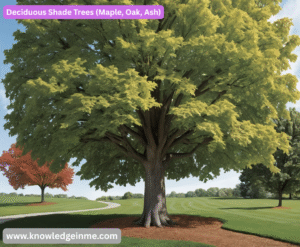
- Deciduous Shade Trees (Maple, Oak, Ash)
- Goal: Develop a strong central leader (one main trunk) and well-spaced lateral branches.
Tips:
- Prune when young to establish structure. Remove competing leaders.
- Avoid “topping” (cutting large branches back to stubs) at all costs. It creates weak, hazardous growth.
- Oak Trees: To prevent the spread of Oak Wilt, a fatal disease, prune oaks only during dormancy (Nov – Feb) in areas where the disease is present.
Fruit Trees (Apple, Pear, Peach, Cherry)
- Goal: Maximize fruit production and allow light into the canopy.
Tips:
- Prune in late winter to encourage vigorous spring growth.
- Focus on creating an open “vase” or central leader shape.
- Remove any water sprouts (vigorous vertical shoots) and suckers (shoots from the base).
- Prioritize removing inward-growing and downward-growing branches.
Flowering Trees
- Dogwood & Redbud: Prune after flowers fade in spring. They need little pruning; focus on removing dead wood and thinning crowded branches.
- Crape Myrtle: A commonly butchered tree (“crape murder”). Do not top them!
- Prune in late winter. Simply remove:
- Suckers from the base.
- Smaller branches growing inward.
- Crossed or rubbing branches.
- Last year’s seed pods (optional for aesthetics).
- Magnolia: Needs minimal pruning. Prune after flowering if necessary. They don’t heal well from large cuts, so only remove what is absolutely necessary.
Evergreens (Pine, Spruce, Fir)
- Goal: Maintain natural shape.
Tips:
- Pruning Tips for Common Trees The best time is in early summer when new growth (“candles”) is still soft.
- For pines, you can prune by snapping off up to 2/3 of the length of the new candle before the needles expand.
- Avoid cutting back into old wood that has no needles, as it may not generate new growth.
Ornamental Trees (Japanese Maple, Birch)
- Japanese Maple: Best pruned in dormancy (winter) when the structure is visible. They are slow-growing; be subtle and deliberate. Use thinning cuts to create an elegant, open structure. Avoid heading cuts.
- Birch: Prune in mid-to-late summer to avoid the heavy sap flow of spring. Focus on removing dead or poorly placed branches.
What to Avoid (The “Don’ts”)
- DON’T TOP Trees: This is the #1 pruning mistake. It stresses the tree and creates weak, fast-growing branches that are more likely to break.
- DON’T Use Pruning Paint/Wound Dressing: Research shows it does not prevent decay and can actually interfere with the tree’s natural healing process.
- DON’T Remove More Than 25% of the Canopy in One Season: This can severely stress the tree.
- DON’T Make Flush Cuts: Always identify and respect the branch collar.
- DON’T Prune When Branches are Wet: This can spread disease more easily.
Advanced Concepts: Beyond the Basic Cut
Structural (Formative) Pruning for Young Trees
- This is the most important pruning you will ever do. A well-structured young tree becomes a resilient, low-maintenance mature tree.
- Goal: Establish a single, dominant central leader (the main trunk) and well-spaced, strong scaffold branches (the main lateral branches).
How-To:
- Identify the Leader: Choose the strongest, most central upward-growing stem to be the leader.
- Subordinate Competing Leaders: Identify other upright stems that compete with your chosen leader. Do not remove them entirely. Instead, prune them back to a lateral branch that is shorter than the central leader. This weakens them without creating large wounds, allowing the chosen leader to dominate.
- Select Scaffold Branches: Choose branches that have wide-angle crotches (as close to 10 o’clock or 2 o’clock as possible). These are much stronger than narrow, V-shaped crotches, which are prone to splitting.
- The “Rule of Thumb” for Vertical Spacing: Scaffold branches should be spaced at least 6-12 inches apart vertically on the trunk. For horizontal spacing, imagine the branches radiating from the trunk like spokes on a wheel; no two should be directly above one another.
Understanding Apical Dominance
- This is the biological principle that guides pruning decisions. The terminal bud (the bud at the very end of a branch) produces hormones that suppress the growth of the lateral buds behind it.
- A Heading Cut (cutting back to a bud) breaks apical dominance. The bud you cut back to becomes the new terminal bud, and you stimulate the growth of several buds behind it, creating a dense, bushy effect. (Use this carefully!).
- A Thinning Cut (removing a branch at its origin) preserves apical dominance. You don’t stimulate rampant new growth near the cut; you simply redirect energy into the remaining branches, maintaining the tree’s natural growth habit.
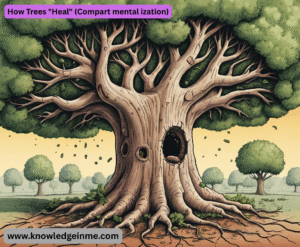
How Trees “Heal” (Compart mental ization)
- Trees don’t heal wounds like humans do; they seal them off. They form walls of specialized cells around the wound to prevent decay from spreading into the rest of the tree.
- Why the Branch Collar is Sacred: The branch collar contains pre-formed defensive chemicals. A cut made just outside the collar allows the tree to most effectively seal the wound. A flush cut invades this zone and makes the tree vulnerable to decay.
Deep Dive into Common Species
The Crape Myrtle Controversy: “Crape Murder” Explained
- Why It’s Bad: Topping creates weak, knuckled growth that is more susceptible to disease and breakage. It wastes the tree’s energy on sucker growth instead of beautiful, flowering branches. It utterly destroys the tree’s natural, elegant form.
The Right Way:
- Remove all suckers from the base.
- Remove any branches growing inward toward the center.
- Thin out small, twiggy branches from the interior to allow for air circulation.
- Optionally, you can carefully reduce the height by cutting back to a lateral branch that is at least 1/3 the diameter of the branch being removed and that is growing in a direction you want to encourage. This is a thinning cut, not a heading cut.
Conifers (Pines, Spruces, Firs) vs. Broadleaf Evergreens (Holly, Magnolia)
- Conifers: As mentioned, they generally won’t bud back on old wood. Prune during “candle” stage or for shape in early summer.
- Broad leaf Evergreens: Hollies, Southern Magnolias, etc., can be treated more like deciduous trees. They can handle more aggressive pruning and will often generate new growth from old wood. Prune in dormancy or after flowering.
Fruit Trees: Espalier and Open Center
- Pruning Tips for Common Trees Espalier: This is the art of training a tree to grow flat against a wall or trellis. It requires summer pruning to manage new, soft growth and direct the tree’s energy.
- Open Center (Vase) Shape: Common for stone fruits like peaches, plums, and cherries. The central leader is removed entirely, and 3-5 main scaffold branches are trained to grow outward and upward, creating a bowl-shaped tree that allows maximum sunlight to reach all fruit-bearing branches.
The Toolbox: Right Tool for the Right Job
- Bypass Hand Pruners (Secateurs): Your most used tool. The scissor-like action makes clean cuts on branches up to ~3/4″. Ideal for precise cuts.
- Bypass Loppers: Long handles provide leverage for branches from ~3/4″ to 1.5″-2″. Essential for reaching into the canopy.
- Pruning Saw: For branches larger than what loppers can handle. Modern tri-edge or curved saws cut on the pull stroke and are incredibly efficient.
- Pole Pruner: For high branches. Use with extreme caution. Never use near power lines.
- Hedge Shears: Only for shaping hedges and shrubs, not for pruning trees.
- Tool Maintenance: Keep blades sharp and clean. Wipe down with oil to prevent rust. Disinfect with isopropyl alcohol or a 10% bleach solution between trees to prevent disease spread.
When to Absolutely Call an Arborist (ISA Certified)
- The work requires you to leave the ground. (Ladder work is dangerous).
- (Assume all lines are live and contact the utility company).
- The tree has significant defects: large cavities, cracks in the trunk, or signs of decay.
- You need to remove a very large branch (over 4-5 inches in diameter) high in the canopy.
- The tree is valuable or historic and the consequences of a mistake are high.