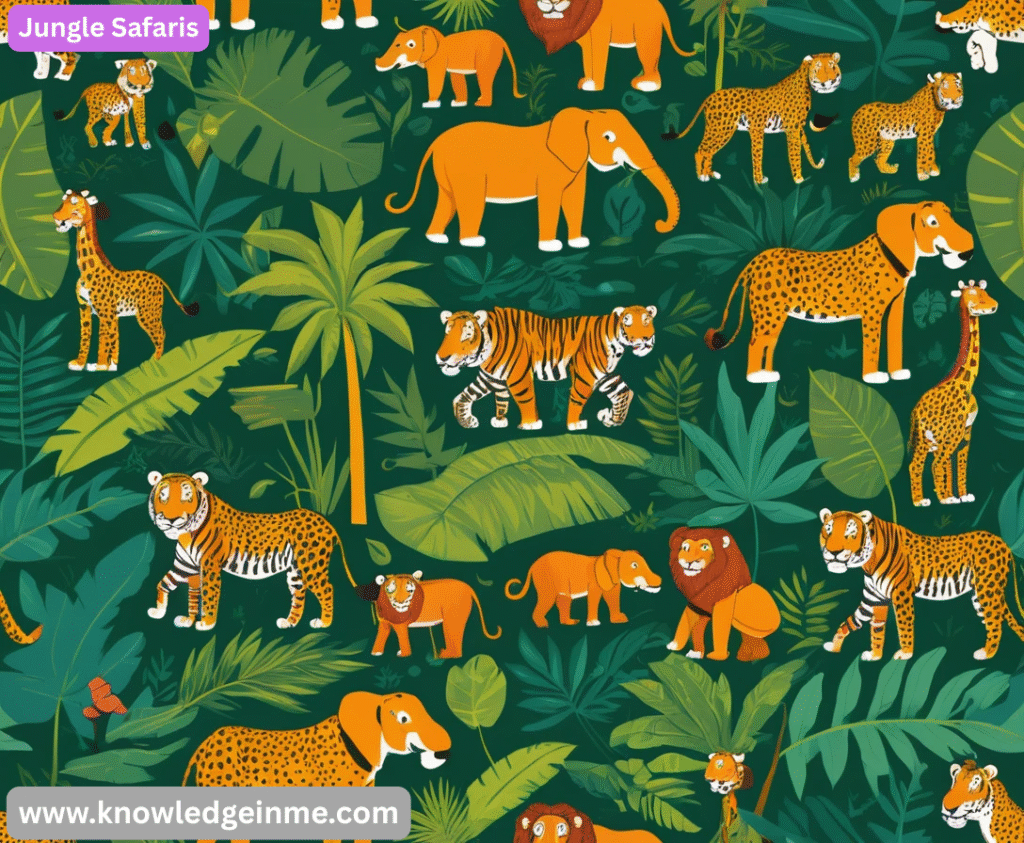

Jungle Safaris A jungle safari is an expedition into a forest or wilderness area, primarily to observe wildlife in its natural habitat. Unlike the open savannas of Africa, jungle safaris typically involve navigating dense forests, rivers, and wetlands to spot a different set of animals that are often more elusive and camouflaged. The classic image is a 4×4 jeep, but jungle safaris can also be conducted on foot, by boat, on elephants, or even from watchtowers.
Top Destinations for Jungle Safaris
India: The Land of the Tiger
- India is arguably the world’s premier jungle safari destination, famous for its Bengal tigers and rich biodiversity.
Key Parks:
- Ranthambore National Park, Rajasthan: Tigers set against the backdrop of an ancient fort. Known for good sighting opportunities.
- Bandhavgarh & Kanha National Park, Madhya Pradesh: These parks in “Kipling Country” inspired The Jungle Book. High density of tigers.
- Kaziranga National Park, Assam: Home to two-thirds of the world’s population of the rare One-horned Rhinoceros. Also has wild water buffalo and elephants.
- Star Attraction: Bengal Tiger, Leopard, Sloth Bear, Indian Elephant, One-horned Rhino (Kaziranga), countless bird species.
Nepal: Himalayan Foothills
- Nepal combines mountain scenery with dense tropical forests.
Key Parks:
- Chitwan National Park: A UNESCO World Heritage Site, famous for rhinos, Bengal tigers, and gharial crocodiles.
- Bardiya National Park: More remote and wild, offering a higher chance of spotting elusive species like tigers and wild elephants.
- Star Attraction: One-horned Rhinoceros, Bengal Tiger, Gharial Crocodile.
Sri Lanka: The Island Gem
- Compact yet incredibly biodiverse, Sri Lanka’s parks offer a huge variety of life.
Key Parks:
- Yala National Park: Has one of the highest leopard densities in the world.
- Wilpattu National Park: Known for its natural “willus” (lakes) and sloth bears.
- Sinharaja Forest Reserve: A UNESCO site, better for rainforest hiking and birding than traditional jeep safaris.
- Star Attraction: Leopard, Sloth Bear, Asian Elephant, incredible endemic birds.
Southeast Asia: Dense Rainforests
- Thailand: Khao Yai National Park (elephants, gibbons, tigers) and Kaeng Krachan (birds, elephants).
- Indonesia: Tanjung Puting National Park, Borneo for river safaris to see orangutans, proboscis monkeys, and crocodiles.
- Malaysia: Taman Negara is one of the world’s oldest rainforests, great for hiking, birding, and spotting tapirs.
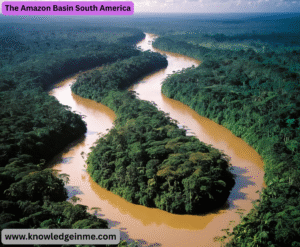
The Amazon Basin South America
- The ultimate “jungle” experience in the world’s largest tropical rainforest.
- Countries: Brazil, Peru, Ecuador, Colombia, Bolivia.
- Experience: More focused on riverboat journeys, canopy walks, and guided jungle hikes than jeep safaris.
- Star Attraction: Jaguar, Pink River Dolphin, Anaconda, Macaws, Monkeys, Sloths.
Africa: The Lush Forests
- While famous for savannas, Africa has incredible jungles.
- Uganda & Rwanda: For Bwindi Impenetrable Forest and Volcanoes National Park – the home of trekking to see Mountain Gorillas.
- Democratic Republic of Congo: Virunga National Park for gorillas and active volcanoes.
- Madagascar: A world apart, with unique wildlife like lemurs, chameleons, and baobab trees.
Types of Jungle Safaris
- Jeep Safari (Gypsy/CANTER): The most common. Open-top 4×4 vehicles driven by experienced guides and naturalists.
- Elephant Safari: Offers a high vantage point to traverse through tall grasses and get closer to animals (like rhinos) without alarming them. Ethical considerations are important; choose operators who treat elephants well.
- Boat Safari: Excellent in wetlands like Kaziranga, Chitwan, or the Amazon. Perfect for viewing water birds, crocodiles, and animals coming to the water to drink.
- Walking Safari: A guided trek with an armed ranger. Offers an intimate experience of the jungle—tracking prints, smelling the air, and noticing the smaller insects, plants, and bird calls.
- Canopy Watchtowers: Some parks have watchtowers or hides near waterholes, allowing for silent, stationary viewing.
Essential Tips for Your Jungle Safari
- Book in Advance: Permits for popular parks (especially in India for tiger zones) sell out months in advance, particularly for the high season.
Choose Your Season Wisely:
- Dry Season (Oct-Apr in Asia): Best for wildlife viewing. Animals congregate around scarce water sources, and vegetation is thinner.
- Wet Season (May-Sep): Lush, green, and beautiful for photography, but animals are harder to spot in the thick foliage. Some parks close during monsoon.
- Follow the Rules: Listen to your guide. Do not stand up, make loud noises, or try to get the animal’s attention. Never get out of the vehicle unless in a designated safe area.
What to Wear & Pack:
- Clothing: Wear muted colors like beige, green, brown, and grey. Avoid bright colors and white.
- Comfort: Wear light, breathable clothes in summer and layer up for cold mornings in winter.
- Essentials: Binoculars are a MUST. Also pack a good camera, sunscreen, insect repellent, a hat, and a reusable water bottle.
- Manage Expectations: The jungle is not a zoo. Spotting animals, especially predators, requires patience and luck. Enjoy the entire experience—the sounds, the smells, and the sheer beauty of the forest.
- Respect Wildlife: Maintain a safe distance. Your presence should not alter the animal’s natural behavior.
The Art of Jungle Tracking: Reading the Signs
- On a savanna, you see the animals. In a jungle, you find them. This is the real thrill. Your guide will be your interpreter, reading the forest’s language:
- Pugmarks (Paw Prints): The most obvious sign. The size, depth, and freshness tell the guide the species, size, and how recently the animal passed by.
- Scat (Droppings): A wealth of information. It can identify the animal, what it ate, and how long ago it was there.
- Scratches on Trees: Tigers, leopards, and bears mark their territory by clawing tree bark. The height of the marks can indicate the size of the animal.
- Alarm Calls: The jungle’s early warning system. A sambar deer’s loud, piercing bark, a langur’s specific chattering, or a peacock’s cry often means a predator is on the move. Guides use these calls to triangulate a big cat’s position.
- Kills and Remains: A carcass or drag marks mean a predator is likely nearby, either resting or guarding its meal.
- Vocalizations: The deep, resonant “aaaaoum” of a tiger’s roar just before dawn or after dusk is an unforgettable sound that guides can use to locate them.
Ethical Safari Practices: Be a Responsible Traveler
- The impact of tourism on fragile ecosystems is significant. Choosing to be an ethical traveler ensures these wonders exist for generations to come.
- Choose Responsible Operators: Research your tour company. Do they follow park rules? Do they employ local guides and naturalists? Do they respect animal boundaries?
- The Elephant Question: If offered an elephant safari, investigate thoroughly. Ask how the elephants are treated. Are they chained when not working? Do they have space to roam socially? The “bareback” or “howdah-less” (no large saddle) option is often a sign of better welfare. Consider if observing wild elephants from a jeep is a better choice.
- Keep Your Distance: Never pressure your driver to get “just a little closer.” This stresses the animal and can provoke a dangerous charge. Use your zoom lens instead.
- Silence is Golden: Keep noise to an absolute whisper. You’ll hear more, see more, and disturb less. The sounds of the jungle are part of the magic.
- Leave No Trace: Take all your trash (including biodegradable like fruit peels) back with you. Nothing should be left behind.
- No Flash Photography: Using a flash can startle and temporarily blind animals, especially at night.
Beyond the Big Cats: Appreciating the Ecosystem
- While the tiger or leopard is the star, a true jungle aficionado learns to appreciate the entire supporting cast.
- The Birdlife: Jungles are a birder’s paradise. From the majestic Crested Serpent Eagle to the tiny, colorful sunbirds and the prehistoric-looking hornbills, birds are everywhere and often easier to observe.
- The Reptiles: Look for monitor lizards basking on rocks, crocodiles sunning on riverbanks, and a stunning variety of snakes (mostly shy and non-venomous).
- The Insects & Arachnids: The micro-world is fascinating. Look for intricate spider webs, colorful butterflies, and industrious lines of ants.
- The Trees and Plants: Learn about the medicinal plants, the mighty strangler figs, and the ancient trees that form the very structure of the jungle.