
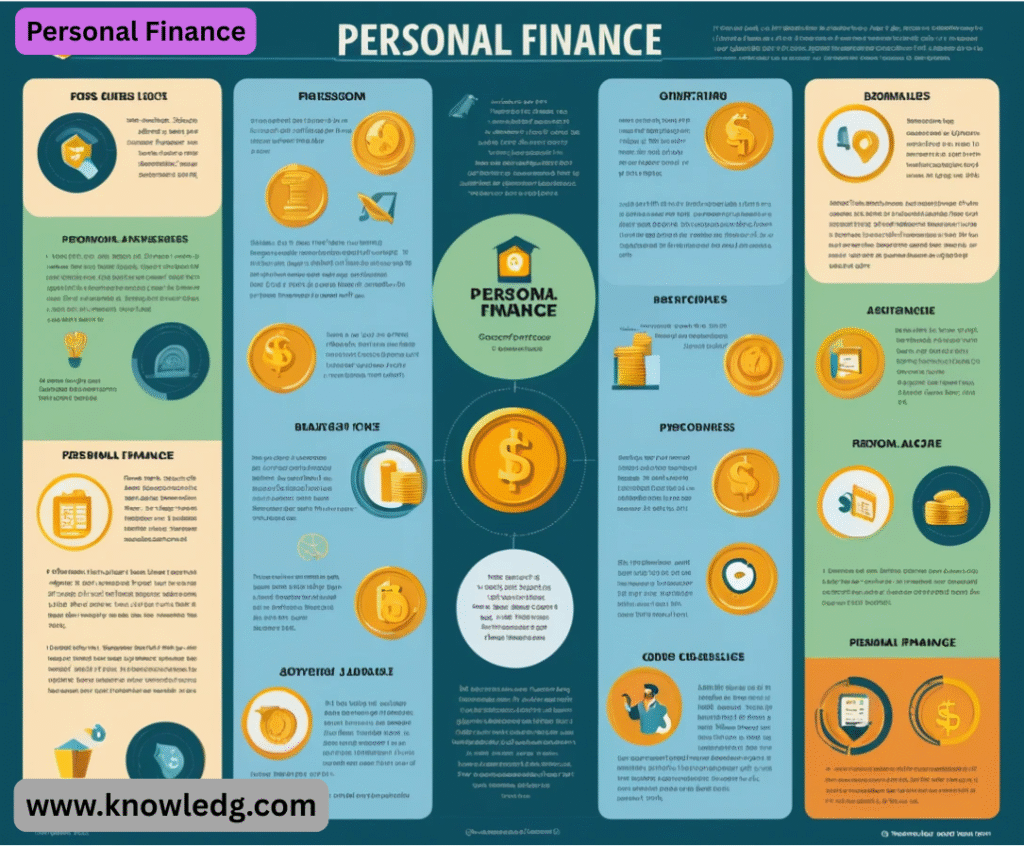

Personal Finance Here is a comprehensive guide to the core principles and key areas of personal finance.
The Foundation: The Five Pillars of Personal Finance
- Think of managing your money as building a house. You need a solid foundation before you add the walls and roof.
- Income: The total amount of money you earn. This is the fuel for your entire financial plan. Sources include:
- Salary, wages, tips, bonuses
- Interest and investment earnings (dividends, capital gains)
- Side hustles and freelance work
- Spending: The money going out. This is where most people need the most control.
- Essential Spending: Housing, food, utilities, transportation, insurance.
- Discretionary Spending: Entertainment, dining out, hobbies, vacations.
- Key Tool: A budget (or spending plan) is essential to manage this.
- Saving: The money you don’t spend. This is your safety net and your future opportunity fund.
- Emergency Fund: The most important savings goal.
- Short-Term Goals: Saving for a vacation, a down payment on a car, or a new laptop.
- Investing: Using your money to make more money. While saving is about preserving money, investing is about growing it over the long term.
- Common vehicles: Stocks, bonds, mutual funds, ETFs, real estate.
- Protection (Insurance): Safeguarding yourself and your assets from unforeseen disasters.
Key Areas to Master
Budgeting and Tracking Expenses
- This is the most critical skill. You can’t manage what you don’t measure.
- 50/30/20 Rule: A popular, simple budgeting framework.
- 50% of income for Needs (rent, groceries, minimum debt payments)
- 30% for Wants (dining out, entertainment, shopping)
- 20% for Savings & Debt Repayment (emergency fund, retirement, extra payments on debt)
- Zero-Based Budget: Every dollar of income is assigned a job (spending, saving, or investing) so your income minus your expenses equals zero.
- Tools: Apps like Mint, YNAB (You Need A Budget), or a simple spreadsheet.
Managing and Eliminating Debt
Not all debt is created equal.
- “Bad” Debt: High-interest debt that finances depreciating assets.
- Examples: Credit card debt, payday loans. Priority #1 is to eliminate this.
Strategies:
- Debt Avalanche: Pay minimums on all debts, put any extra money toward the debt with the highest interest rate. (Saves the most money on interest).
- Examples: A mortgage (for an appreciating asset: a house), student loans (for an investment in your earning potential).
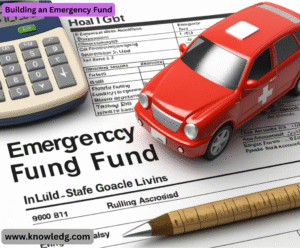
Building an Emergency Fund
- This is your financial shock absorber. It prevents you from going into high-interest debt when unexpected expenses arise (car repair, medical bill, job loss).
- Goal: Start with $1,000. Then build to 3-6 months’ worth of essential living expenses.
- Where to keep it: In a safe, liquid (easily accessible) account like a high-yield savings account.
Saving for Retirement
- Time is your greatest asset. Thanks to compound interest, starting early is exponentially more powerful than starting later.
- Take advantage of tax-advantaged accounts:
- 401(k): Employer-sponsored plan.
- IRA (Individual Retirement Account): You open this yourself.
Investing Basics
- Start Early: Even small amounts add up over decades.
- Use low-cost index funds or ETFs.
- Think Long-Term: Don’t try to time the market. Consistently invest and stay the course through market ups and downs.
Protecting Your Wealth (Insurance)
- Health Insurance: Non-negotiable for protecting against massive medical bills.
- Renter’s/Homeowner’s Insurance: Protects your dwelling and belongings.
- Auto Insurance: Legally required and crucial for accident-related costs.
- Life Insurance: Essential if someone depends on your income (e.g., a spouse, children).
- Disability Insurance: Often overlooked.
A Simple Action Plan to Get Started Today
- Track Your Spending: For one month, write down every single penny you spend. No judgment, just data collection.
- Create a Basic Budget: Use the 50/30/20 rule as a starting point based on your tracking.
- Open a High-Yield Savings Account: Set up an automatic transfer of even $25 per week to start building your emergency fund.
- Contribute to Your 401(k): If your employer offers a match, increase your contribution immediately to capture the full match.
- Tackle High-Interest Debt: Choose the Avalanche or Snowball method and start attacking your credit card debt.
The Psychology of Money
- Your mindset is often more important than the math.
- Scarcity vs. Abundance Mindset: A scarcity mindset (“I’ll never have enough”) leads to fear-based decisions. An abundance mindset (“I can make choices to improve my situation”) leads to empowerment and growth.
- “Stealth Wealth”: Avoiding lifestyle inflation. Just because you get a raise doesn’t mean you need a more expensive car or a bigger house.
- Your “Why”: Personal finance is not about collecting the most money. It’s about what that money enables—security, freedom, choices, the ability to help others, or to pursue passions. Define your “why” to stay motivated.
Advanced Cash Flow Management
- Personal Finance Sinking Funds: This is a pro-level budgeting move. Instead of being surprised by irregular expenses, you save for them monthly.
- Example: Car insurance is $600 every 6 months. You create a “Car Insurance” sinking fund and automatically transfer $100 to a dedicated savings account each month.
- What to save for: Car maintenance, holiday gifts, annual subscriptions, property taxes, vacations.
- The Hierarchy of Cash Flow: What to do with your next dollar?
- Cover Essentials: Food, shelter, utilities, transportation.
- Get 401(k) Match: Free money is the highest-return investment you’ll ever get.
- Pay Down High-Interest Debt: Credit card APRs are often 20%+. Paying this off is a guaranteed return of 20%.
- Maximize Tax-Advantaged Accounts: Increase 401(k) contributions and max out an IRA (Roth or Traditional).
- Pay Down Medium-Interest Debt: Student loans, auto loans in the 4-7% range. This is a gray area where personal risk tolerance matters.
- Invest in a Taxable Brokerage Account: For goals beyond retirement.
- Pay Down Low-Interest Debt: Mortgages below ~4%. Pre-paying this is often more emotional than mathematical, as invested funds likely outperform this low rate over time.
Deep Dive on Investing
- Rule of Thumb: 120 – Your Age = % in Stocks. A 30-year-old might be 90% stocks/10% bonds. A 60-year-old might be 60% stocks/40% bonds. This is just a starting point.
Tax-Efficient Investing:
- Location: Hold investments in the right type of account.
- Taxable Brokerage Accounts: Hold tax-efficient investments like ETFs, index funds, and stocks you plan to hold long-term (qualified dividends and long-term capital gains are taxed at lower rates).
- Tax-Advantaged (IRA/401k): Hold tax-inefficient investments like bonds (which generate ordinary income) and actively traded funds.
- Financial Independence, Retire Early (FIRE): A movement focused on extreme savings and investment to achieve financial independence much earlier than traditional retirement age. The core principle is living on a small percentage of your investment portfolio (e.g., the 4% Rule).
Protecting Your Estate
Estate Planning (It’s Not Just for the Wealthy):
- Will: Dictates who gets your assets and, crucially, who becomes the guardian of your minor children.
- Living Will / Advance Healthcare Directive: outlines your wishes for medical care if you’re incapacitated.
- Beneficiary Designations: Double-check these on all accounts (401k, IRA, life insurance). They override instructions in a will.
Common Pitfalls to Avoid
- Lifestyle Inflation: The #1 wealth killer. As your income increases, your spending increases at the same rate, trapping you on a “hedonic treadmill” where you never feel richer.
- Not Negotiating: People leave thousands of dollars on the table by not negotiating salary, bills (cable, internet, insurance), and even large purchases.
- Financial Infidelity: Hiding purchases or debts from a partner. It erodes trust, which is the foundation of a joint financial life.
- Being Underinsured: Skipping renter’s insurance or disability insurance can be a catastrophic mistake. It’s a small price to pay for immense protection.
- Letting “Perfect” Be the Enemy of “Good”: Waiting for the perfect budget or the perfect time to invest means you’re losing valuable time. Start messy and refine as you go.