
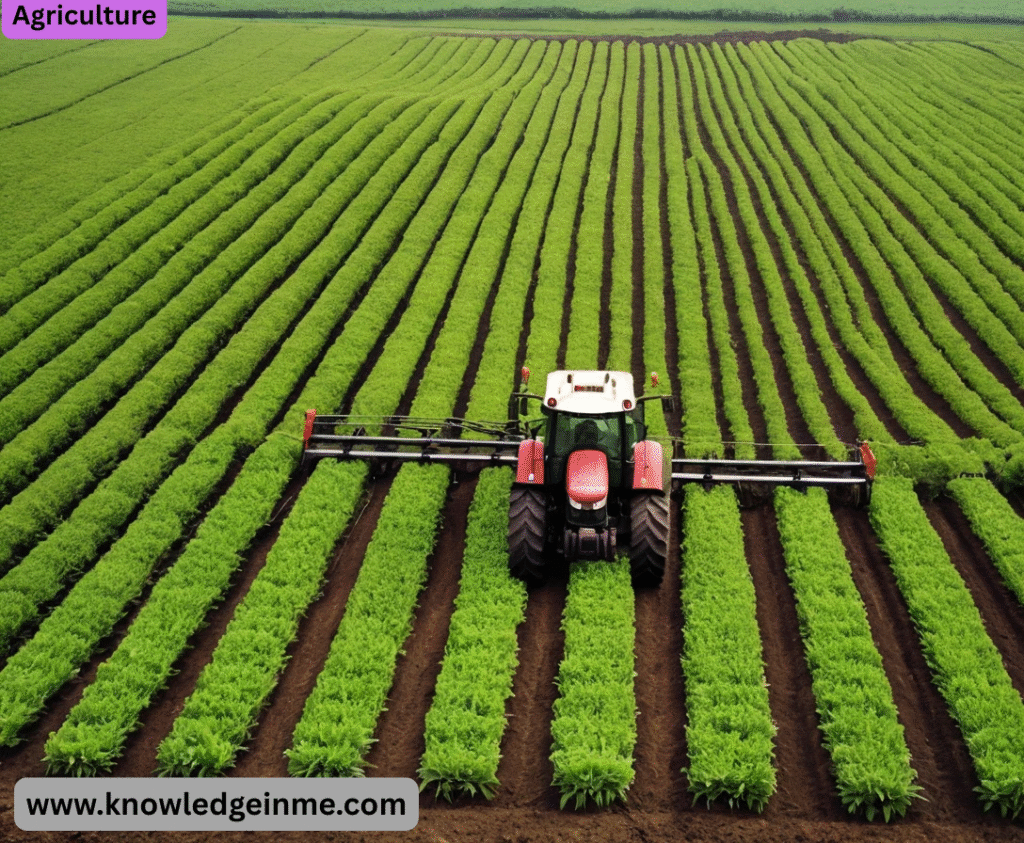

Agriculture Of course. Agriculture is the practice of cultivating plants and rearing animals for food, fiber, medicinal plants, and other products used to sustain and enhance human life. It is the foundation of civilization and remains one of the most critical sectors of the global economy.Here is a comprehensive overview of agriculture, covering its importance, types, modern practices, challenges, and future.
The Importance of Agriculture
- Food Security: It is the primary source of the world’s food supply.
- Economic Contribution: It is a major source of employment, especially in developing countries, and a significant contributor to GDP.
- Raw Materials: Provides raw materials for countless industries, including textiles (cotton, wool), biofuels (corn, sugarcane), pharmaceuticals, and construction.
- Cultural Significance: Forms the basis of traditions, diets, and ways of life for communities worldwide.
- Environmental Stewardship: When managed sustainably, agricultural landscapes can provide ecosystem services like water filtration, soil preservation, and carbon sequestration.
Main Types of Agriculture
Agriculture can be categorized in several ways:
By Scale and Intensity
- Subsistence Agriculture: Farming where the primary focus is growing enough food to feed the farmer’s family, with little or no surplus for trade. Common in developing regions.
- Commercial Agriculture: Large-scale farming focused on producing crops and animals for sale, often using advanced technology and economies of scale.
By Farming Methods
- Arable Farming: Cultivation of crops on cultivated land (e.g., wheat, maize, rice, vegetables).
- Pastoral Farming: Rearing of animals (e.g., cattle, sheep, goats for meat, milk, and wool).
- Mixed Farming: Combines both growing crops and raising livestock on the same farm.
- Nomadic Pastoralism: Herders move their animals from one pasture to another in search of fresh grazing land.
- Shifting Cultivation: A plot of land is cleared, cultivated for a few years, then abandoned for a long period to allow soil fertility to recover naturally.
Modern Specialized Types
- Industrial Agriculture: Capital-intensive, large-scale farming that uses machinery, hybrid seeds, and synthetic fertilizers and pesticides to maximize yield.
- Organic Farming: Avoids synthetic inputs, relying on natural methods like crop rotation, compost, and biological pest control.
- Sustainable Agriculture: Focuses on farming in a way that protects the environment, promotes biodiversity, and supports community well-being.
- Precision Agriculture: Uses technology (GPS, sensors, drones, data analytics) to apply precise amounts of water, fertilizer, and pesticides only where needed, increasing efficiency.
- Vertical Farming & Hydroponics: Growing crops in stacked layers or without soil, indoors, using controlled-environment agriculture (CEA) technology.
Key Components of Agriculture
- Crops: Cereals (wheat, rice, corn), pulses, fruits, vegetables, oilseeds, and cash crops (cotton, coffee, tea).
- Livestock: Cattle, poultry, pigs, sheep, goats, etc.
- Soil Science: Management of soil health through fertilization, pH balancing, and conservation.
- Water Management: Irrigation systems and water conservation techniques.
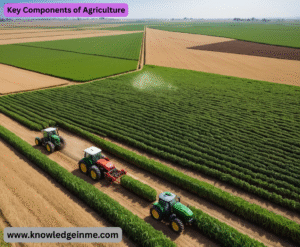
- Agricultural Technology (Agri Tech): Includes everything from tractors and combines to AI-powered drones and automated irrigation systems.
Major Challenges Facing Modern Agriculture
- Climate Change: Increasing droughts, floods, and unpredictable weather patterns threaten crop yields.
- Resource Depletion: Overuse and pollution of water sources, and degradation of soil health.
- Biodiversity Loss: Monoculture farming reduces genetic diversity and makes crops more vulnerable to disease.
- Feeding a Growing Population: The global population is projected to reach nearly 10 billion by 2050, requiring a significant increase in food production.
- Economic Pressures: Rising costs of land, fuel, and inputs, coupled with price volatility for farm products.
- Food Waste: A significant portion of produced food is lost during supply chains or wasted by consumers.
- Pesticide and Fertilizer Runoff: This can pollute waterways, causing algal blooms and “dead zones.”
The Future of Agriculture: Trends and Innovations
To address these challenges, agriculture is rapidly evolving:
- Climate-Smart Agriculture: Practices that increase productivity, enhance resilience, and reduce greenhouse gas emissions.
- Genetic Engineering (GMOs) and Gene Editing (CRISPR): Developing crops that are more nutritious, drought-resistant, and pest-resistant.
- Automation and Robotics: Autonomous tractors, robotic harvesters, and weed-pulling robots to address labor shortages and increase precision.
- Big Data and AI: Analyzing vast amounts of data (weather, soil conditions, market prices) to help farmers make better decisions.
- Regenerative Agriculture: A holistic approach focused on improving soil health, increasing biodiversity, and enhancing the water cycle.
- Alternative Proteins: Cultivated (lab-grown) meat and plant-based proteins to reduce the environmental footprint of livestock farming.
- Urban Agriculture: Rooftop gardens and community farms to reduce food miles and increase food security in cities.
The Agricultural Supply Chain: From Field to Fork
Agriculture isn’t just growing food; it’s a complex logistics network:
- Inputs: This stage provides farmers with the tools they need: seeds, fertilizers, pesticides, machinery, fuel, and financing.
- Production: The on-farm cultivation of crops and rearing of livestock.
- Processing & Value-Adding: Transforming raw commodities (e.g., wheat into flour, tomatoes into ketchup, livestock into packaged meat).
- Distribution & Logistics: The storage (in silos, cold storage), transportation (refrigerated trucks, cargo ships), and wholesale trading that moves food globally.
- Marketing & Retail: The final sale to consumers through supermarkets, farmers’ markets, restaurants, and CSAs (Community Supported Agriculture).
- Each step adds cost and complexity, and disruptions (like fuel price spikes or port closures) can ripple through the entire chain.
The Heated Debates in Modern Agriculture
Agriculture is at the center of several critical global discussions:
Organic vs. Conventional:
- Pro-Organic: Focuses on environmental health, reduced synthetic chemical use, and animal welfare. Critics point to lower yields and higher costs.
- Pro-Conventional: Argues that high-yield, efficient farming is necessary to feed the world affordably and that modern pesticides are rigorously tested. Critics point to environmental externalities like runoff.
- GMOs (Genetically Modified Organisms):
- Pro-GMO: Highlights potential for higher yields, reduced pesticide use (e.g., Bt corn resistant to pests), enhanced nutrition (e.g., Golden Rice with Vitamin A), and drought tolerance.
- Anti-GMO: Concerns include corporate control of the seed supply (patents), potential long-term ecological impacts, and a “right to know” through labeling.
Animal Welfare:
- Factory Farming (CAFOs – Concentrated Animal Feeding Operations): Praised for efficiency and low cost but criticized intensely for animal crowding, disease potential, and ethical concerns.
- Free-Range & Pasture-Raised: Addresses welfare concerns but often results in more expensive products and a larger land footprint.
Local vs. Global:
- “Locavore” Movement: Advocates for eating locally produced food to support local economies, reduce “food miles” (transport emissions), and increase freshness.
- Global Trade: Provides consumers with year-round variety, can be more efficient (e.g., growing crops in ideal climates), and is vital for the economies of exporting countries.
A Closer Look at Key Innovations
Precision Agriculture in Action:
- GPS-Guided Tractors: Drive with centimeter-level accuracy, avoiding overlaps and gaps, saving fuel and inputs.
- Variable Rate Technology (VRT): Sensors and maps tell applicators to apply different amounts of seed, fertilizer, or water in different parts of a single field.
- NDVI (Normalized Difference Vegetation Index): Drone or satellite imagery that shows plant health, allowing farmers to spot problems before they are visible to the naked eye.
Water Management Innovations:
- Drip Irrigation: Delivers water directly to the base of the plant root, drastically reducing evaporation and water waste compared to flood or sprinkler systems.
- Soil Moisture Sensors: Provide real-time data to farmers, telling them exactly when and how much to water, preventing over- and under-irrigation.
The Biological Revolution:
- Microbes: Companies are developing soil probiotics and biopesticides—using beneficial bacteria and fungi to help plants absorb nutrients better or fight off pests and diseases naturally.
- Gene Editing (CRISPR): Unlike traditional GMOs (which can introduce genes from other species), gene editing makes precise changes to a plant’s own DNA. This can create seedless grapes, mushrooms that don’t brown, or disease-resistant wheat without introducing foreign genes.
The Social Dimension: Farmers and Communities
- Aging Farmer Population: In many countries, the average age of farmers is over 55. A major challenge is encouraging a new generation to take up farming.
- Land Access: Rising land prices make it incredibly difficult for new and young farmers to enter the profession.
- Labor: Agriculture relies heavily on migrant labor in many regions, leading to debates over immigration policy and workers’ rights.
- Women in Agriculture: Women play a critical role in global food production, especially in subsistence farming, yet often have less access to land, credit, and education than men.
- Indigenous Knowledge: Many sustainable practices, like water management and seed saving, are rooted in ancient indigenous traditions that are now being recognized for their modern value.